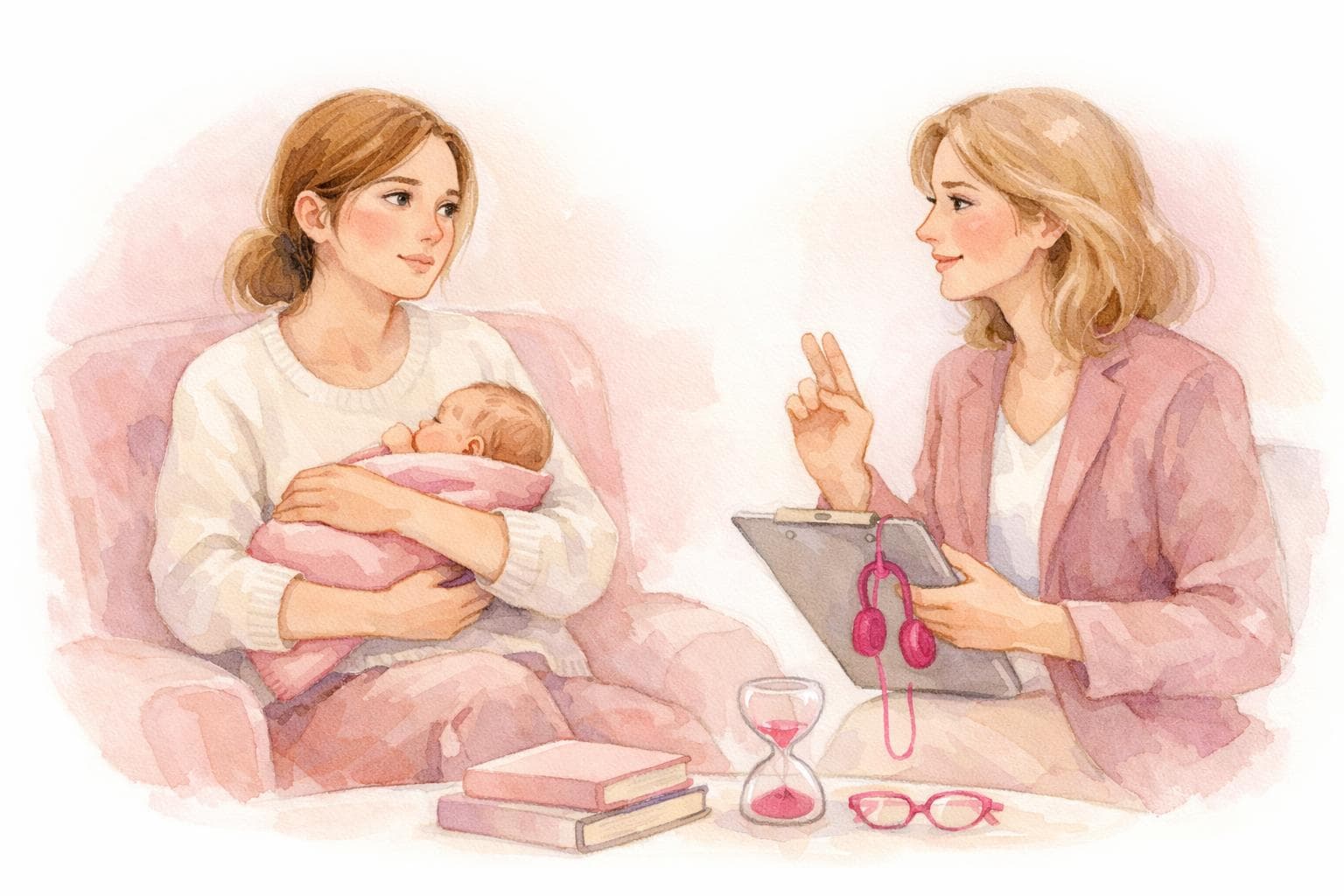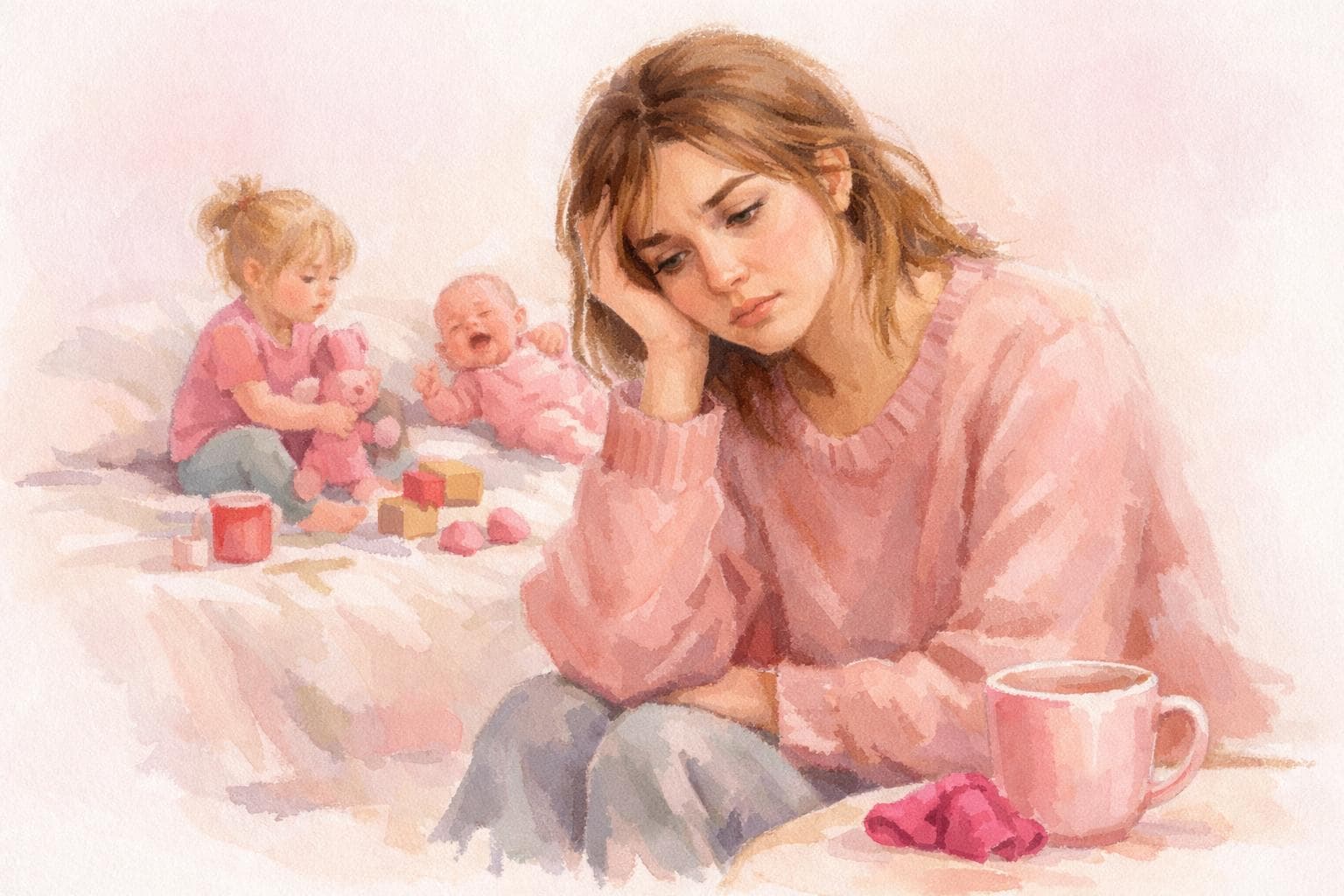
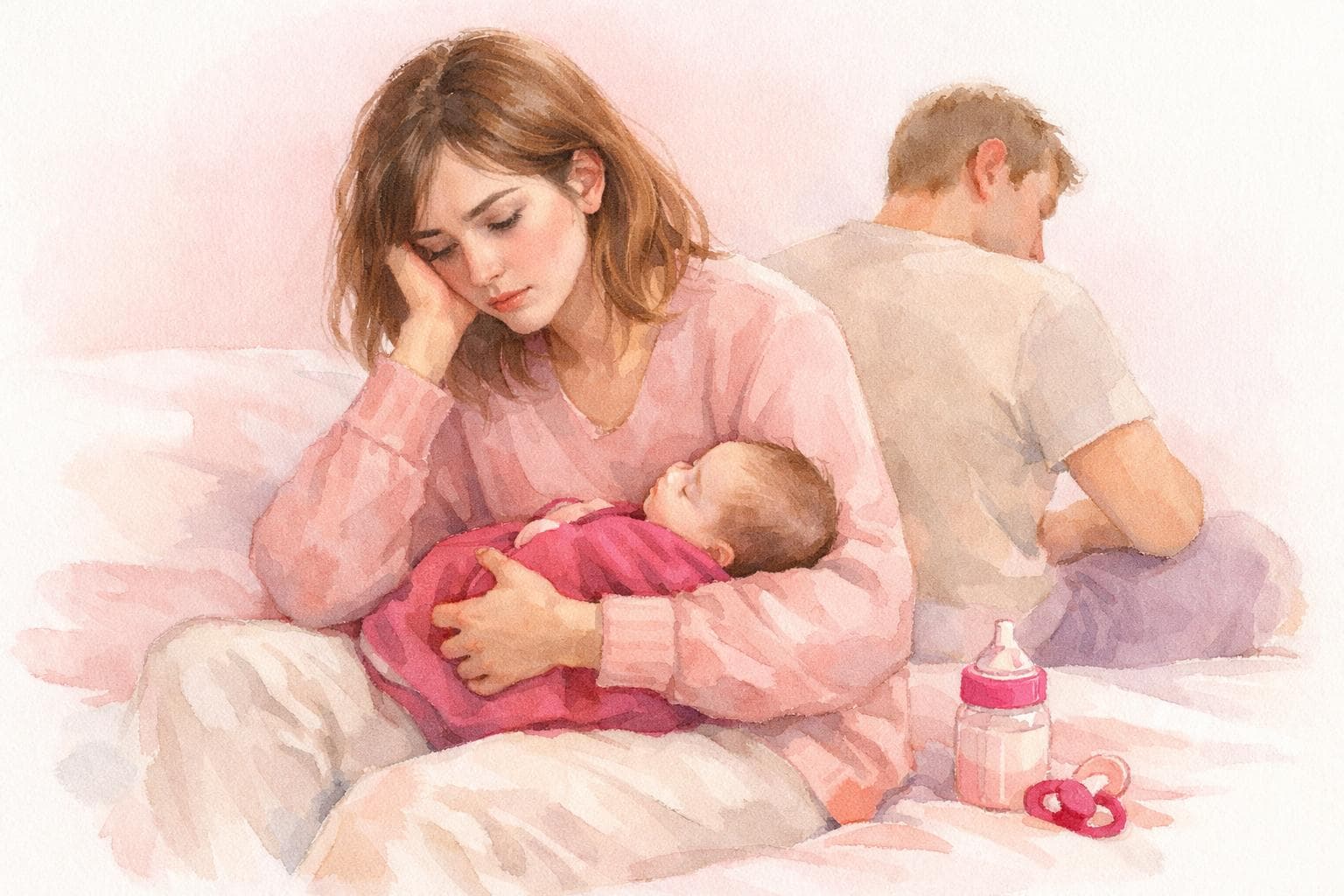
You thought you would feel happy. Everyone said you would. The baby is healthy, the birth is over, the hard part is done. But you do not feel happy. You feel hollow. Or heavy. Or numb. Or all three at once, shifting between them like weather you cannot predict.
Something is wrong and you are afraid to say it out loud because what kind of mother feels this way?
The kind who has postpartum depression. And there are over 460,000 of you in the US alone every single year.
Postpartum depression (PPD) is a mood disorder that develops after childbirth, characterised by persistent sadness, anxiety, fatigue and difficulty functioning. It affects approximately 10 to 20% of postpartum women globally, with the CDC reporting that 1 in 8 US mothers experience it after a live birth. Unlike the temporary "baby blues" which resolve within two weeks, PPD is more severe, longer-lasting and requires treatment. It can begin any time within the first year after delivery. With appropriate intervention, up to 80% of women achieve full recovery.
How common is it?
Statistic | Source |
|---|---|
1 in 8 US mothers experience PPD after live birth | CDC (2024) |
10 to 20% of postpartum women globally | MDPI scoping review (2025) |
Over 460,000 US mothers affected annually | Based on 3.7 million annual births |
50%+ of affected women go untreated | CDC |
Suicide is a leading cause of maternal death in the first postpartum year | Multiple sources |
Prevalence in fathers: approximately 8.75% | Wang et al. meta-analysis (2019) |
These numbers only account for live births. Women who experience miscarriage or stillbirth also develop perinatal depression, making the true figure higher than any single study captures.
Baby blues vs postpartum depression vs postpartum psychosis
Baby blues | Postpartum depression | Postpartum psychosis | |
|---|---|---|---|
Prevalence | Up to 80% of new mothers | 10 to 20% | 1 to 2 per 1,000 births |
Onset | Within days of birth | Within weeks to months; can develop any time in the first year | Usually within the first 2 weeks |
Duration | Resolves within 2 weeks | Weeks to months without treatment; can persist for years | Medical emergency; requires hospitalisation |
Symptoms | Mood swings, tearfulness, irritability, anxiety | Persistent sadness, hopelessness, loss of interest, difficulty bonding, sleep and appetite changes, thoughts of self-harm | Hallucinations, delusions, confusion, paranoia, disorganised thinking |
Treatment needed | Support and reassurance | Therapy, medication or both | Immediate psychiatric intervention |
If your symptoms have lasted beyond two weeks and are affecting your ability to function, it is not the baby blues. It is something that needs and deserves clinical attention.
Symptoms of postpartum depression
PPD does not always look like sadness. It can also look like rage, numbness, hypervigilance or simply the absence of feeling anything at all.
- Persistent sadness, emptiness or hopelessness that does not lift
- Loss of interest or pleasure in things you used to enjoy
- Difficulty bonding with your baby
- Withdrawing from your partner, family or friends
- Severe anxiety, worry or panic attacks
- Changes in appetite: eating too much or too little
- Insomnia or sleeping too much, even when the baby sleeps
- Overwhelming fatigue that goes beyond normal new-parent tiredness
- Difficulty concentrating or making decisions
- Feelings of worthlessness, guilt or shame
- Intrusive thoughts about harm to yourself or the baby
- Thoughts of death or suicide
If you are experiencing intrusive thoughts, read about perinatal OCD, which is a separate but related condition that is highly treatable.
"Postpartum depression is a severe mental health condition marked by persistent sadness, anxiety, fatigue, and difficulty functioning. Unlike the temporary baby blues, PPD is more severe and long-lasting, potentially leading to negative consequences for mother and child." - Journal of Clinical Medicine (2025)
What causes it?
No single factor causes PPD. It results from the interaction of biological, psychological and social factors.
Factor type | Examples |
|---|---|
Hormonal | Sharp drop in oestrogen and progesterone after delivery; thyroid disruption |
Genetic | Personal or family history of depression or mood disorders |
Psychological | History of anxiety, depression or trauma; perfectionism; low self-esteem |
Obstetric | Traumatic birth, emergency caesarean, premature baby, NICU admission |
Social | Lack of partner or family support, financial stress, isolation |
Sleep | Chronic sleep deprivation disrupts emotional regulation and cognitive function |
Identity | The developmental transition of matrescence can intensify vulnerability |
Maternal depression is also strongly associated with paternal depression. When one parent is depressed, the other's risk increases significantly. Our guide to postpartum depression in dads covers the often-overlooked partner experience.
How is it diagnosed?
The most widely used screening tool is the Edinburgh Postnatal Depression Scale (EPDS), a 10-item self-report questionnaire. A score of 12 or above is the standard clinical cutoff for probable depression, though lower cutoffs (9 to 11) are used for monitoring.
The EPDS is a screen, not a diagnosis. A score above the cutoff means further clinical assessment is needed, not that you definitively have PPD. Equally important: the EPDS was not designed to detect postpartum anxiety, PTSD or OCD, which require separate screening tools.
If you have taken the EPDS and want to understand your result, our step-by-step action plan after your score explains what to do for every score range.
Treatment options compared
Treatment | How it works | Evidence | Best for |
|---|---|---|---|
CBT (Cognitive Behavioural Therapy) | Restructures negative thought patterns and behaviours | Strong; meta-analysis of 20 RCTs showed significant improvement | Mild to severe PPD; effective across multiple delivery formats |
IPT (Interpersonal Therapy) | Addresses relationship conflicts and role transitions | Strong | PPD linked to isolation, relationship strain or identity loss |
SSRIs (antidepressants) | Increase serotonin availability in the brain | Strong; sertraline and paroxetine are preferred during breastfeeding | Moderate to severe PPD; faster initial symptom relief |
Zuranolone (Zurzuvae) | First oral medication specifically approved for PPD (FDA, 2023) | Moderate; newer drug with limited long-term data | PPD requiring rapid treatment; 14-day course |
EMDR | Reprocesses traumatic birth memories through bilateral stimulation | Growing; effective for birth-related PTSD | PPD with co-occurring birth trauma |
Combined (therapy + medication) | Addresses both cognitive patterns and neurochemistry | Strongest outcomes for moderate to severe presentations | Women who need both immediate relief and long-term skill building |
For a detailed side-by-side comparison, see our CBT vs medication decision guide. For a full breakdown of therapy specifically, see our CBT for postpartum depression guide. And for guidance on who to see, our provider comparison explains the differences between counselors, therapists, psychologists and psychiatrists.
Risk factors
The strongest predictors of PPD, identified across multiple systematic reviews:
- History of depression or anxiety (strongest individual predictor)
- Depression or anxiety during pregnancy
- Stressful life events during pregnancy or postpartum
- Lack of social support
- Relationship difficulties
- Traumatic or complicated birth
- Baby admitted to NICU
- Financial hardship
- Unplanned or unwanted pregnancy
- History of trauma or abuse
Having risk factors does not mean you will develop PPD. And not having them does not mean you are immune. PPD can affect any mother, regardless of circumstance.
How PPD affects the whole family
Untreated PPD has measurable consequences beyond the mother:
- Impaired mother-infant bonding and attachment
- Delayed cognitive and language development in the child
- Increased behavioural and emotional problems in children by age three
- Higher rates of breastfeeding cessation
- Elevated risk of paternal depression
- Relationship strain and increased conflict
This is not blame. It is information. Treating PPD is not just about the mother. It is about the family.
When to get help
Today. If you are reading this article because something does not feel right, that instinct is enough. You do not need to wait until it gets worse.
- If your symptoms have lasted more than two weeks, speak to your GP or midwife
- If you are having thoughts of self-harm, contact a crisis line immediately: 988 (US), 116 123 (UK Samaritans) or your local emergency service
- If you scored 9 or above on the EPDS, follow our action plan
- If you are unsure whether what you are feeling "counts," it does. Every new mom should consider therapy, even if they feel fine
You can also read about what happens at a perinatal mental health assessment so you know exactly what to expect before you walk through the door.
Key takeaways
- Postpartum depression affects 1 in 8 US mothers (over 460,000 per year) and 10 to 20% of women globally. It is one of the most common complications of childbirth.
- PPD is not the baby blues. Baby blues resolve within two weeks. PPD persists, worsens without treatment and can develop at any point in the first year.
- With treatment, up to 80% of women fully recover. CBT, SSRIs and combined approaches all have strong evidence. Zuranolone offers a new 14-day treatment option.
- More than half of affected women go untreated. The biggest barrier is not treatment availability but recognition, screening and the stigma of asking for help.
- PPD affects the whole family. Untreated maternal depression is linked to developmental delays in children and elevated depression in partners.
Sources and further reading
- MDPI / Journal of Clinical Medicine. (2025). Postpartum depression: epidemiology, risk factors, diagnosis and management. mdpi.com
- Cleveland Clinic. (2026). Postpartum depression: causes, symptoms and treatment. clevelandclinic.org
- PostpartumDepression.org. (2025). Postpartum depression statistics. postpartumdepression.org
- MHStats. (2026). Postpartum depression statistics 2026. mhstats.org
- CDC. (2024). Depression among women of reproductive age.
- Wang, T. et al. (2019). Prevalence of paternal postpartum depression: meta-analysis. Journal of Affective Disorders.
- Postpartum Support International: postpartum.net