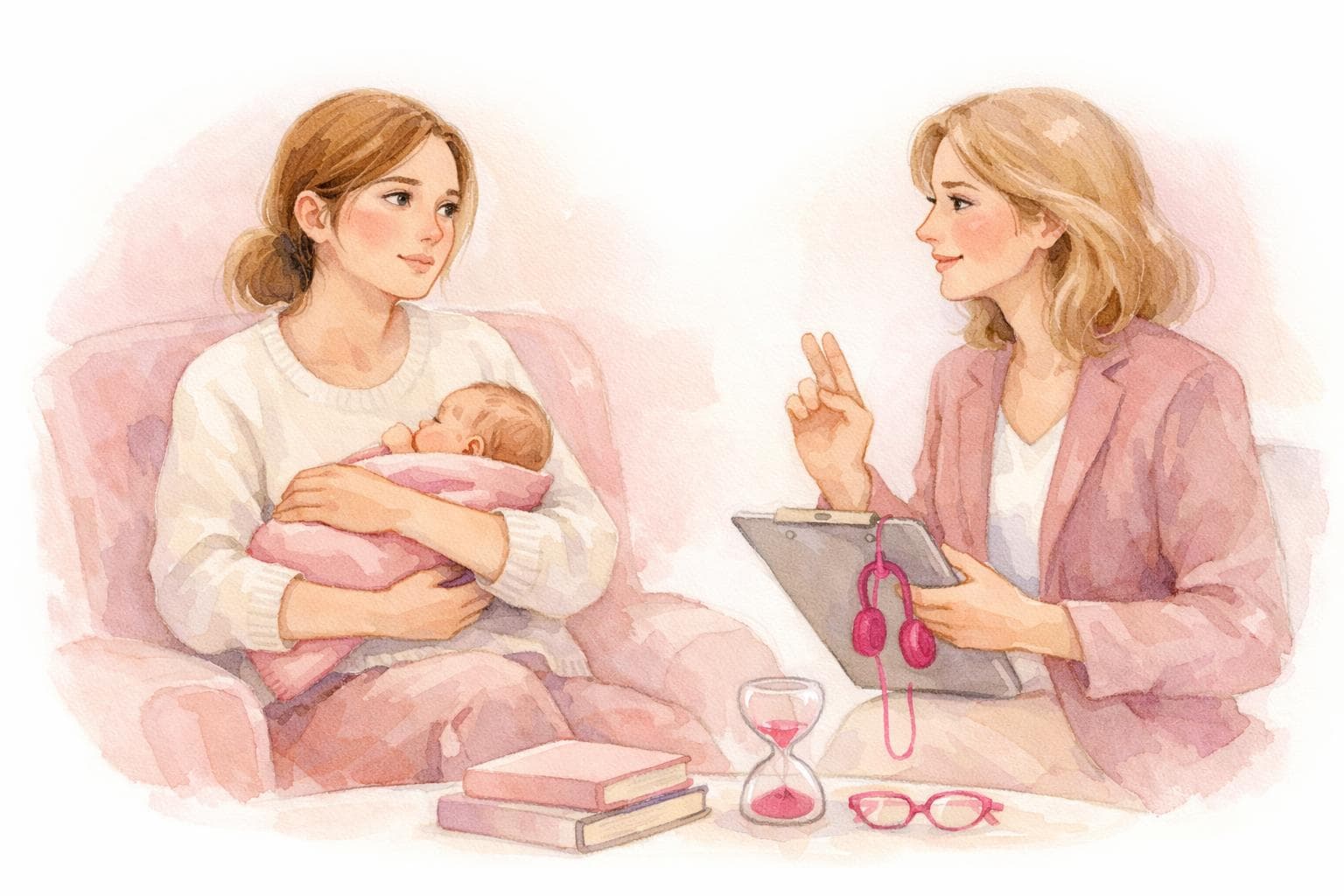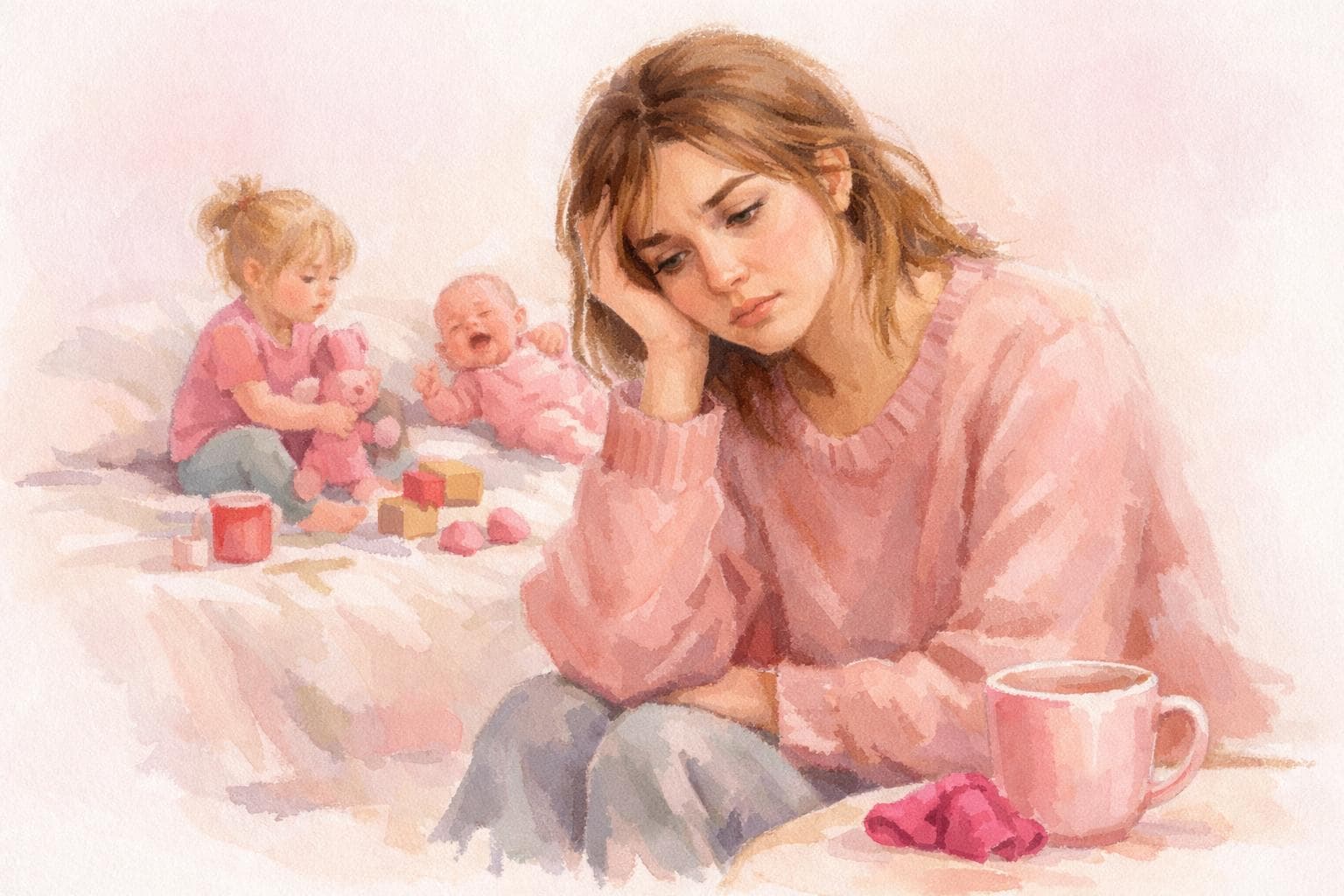
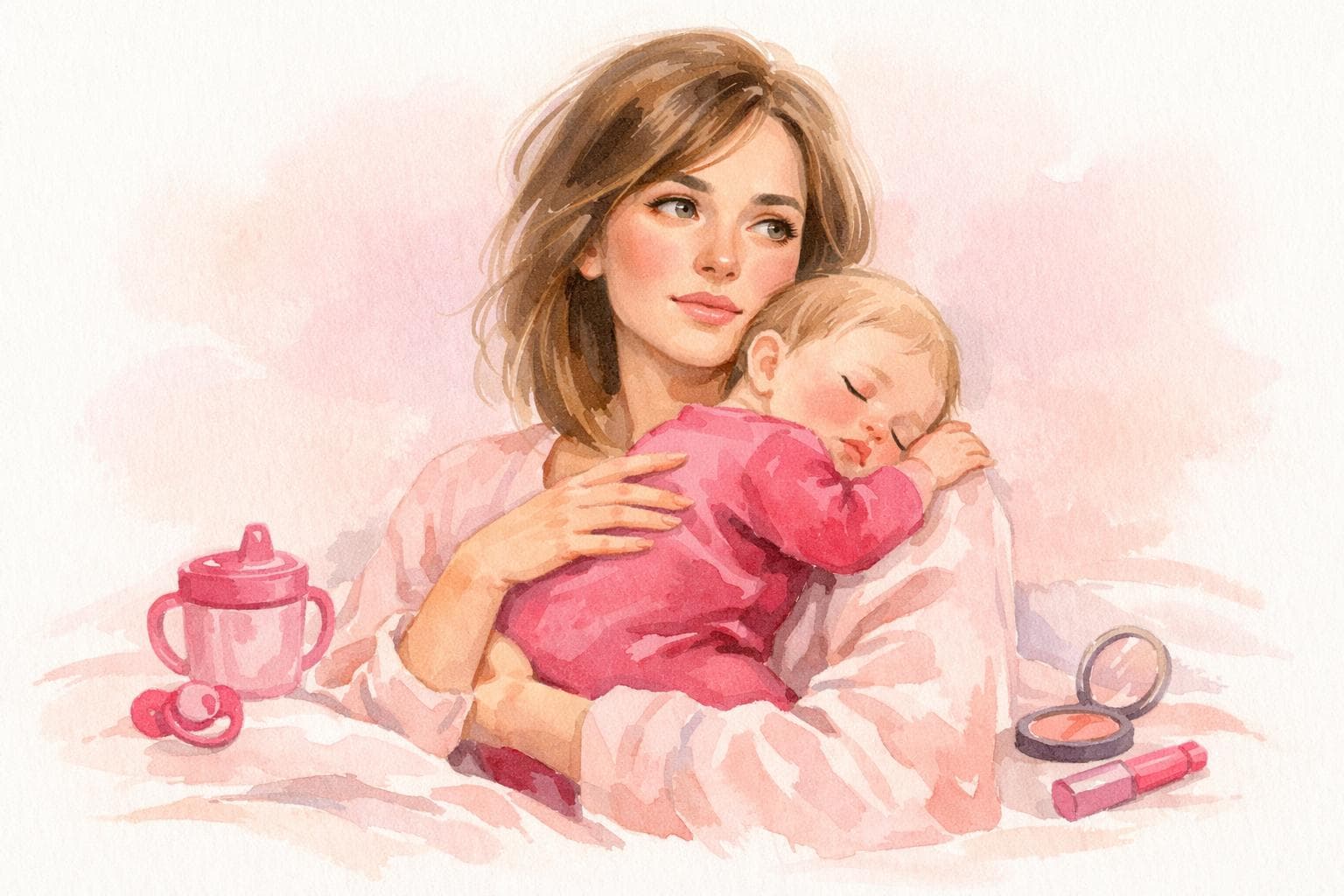
You used to know exactly who you were. You had routines, opinions, a sense of direction. Then you had a baby, and somewhere between the first feed and the fourth sleepless night, something inside you rearranged. Not just your schedule. You.
You still love your child. That is not the question. The question is: who are you now? Because the person staring back in the mirror feels both familiar and completely foreign. And the strangest part is that nobody told you this would happen.
There is actually a word for what you are going through. It is called matrescence.
What does matrescence mean?
Matrescence describes the psychological, physical and emotional transformation a woman goes through when she becomes a mother. The term was coined by medical anthropologist Dana Raphael in the 1970s. It draws a direct parallel with adolescence, another developmental stage marked by hormonal shifts, body changes and identity confusion.
Reproductive psychiatrist Dr. Alexandra Sacks brought the concept into mainstream awareness through her 2017 New York Times piece and her 2018 TED talk, which has been viewed over a million times. She describes matrescence as the "birth of a mother," happening alongside the birth of the baby but receiving almost none of the same attention.
A 2024 perspective article published in Frontiers in Psychiatry argued that there is a critical need for the concept of matrescence in perinatal psychiatry, noting that despite advances in maternal mental health, a bias towards pathologising maternal experiences persists in both research and practice.
What happens to your brain
This is not just a metaphor. Matrescence involves measurable neurological change.
A landmark 2017 study published in Nature Neuroscience found that pregnancy causes extensive grey matter restructuring in brain regions responsible for social cognition, empathy and emotional regulation. These changes persisted for at least two years postpartum.
A 2023 paper in Trends in Cognitive Sciences went further, reframing matrescence as a neurocognitive developmental stage. The researchers argued that the brain changes during pregnancy are comparable in scale to those seen in adolescence, and that the so-called "mum brain" is not a deficit but a cognitive adaptation to the demands of caregiving.
Your brain is not broken after birth. It is reorganising. And that reorganisation, like any renovation, is disorienting while it happens.
What matrescence actually feels like
The lived experience of matrescence is rarely tidy. It is a mix of contradictions that can leave you confused about what you are feeling and whether those feelings are normal.
What you might feel | What it looks like in daily life |
|---|---|
Identity confusion | Not recognising yourself in old photos or hobbies |
Ambivalence | Loving your baby and missing your old life at the same time |
Grief | Mourning your former self, your body, your freedom |
Hypervigilance | Checking on the baby constantly, unable to relax |
Isolation | Feeling alone even in a room full of people |
Guilt | Thinking you should feel happier than you do |
None of these feelings mean you are failing. They mean you are in the middle of a developmental transition, one that deserves the same patience and understanding we give to teenagers going through puberty.
Why nobody names it
Part of the problem is cultural. Western societies have built a story around motherhood that leaves very little room for struggle. The expectation is that you will feel overwhelmed but grateful, tired but fulfilled. Any deviation from that script gets treated as a warning sign rather than a natural part of growing into a new identity.
A 2023 Pew Research survey found that mothers are more likely than fathers to feel judged for their parenting choices, and 28% of mothers on social media reported feeling pressure to share only "good parent" moments. That kind of environment makes it harder to say, "I don't feel like myself and I don't know who I'm becoming."
"Despite advances in maternal mental health, a bias towards pathologising maternal experiences persists. The concept of matrescence offers a paradigm shift towards understanding the holistic development of mothers." - Athan, A.M. (2024), Frontiers in Psychiatry
When we do not name the transition, women are left to interpret their discomfort as disorder. Some will be correctly diagnosed with postpartum depression or anxiety. But many are simply going through matrescence, and knowing that makes all the difference.
Matrescence is not postpartum depression
This distinction matters. Matrescence is a developmental process. Postpartum depression is a clinical condition. They can overlap, but they are not the same thing.
- Matrescence is the shift in identity, relationships and self-perception that comes with becoming a mother
- PPD involves persistent sadness, hopelessness, loss of interest and difficulty functioning
- You can be in the thick of matrescence and still be mentally well
- You can also be in matrescence and develop PPD at the same time
If your experience includes emotional pain that does not ease, thoughts of self-harm, inability to care for yourself or your baby or deep hopelessness that persists, please speak to a healthcare professional. That is not matrescence. That is something that needs and deserves clinical support.
You can read more about emotional exhaustion in motherhood and how therapy can help moms who feel stuck for a deeper look at where normal struggle ends and something more begins.
How to support yourself through matrescence
There is no shortcut through a developmental stage. But there are things that help.
- Name what is happening. Language matters. Knowing that what you feel has a name and a scientific basis is, for many women, the first step toward feeling less lost.
- Find your people. Isolation makes every feeling louder. Connecting with other mothers, whether online or in person, reminds you that this is shared ground. New-mom support groups can be a powerful anchor.
- Allow the grief. You are allowed to miss who you were before. That grief does not cancel out your love for your child. Both things can exist at the same time.
- Lower the bar. The expectation to "bounce back" is part of what makes matrescence so painful. You are not bouncing back. You are becoming someone new. That takes time.
- Ask for help early. If you are struggling, do not wait until it becomes a crisis. Asking for help as a mom is not a sign of weakness. It is part of the process.
You are not losing yourself. You are becoming.
Matrescence is not a disorder. It is not a flaw. It is one of the most significant psychological transitions a person can go through, and it deserves to be spoken about as openly as adolescence.
You are not who you were before. You will not go back. But what comes next, once the dust settles and the new shape of your life starts to feel familiar, might surprise you.
Sources and further reading
- Athan, A.M. (2024). A critical need for the concept of matrescence in perinatal psychiatry. Frontiers in Psychiatry. frontiersin.org
- Orchard, E.R. et al. (2023). Matrescence: lifetime impact of motherhood on cognition and the brain. Trends in Cognitive Sciences. pubmed.ncbi.nlm.nih.gov
- Hoekzema, E. et al. (2017). Pregnancy leads to long-lasting changes in human brain structure. Nature Neuroscience, 20(2), 287–296.
- Sacks, A. (2018). A new way to think about the transition to motherhood. TED Talk. ted.com
- Stern, D.N. et al. (1998). The Birth of a Mother: How the Motherhood Experience Changes You Forever. Basic Books.
- Pew Research Center. (2023). Parenting in America Today. pewresearch.org