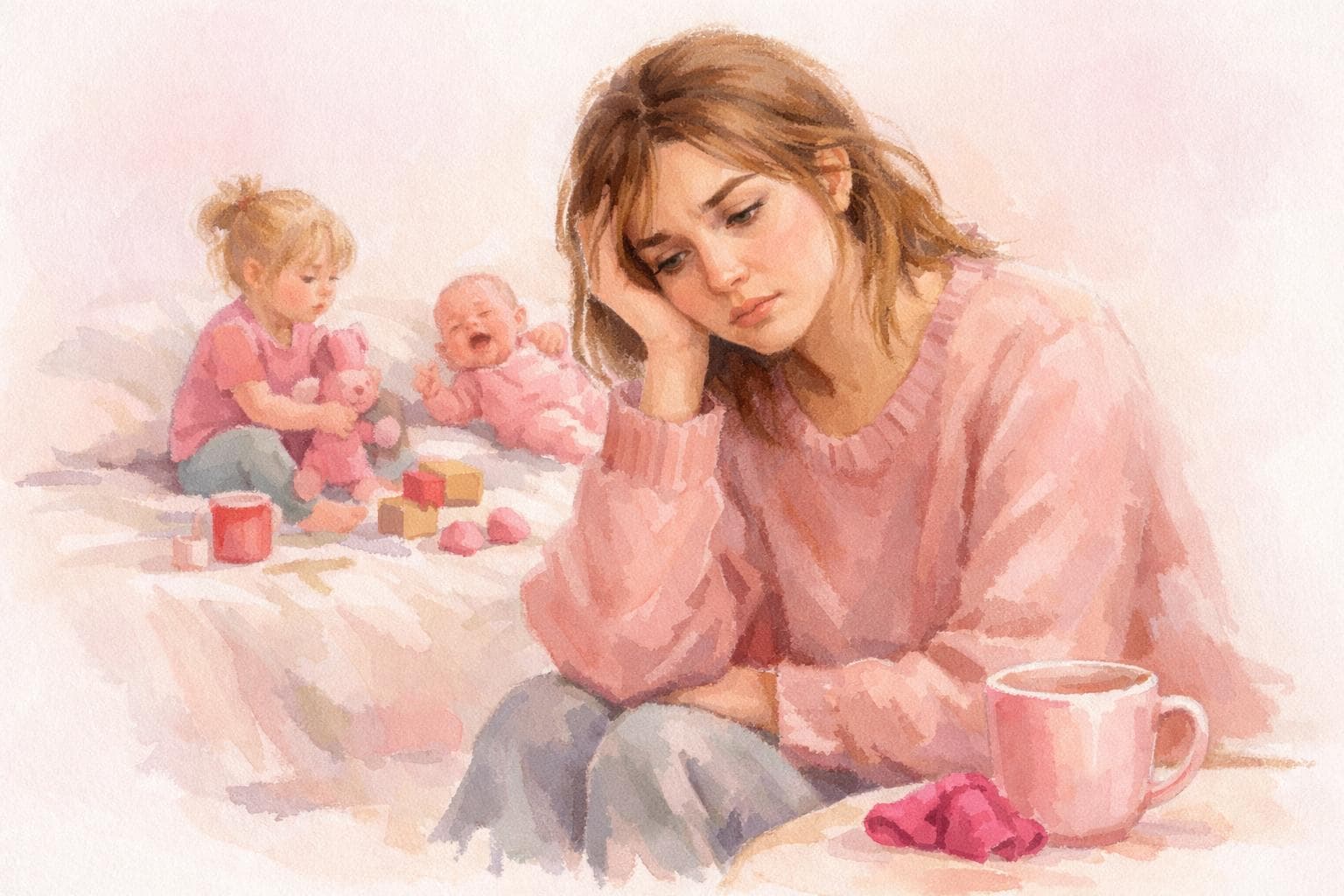
In the first days after having my baby, I cried at a diaper commercial. I cried because the onesie was too small. I cried because it fit perfectly. I cried in the shower for reasons I couldn't name and then felt immediately embarrassed about it, because hadn't I wanted this? Wasn't I supposed to be happy?
Everyone told me it was the baby blues. They said it like it was nothing a weather event, a passing inconvenience. Just hormones. It'll pass.
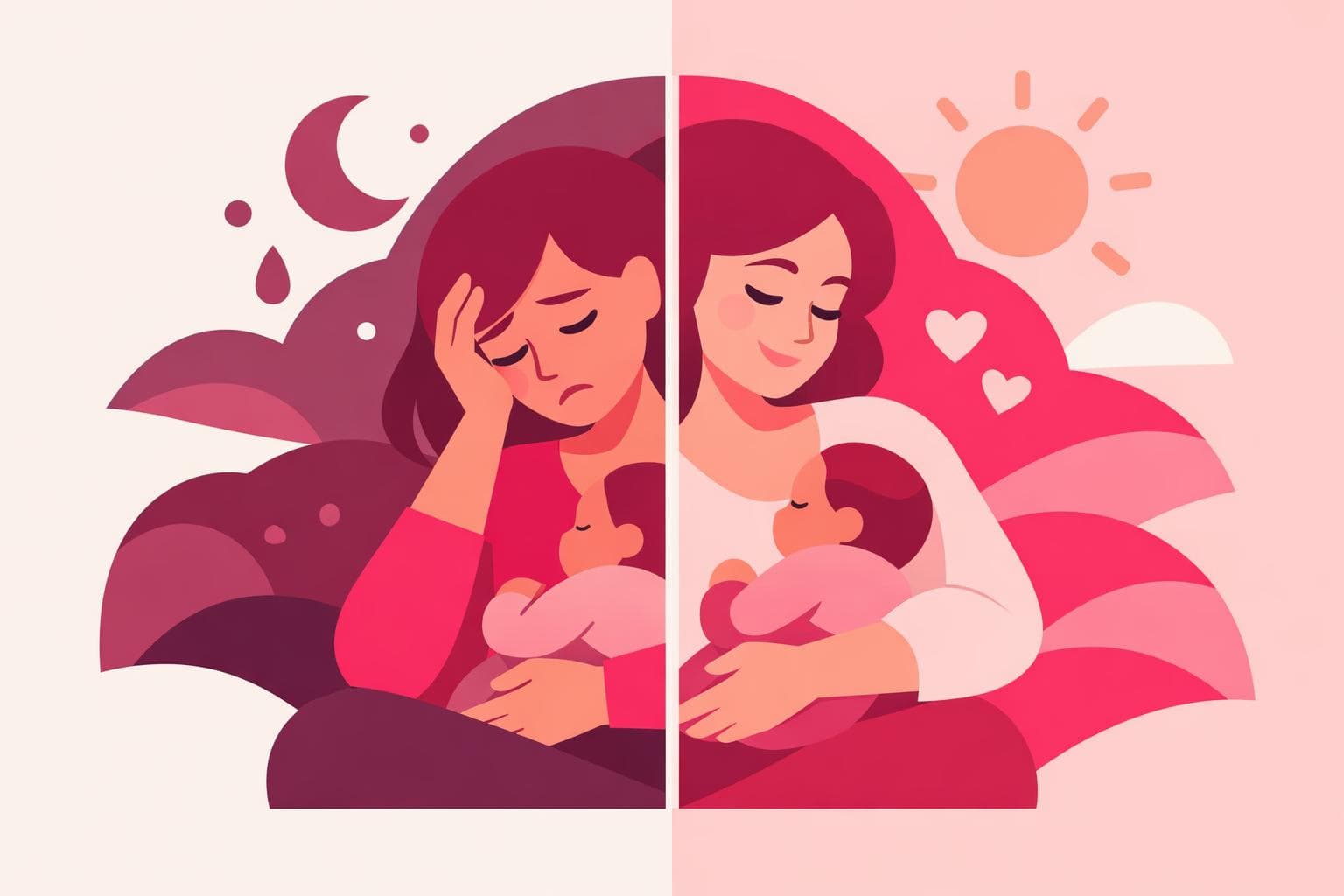
And for most women, it does pass. But for roughly one in five, what's happening isn't the baby blues at all. It's postpartum depression. And those two things are not the same, even though they can start by looking identical.
Understanding the difference matters not to panic yourself in the early days, but to know what to watch for and when to ask for help without waiting to see if you can just push through.
What the baby blues actually are
Baby blues are extraordinarily common. According to the American College of Obstetricians and Gynecologists somewhere between 70% and 80% of new mothers experience them. That's not a disorder it's closer to a universal response to an enormous hormonal shift.
In the 24 to 72 hours after birth, estrogen and progesterone levels drop precipitously. They fall faster and further than at any other point in human life. At the same time, your body is recovering from labor, your sleep is already disrupted, and you're navigating the emotional enormity of a new person being entirely dependent on you. The tearfulness, the mood swings, the sudden waves of anxiety followed by equally sudden moments of tender joy all of that is your nervous system processing something genuinely massive.
Baby blues typically begin within two to three days of delivery. They peak around day four or five. And then gradually, they recede usually within two weeks without treatment.
That's the key: they pass.
What postpartum depression looks like instead
Postpartum depression doesn't always look like sadness. That's part of why it gets missed.
It can look like irritability a short fuse that surprises you with how easily it gets triggered. It can look like emotional numbness, a flatness where you expected to feel things you don't. It can look like anxiety so persistent and physical that it feels more like a body problem than a mind one. It can look like disconnection from your baby not a dramatic rejection, but a quiet absence of the feelings you expected to arrive.
The NHS estimates that postpartum depression affects approximately 1 in 10 women after giving birth. Some research suggests the figure is higher particularly when accounting for women who don't seek help or who are never screened. A 2018 meta-analysis in JAMA Psychiatry put the global prevalence of postpartum depression at around 17.7%, though rates vary significantly by country and context.
Here's the clearest way to hold the distinction:
Baby BluesPostpartum Depression
Begins 2–3 days after birth
Can begin anytime in the first year
Peaks around day 4–5
Doesn't peak and pass persists or worsens
Resolves within 2 weeks
Lasts longer than 2 weeks without treatment
Tearfulness, mood swings, emotional sensitivity
Persistent low mood, numbness, anxiety, irritability
Doesn't significantly impair daily functioning
Affects ability to care for yourself and your baby
Doesn't require treatment
Responds well to treatment and treatment matters
The timing is the first signal. If what you're experiencing has lasted beyond two weeks or if it's intensifying rather than lifting, it's worth taking seriously as something other than blues.
The symptoms that get underreported
Women describe postpartum depression in ways that don't always match what they've been told to look for. Which means a lot of them spend weeks wondering if what they're feeling is "bad enough" to mention to anyone.
It's worth knowing the full picture:
- Persistent sadness or emptiness that doesn't lift even in moments that should feel good
- Crying more than usual, or not being able to cry when you feel like you should
- Difficulty bonding with your baby feeling detached, going through the motions
- Withdrawing from your partner, friends or family
- Loss of appetite, or eating significantly more than usual
- Inability to sleep even when the baby is sleeping
- Feelings of worthlessness, shame, or the sense that you're a bad mother
- Intrusive thoughts unwanted, distressing thoughts that feel foreign and frightening
- In severe cases, thoughts of harming yourself or your baby
That last point deserves a specific mention. Intrusive thoughts in the postpartum period thoughts about harm that arrive unwanted and feel horrifying are more common than most mothers know. They are not the same as intent. They are a symptom of an anxiety disorder or postpartum OCD, and they respond to treatment. If you're having them, tell someone. A doctor, a midwife, a therapist. You don't have to carry that alone.
Why women wait too long to seek help
There's a specific kind of shame that attaches to postpartum depression. It sits right at the intersection of two things that are already difficult: admitting you're struggling and admitting you're struggling at the moment you're supposed to feel most fulfilled.
Research published in the Journal of Affective Disorders found that stigma remains one of the primary barriers to help-seeking for postpartum depression with many mothers reporting that they feared being seen as unfit parents being judged for not coping or having their children taken from them. These fears are almost always unfounded. But they're very real.
"Asking for help is not giving up. It is refusing to give up." - Charlie Mackesy, The Boy, the Mole, the Fox and the Horse
If you're reading this and wondering whether what you're feeling is serious enough to mention to someone it is. The bar for asking for help is not "I'm completely falling apart." It's "this doesn't feel right and I've been waiting for it to pass."
How to Ask for Help as a Mom (and Not Feel Weak) addresses the internal resistance to reaching out in a way that's worth reading before your next appointment. And if you're not sure whether what you're experiencing is depression or something closer to burnout and exhaustion, Emotional Exhaustion in Motherhood: What It Really Means helps make that distinction with some clarity.
What treatment actually looks like
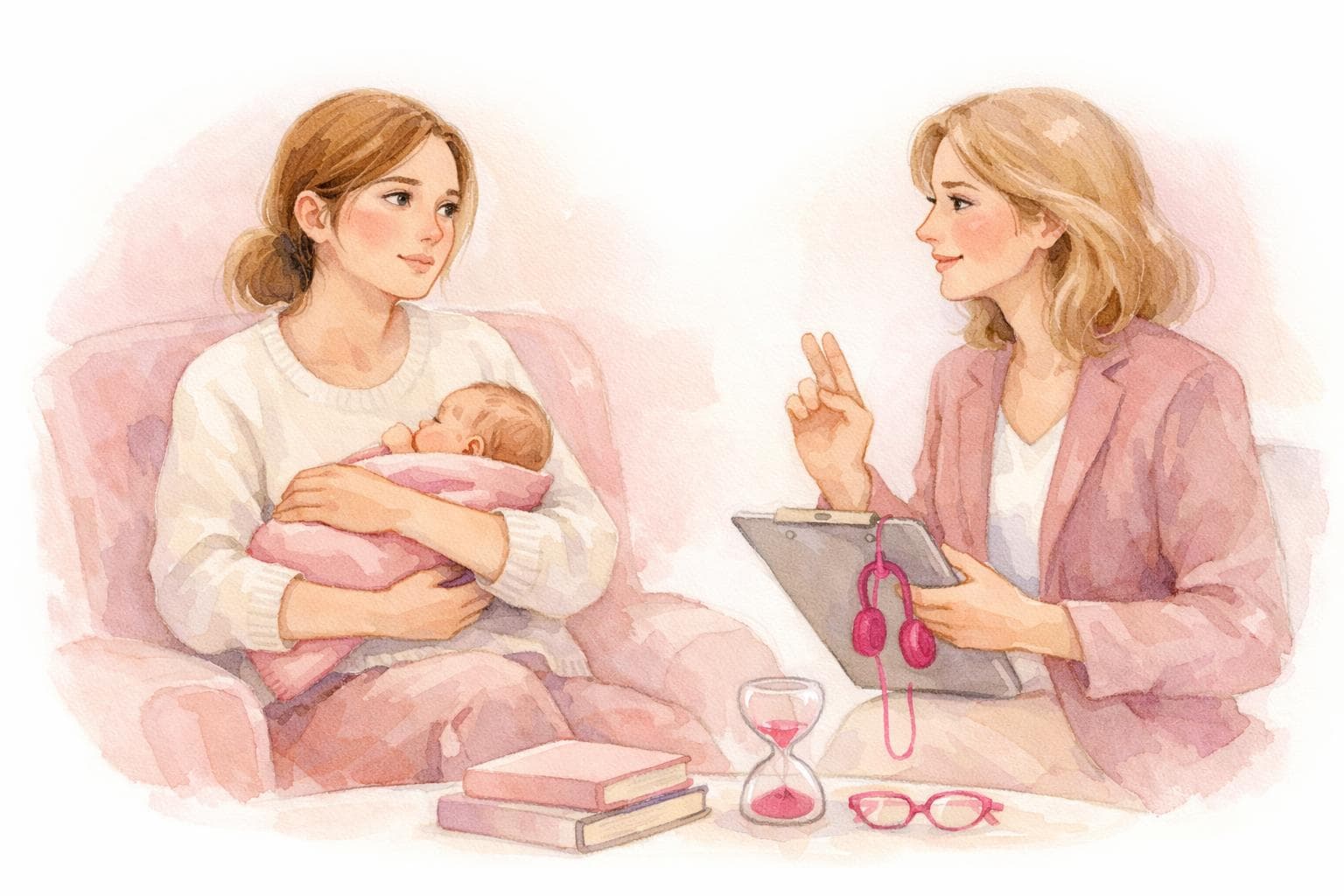
Postpartum depression is treatable. That sounds obvious until you've been in the middle of it and can't imagine feeling different but it's important to say plainly.
Treatment typically involves some combination of therapy particularly cognitive behavioural therapy (CBT) and interpersonal therapy both of which have strong evidence bases for postpartum depression and medication if appropriate. Antidepressants that are compatible with breastfeeding exist. Your GP or psychiatrist can talk you through the options without forcing you to choose between your mental health and feeding your baby.
The sooner treatment starts the sooner it works. Waiting to see if it gets better on its own is a strategy that makes sense for the baby blues. For postpartum depression it tends to extend the suffering rather than resolve it.
If you've been managing in silence because you thought you should be able to handle this on your own, How Therapy Can Help Moms Who Feel Stuck makes the case for reaching out not as a last resort but as the practical next step.
You don't have to wait until you're certain. You're allowed to say "I think something's wrong" and let someone else help you figure out the rest.
If you're in crisis or having thoughts of harming yourself or your baby, please contact your GP, midwife, or call a crisis line immediately. In the UK: Samaritans on 116 123. In the US: Postpartum Support International Helpline on 1-800-944-4773.
Further reading: Karen Kleiman, This Isn't What I Expected: Overcoming Postpartum Depression (2013). Wendy Davis & Walker Karraa, Transformed by Postpartum Depression (2015). PSI (Postpartum Support International): postpartum.net