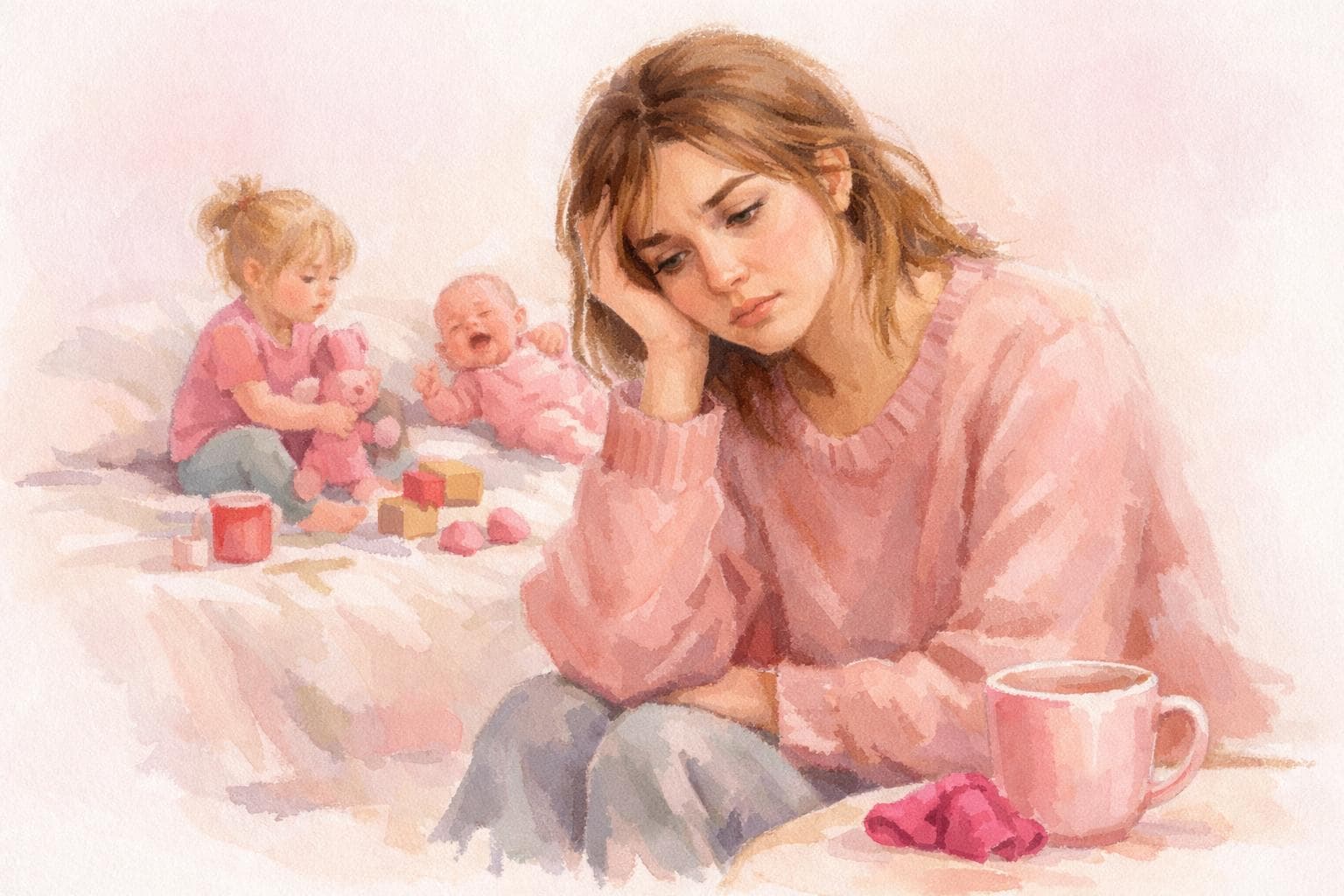
You have heard the phrase "baby blues." But what you are feeling is heavier than that. It has been weeks. You are not sleeping, not because the baby keeps you up, but because your mind will not stop. You cry without knowing why. You feel far away from your own life.
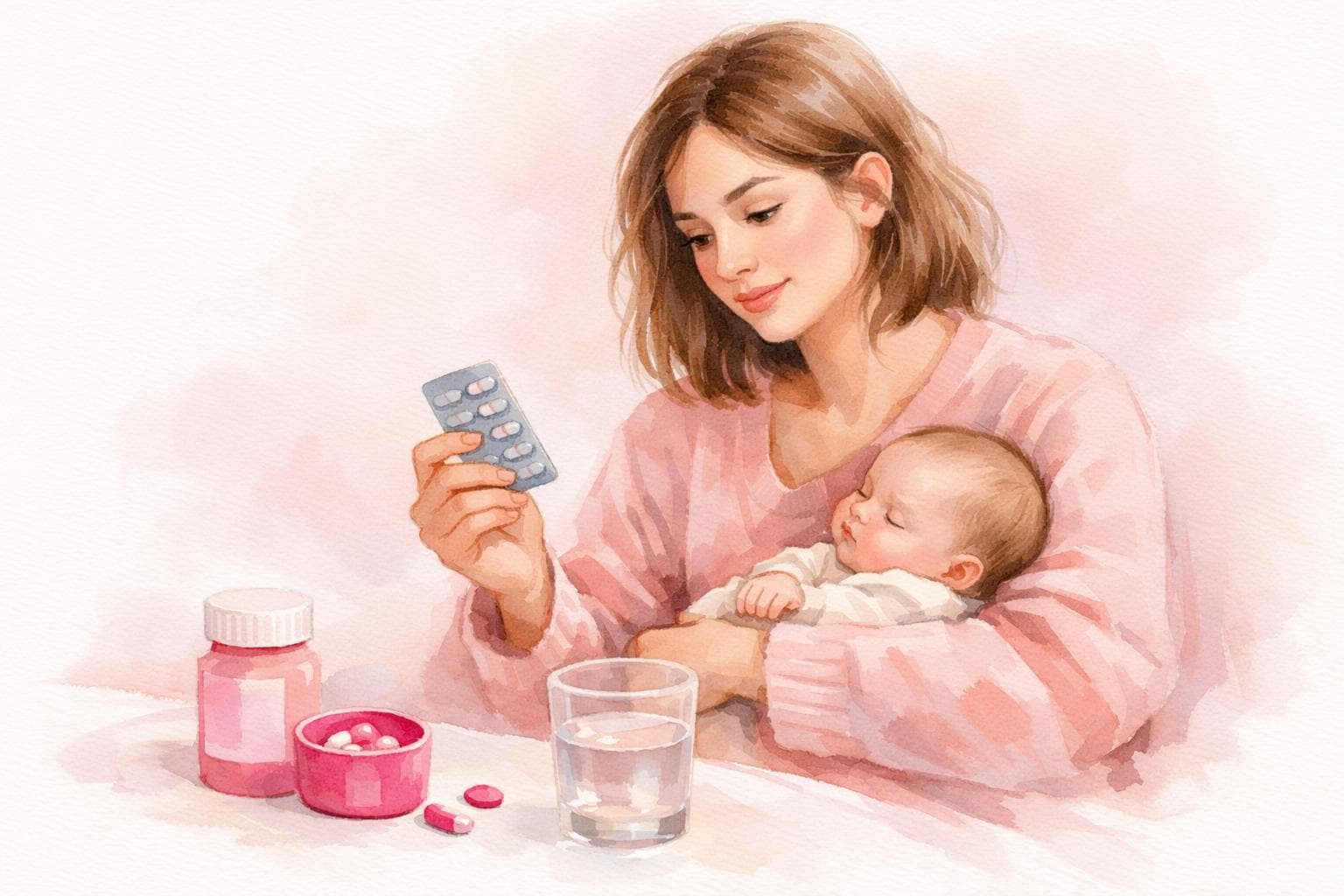
If that sounds familiar, you may be dealing with postpartum depression, and you may be wondering whether medication is the right step. It is a reasonable question, and it deserves a real answer.
What is PPD and how common is it?
Postpartum depression (PPD) is a mood disorder that develops after childbirth. It goes beyond tiredness or emotional adjustment. It affects how you think, feel and function day to day.
A 2021 systematic review published in Translational Psychiatry estimated that PPD affects about 17% of women globally, with significant variation across regions. In some populations, rates can reach 1 in 5 new mothers. That means it is not rare. It is actually one of the most common complications of childbirth.
Yet many women wait months before seeking help, often because they feel ashamed, or because they are not sure their experience "counts." It counts. Always.
When medication might be the right choice
Therapy is effective for postpartum depression, and so is peer support, lifestyle changes and community connection. But medication is often the right tool, particularly when:
- Symptoms are moderate to severe
- Daily functioning is significantly affected
- Sleep deprivation is compounding the depression
- Therapy alone is not enough, or access to therapy is limited
- Symptoms have lasted more than two weeks with no improvement
The decision belongs to you and your doctor. But knowing your options helps you walk into that conversation with confidence.
Types of medication used for PPD
SSRIs: the first-line treatment
Selective serotonin reuptake inhibitors (SSRIs) are the most commonly prescribed medications for PPD. A meta-analysis of randomised controlled trials found that women who received SSRIs showed a response rate of 52.2%, compared to 36.5% in the placebo group, and a remission rate of 46.0% versus 25.7%.
The most studied SSRIs for postpartum depression include:
Medication | Notes |
|---|---|
Sertraline | Most supported by clinical evidence for PPD; low transfer into breast milk |
Escitalopram | Well-tolerated; commonly prescribed |
Fluoxetine | Effective but has a longer half-life; more caution needed during breastfeeding |
Paroxetine | Good efficacy data; also low breast milk transfer |
Among SSRIs, sertraline and paroxetine have the most data supporting safety during breastfeeding. Infant exposure through breast milk appears to be low across the class.
SNRIs
If SSRIs are not effective or cause side effects, your doctor may suggest a serotonin-norepinephrine reuptake inhibitor (SNRI). Venlafaxine, desvenlafaxine and duloxetine all have available data indicating they are compatible with breastfeeding.
Zuranolone: a newer option
In August 2023, the FDA approved zuranolone as the first oral medication specifically designed for postpartum depression. Unlike SSRIs, which can take several weeks to show effect, zuranolone works faster. It is taken once daily for 14 days.
The approval was significant. It gave women a treatment option that acknowledges PPD as its own distinct condition, not just general depression that happens to occur after birth.
Medication and breastfeeding
This is usually the question that stops moms from asking for help. "Is it safe if I'm nursing?"
The short answer: many PPD medications are considered compatible with breastfeeding. A systematic review found that the risk of infant exposure to SSRIs through breast milk is generally low. Your doctor can help you weigh the specific options based on your baby's age and health.
A 2024 consensus panel published recommendations specifically for the pharmacological management of breastfeeding women with PPD, reinforcing that untreated depression also carries risks for both mother and child.
"The risks of untreated postpartum depression are real and significant. For many women, medication is not a last resort. It is a reasonable, evidence-based first step." - Karen Kleiman, LCSW, founder of The Postpartum Stress Center and author of Therapy and the Postpartum Woman
How long does treatment last?
Most guidelines recommend continuing medication for at least 6 to 12 months after remission for women with a low risk of recurrence. Stopping too early increases the chance of symptoms returning.
This is worth discussing with your doctor before you start, so you have a realistic picture of the process from the beginning.
What medication does not fix
Medication reduces symptoms. It does not resolve the underlying pressures of new motherhood: the identity shift, the isolation, the invisible mental load or the emotional exhaustion that builds over time.
That is why most clinicians recommend combining medication with therapy or peer support where possible. CBT and interpersonal therapy both have strong evidence for PPD, and many women find the combination more effective than either approach alone.
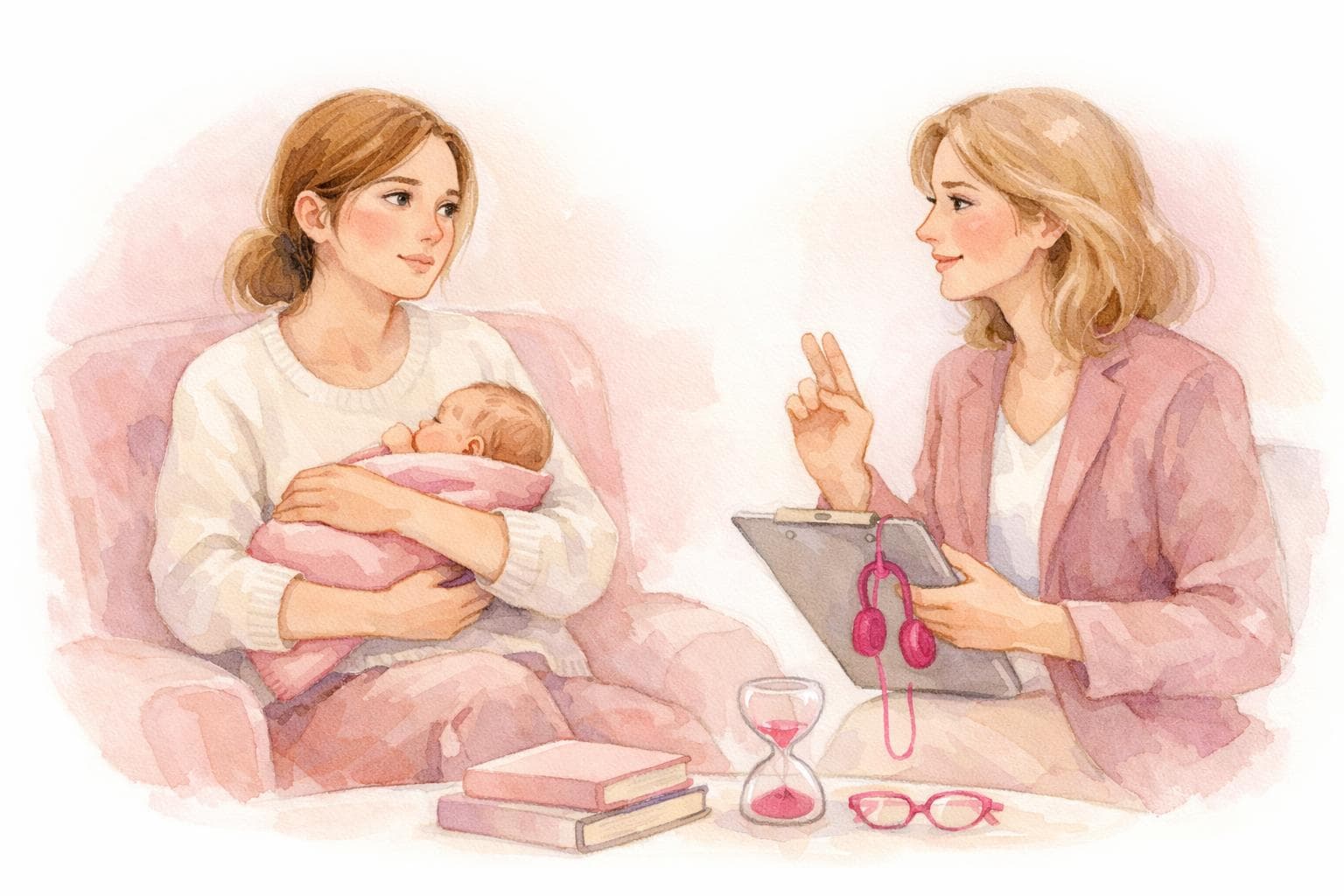
Starting the conversation
If you have been putting off talking to your GP or midwife about how you feel, today is a good day to change that. You can also read about how to ask for help as a mom and how therapy can help moms who feel stuck if you are still figuring out where to begin.
PPD is a medical condition. Medication is a medical tool. Using it is not a sign of failure. It is a sign of a mother who is trying to get well, for herself and for her baby.
Sources and further reading
- Kaufman, Y. et al. (2022). Advances in pharmacotherapy for postpartum depression. Therapeutic Advances in Psychopharmacology. journals.sagepub.com
- EBioMedicine (2023). Therapeutic advances and open questions in postpartum-depression research. ncbi.nlm.nih.gov
- Frontiers in Pharmacology (2022). Comparative efficacy and acceptability of pharmacotherapies for PPD: a network meta-analysis. frontiersin.org
- Kleiman, K. (2009). Therapy and the Postpartum Woman. Routledge.
- American College of Obstetricians and Gynecologists. (2024). Postpartum depression.