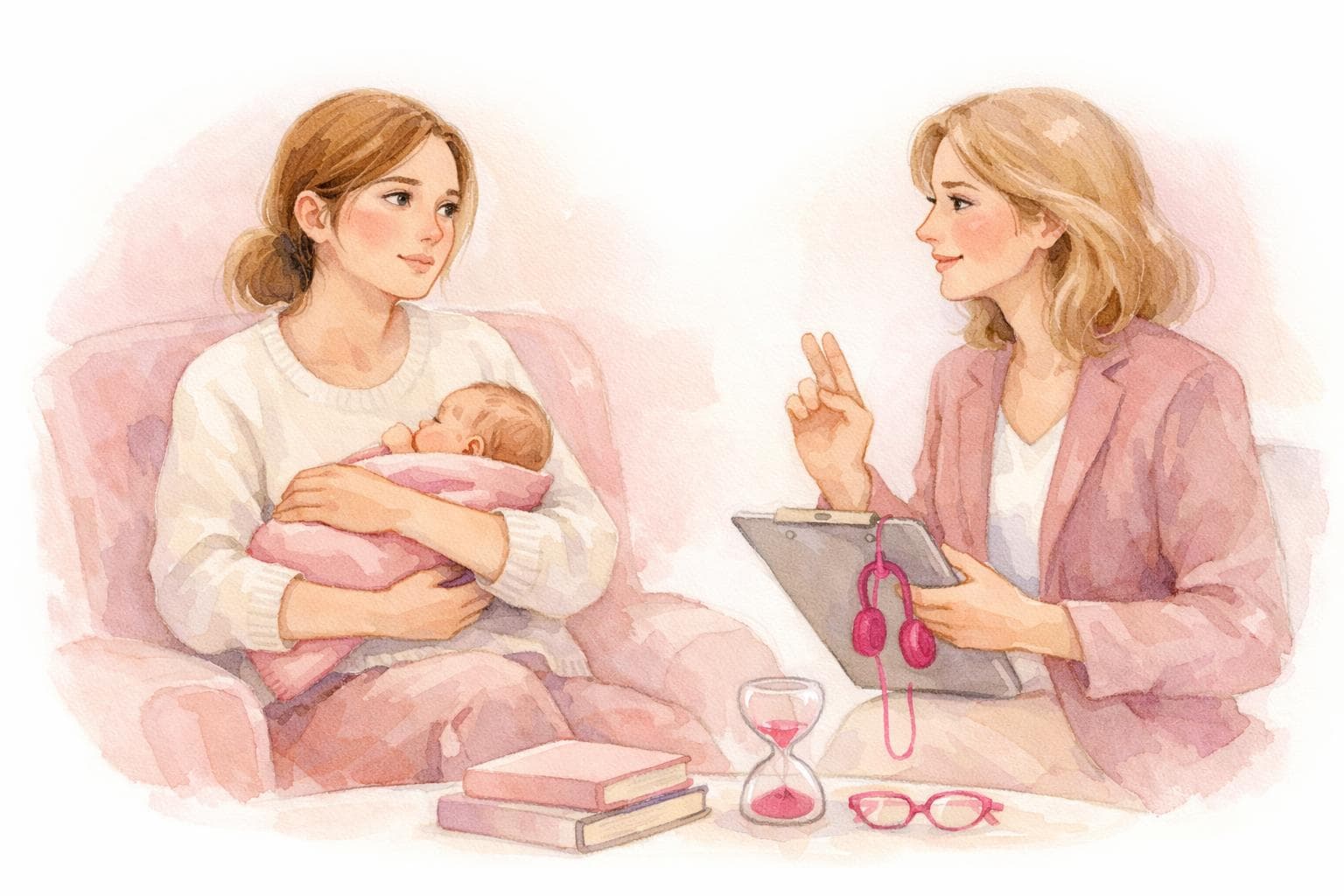
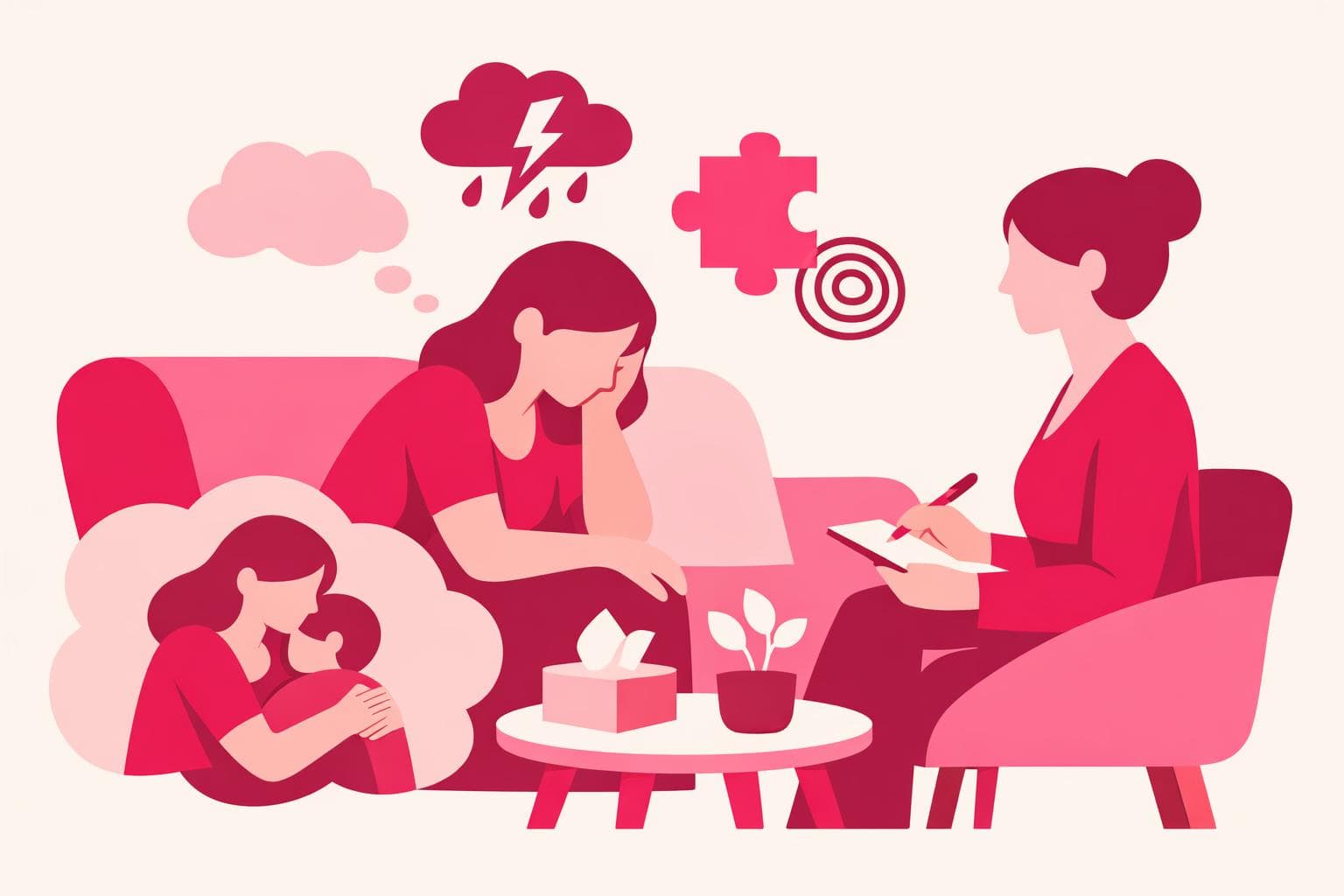
There's a particular kind of stuck that motherhood can produce. Not the ordinary tired-and-overwhelmed kind — though that's real enough — but something quieter and harder to name. You're functioning. You're managing. You're doing everything that's required of you. And yet you feel like you're watching your own life from a slight distance, going through motions that belong to someone else. Or maybe there's an emotion that keeps returning that you can't quite reach the bottom of. Or a version of yourself you've been trying to locate for months.
This is the kind of stuck that therapy is actually built for.
How Many Mothers Are Not Getting Help
The gap between maternal mental health need and maternal mental health care is one of the more quietly alarming statistics in modern medicine. It is estimated that 75% of mothers who experience perinatal mental health conditions never receive treatment — a figure cited by both the George Washington University's Milken Institute School of Public Health and the Maternal Mental Health Leadership Alliance (GWU, 2024).
The reasons are varied, but they consistently include the same few: shame, the belief that what you're feeling is something you should be able to manage on your own, fear of judgment, and the impossibility of finding the logistical space to seek help when you're already at capacity. The American Association of Medical Colleges estimates that about 40% of mothers experiencing postpartum depression symptoms don't seek help — largely driven by stigma and guilt.
Meanwhile, a cross-sectional analysis in JAMA Internal Medicine (2025) confirmed that maternal mental health has meaningfully declined in the US between 2016 and 2023 — with mothers consistently reporting worse mental health than fathers at every measurement point, and mothers of young children carrying disproportionate burden.
"Some patients may not even recognise that they are sick. Many never had a mental health problem before. Then they start waking up in a panic about their baby, or suddenly get the idea that they should kill themselves." — Dr. Erin Bider, Maternal Mental Health Program, University of Kansas Medical Center, speaking to AAMC, 2023
What "Stuck" Actually Looks Like
The word "stuck" is useful precisely because it describes a state that doesn't always look like a crisis from the outside. Mothers who would benefit most from therapy often find the most reasons not to go. Some things that stuck can feel like:
- Repeating the same argument with your partner without resolution, month after month
- A persistent, low-level anxiety that doesn't attach to anything specific
- The sense that you've lost access to yourself, your interests, or the parts of you that existed before motherhood
- Emotional exhaustion that doesn't lift even when you rest
- A feeling of going through the motions — present but not really there
- Mom guilt so entrenched it feels like a permanent background state
- Not being able to locate anything that genuinely restores you
None of these constitute a dramatic breakdown. All of them are reasonable starting points for therapy.
What the Research Shows About Therapy for Mothers
The evidence base here is substantial. A meta-analysis published in Clinical Psychology Review (2022) — examining 79 randomised controlled trials across 2,495 perinatal women — found that CBT (Cognitive Behavioural Therapy) was significantly effective for maternal depression both in the short term and long term, with comparable efficacy for anxiety and stress. The effects held across a range of delivery formats, including individual therapy, group, and online (ScienceDirect, 2022).
A landmark clinical trial published in Nature Medicine (2024), conducted by researchers from Johns Hopkins and the University of Liverpool, found that women who received CBT-based counselling during the perinatal period reduced their odds of developing postpartum depression or anxiety by 81% compared to those who received standard care alone — a significant result, and one suggesting that therapy works far better as early intervention than as emergency response.
Importantly for mothers who feel stuck but not clinically depressed, a 2023 systematic review in BMC Psychiatry — covering 31 studies and over 5,000 participants — found that CBT-based interventions improved not just depression symptoms, but parenting confidence, perceived social support, and sense of parental competence. Therapy, in other words, doesn't just reduce distress. It actively builds capacity.
What Different Types of Therapy Actually Do
The format matters — and different approaches suit different kinds of stuck:
Type of therapyWhat it's particularly good for
CBT (Cognitive Behavioural Therapy)
Identifying thought patterns that maintain anxiety, perfectionism, or low mood
ACT (Acceptance and Commitment Therapy)
Building psychological flexibility; useful for identity-related stuck
IPT (Interpersonal Therapy)
Relationship conflicts, role transitions (like the identity shift of new motherhood)
Narrative therapy
Examining the "good mother" story you've inherited and questioning whether it's yours
Couples therapy
When disconnection with a partner is part of what's maintaining the stuck
Many perinatal-specialist therapists — those trained specifically in maternal mental health — combine elements across these approaches, tailored to where a mother actually is rather than where a checklist suggests she should be.
The Guilt About Asking for Help
This deserves its own moment, because it's what holds most mothers back. There is a deeply socialised belief that needing therapy means you're failing — at motherhood, at coping, at being the person who holds everything together. This belief is not true, but it tends to be extremely resistant to being told it's not true.
What tends to shift it: recognising that every hour spent managing a problem alone uses resources that could go somewhere else. Therapy isn't a confession that you can't cope. It's the strategic decision to stop using coping capacity alone when something more efficient is available.
If burnout has reached the point where the ordinary coping tools — exercise, conversation, self-compassion — no longer reach the bottom of the problem, that's the signal. Not weakness. Information.
How to Begin
The practical barriers to finding a therapist are real — waitlists, cost, the question of who watches the child while you're in session. Some options worth knowing:
- Many therapists now offer evening and weekend appointments specifically for parents
- Online therapy platforms have reduced logistics barriers significantly
- Postpartum Support International (postpartum.net) maintains a provider directory for those seeking specialists in perinatal mental health
- Some GP practices can provide referrals that significantly reduce cost
You do not need to be in crisis to seek support. You do not need to reach a certain threshold of difficulty. If the version of yourself you're living in has been feeling too small, or too exhausted, or too far from whoever you were before — that is enough.
Further reading: Why motherhood feels overwhelming even when you love your child | Postpartum anxiety: how to recognise it and cope | Simple self-care rituals that actually work for moms