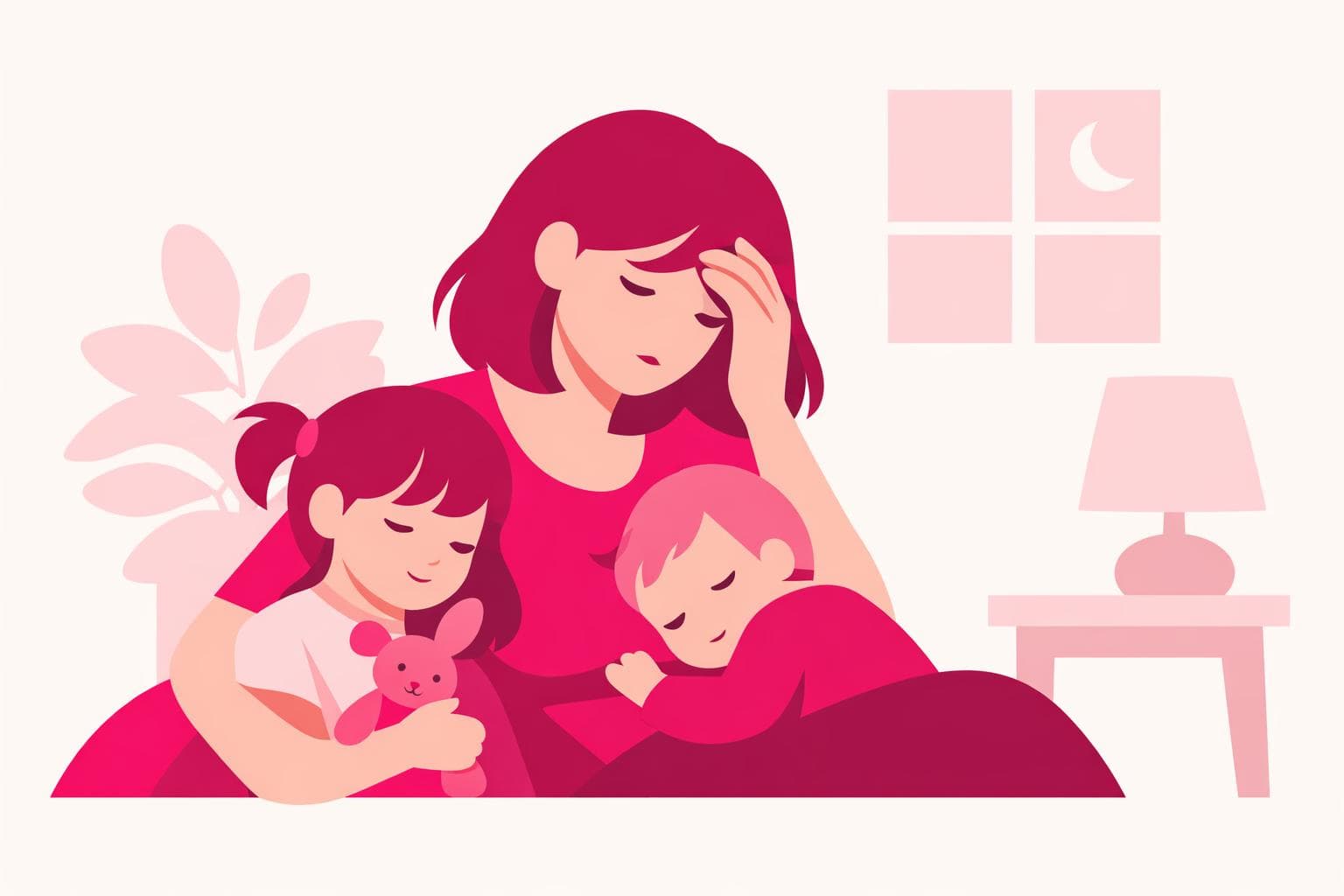
There's a type of tired that sleep doesn't fix. You know the kind — where you've technically had a reasonable night, or even a quiet morning, and you still feel scraped out. Where the thought of one more request from your child, one more decision to make, one more small crisis to navigate, lands somewhere between dread and despair. Where you love your child completely and, in the same breath, find yourself wanting to disappear from your own life for just a few hours.
That specific, particular kind of exhaustion has a name. And understanding it properly might be the most useful thing you do this week.
Tired vs. Emotionally Exhausted: Not the Same Thing
Physical tiredness is relatively simple: your body needs rest and recovery. Emotional exhaustion is different — and researchers have spent the past two decades developing a framework to understand it precisely.
Professors Isabelle Roskam and Moïra Mikolajczak at the Université Catholique de Louvain in Belgium are the leading researchers in what they've named parental burnout — a syndrome distinct from job burnout and different from clinical depression, defined by three specific dimensions:
Overwhelming exhaustion in the parental role — not just tiredness, but feeling emotionally drained by the thought of another day of parenting. Waking up exhausted before the day has even started.
Emotional distancing from your children — not in a cruel way, and not because you don't love them. But a gradual withdrawal, where interactions become more functional and less emotionally present, as a way of conserving whatever is left.
A loss of accomplishment — the sense that you no longer enjoy being a parent, that you can't stand your role anymore, that the person you are as a mother now is a poor version of who you used to be or wanted to be.
Research published in Frontiers in Psychology (Mikolajczak & Roskam, 2018) describes the first symptom precisely: parents "feel tired when getting up in the morning and having to face another day with their children; they feel emotionally drained by the parental role to the extent that thinking about their role as parents makes them feel they have reached the end of their tether" (PMC, 2018).
That sentence might land like recognition.
How Common Is This — Really?
An Ohio State University study found that approximately two-thirds of working parents reported experiencing burnout symptoms. A 2023 systematic review and meta-analysis by Mikolajczak, Aunola, Sorkkila and Roskam — drawing on 49 studies involving over 35,000 parents — confirmed that parental burnout is significantly more prevalent in Western countries, and that mothers consistently score higher on burnout measures than fathers, even in households where parenting involvement is equal (Current Directions in Psychological Science, 2023).
In the US alone, researchers estimate approximately 3.5 million parents experience parental burnout at any given time.
"Burnout is the result of too much stress and the absence of resources to cope with it. You will burn out only if there is an imbalance between stress and resources." — Professor Isabelle Roskam, Université Catholique de Louvain
Why Emotional Exhaustion Hits Mothers Harder
The higher burden on mothers isn't accidental. It accumulates from overlapping pressures:
- The invisible cognitive load. Mothers carry approximately 71% of all household mental load tasks — the anticipating, planning, tracking, and monitoring that happens before any physical task begins. This never switches off.
- Intensive motherhood ideology. Cultural expectations that a good mother is always emotionally available, always prioritising her child, always performing warmth and engagement. When reality doesn't match this, shame compounds exhaustion.
- Perfectionism. Research consistently shows that parental perfectionism — an investment in being the best possible parent — is one of the strongest predictors of burnout. The ideal that is never quite met.
- The absence of legitimate recovery. Leisure time that's constantly interrupted or guilt-tinged isn't restorative. Many mothers never fully switch off.
Signs Worth Recognising
Emotional exhaustion in motherhood looks different to general tiredness. These are some of the signs that researchers identify as specific to parental burnout:
- You wake already dreading the day
- You feel relief when your children are somewhere else, followed by guilt about that relief
- Affection feels effortful — not absent, but harder to access than it should be
- You go through the motions of parenting while feeling mentally absent
- Small requests that once felt normal now feel unbearable
- You find yourself thinking about escaping — not because you don't love your family, but because you're running on empty
- The version of yourself you wanted to be as a mother feels very far away
Roskam and Mikolajczak identified "escape ideation" as a specific symptom of parental burnout — the recurring desire to leave it all, even temporarily — and longitudinal research showed this predicted increased risks of parental neglect and harshness if left unaddressed.
How It Differs From Postpartum Depression
These two conditions overlap but aren't the same. The table below outlines the key differences, though both warrant attention:
Emotional Exhaustion / Parental BurnoutPostpartum Depression
Specific to parenting context — often present only in that role
Pervades all areas of life
Relief when away from children
Persistent low mood even when alone
Love for children still present, just hard to access
May involve emotional detachment throughout
Builds gradually over time from accumulated stress
Can appear suddenly in weeks following birth
Driven by demand-resource imbalance
Involves biological, hormonal, and psychological factors
If postpartum anxiety or depression is present alongside exhaustion, the two tend to compound each other — and professional support is worth seeking for either or both.
What the Research Says Helps
Roskam and Mikolajczak's framework is useful here too: since burnout results from an imbalance between demands and resources, recovery involves either reducing demands or increasing resources — ideally both.
Reducing demands means being honest about what's sustainable. Which commitments actually matter. Where the standards can be lowered without real consequence. Asking for help not as a last resort but as a regular practice.
Rebuilding resources means tending to the things that restore rather than merely recovering from depletion. Not bubble baths, but genuine rest. Connection with people who see you as a person and not just a mother. Movement that feels like care rather than correction.
Self-compassion — consistently demonstrated to reduce parental burnout symptoms — is less about positive thinking and more about refusing to add shame on top of exhaustion. The mom guilt that tells you you're a failure for feeling this way is itself part of the demand side.
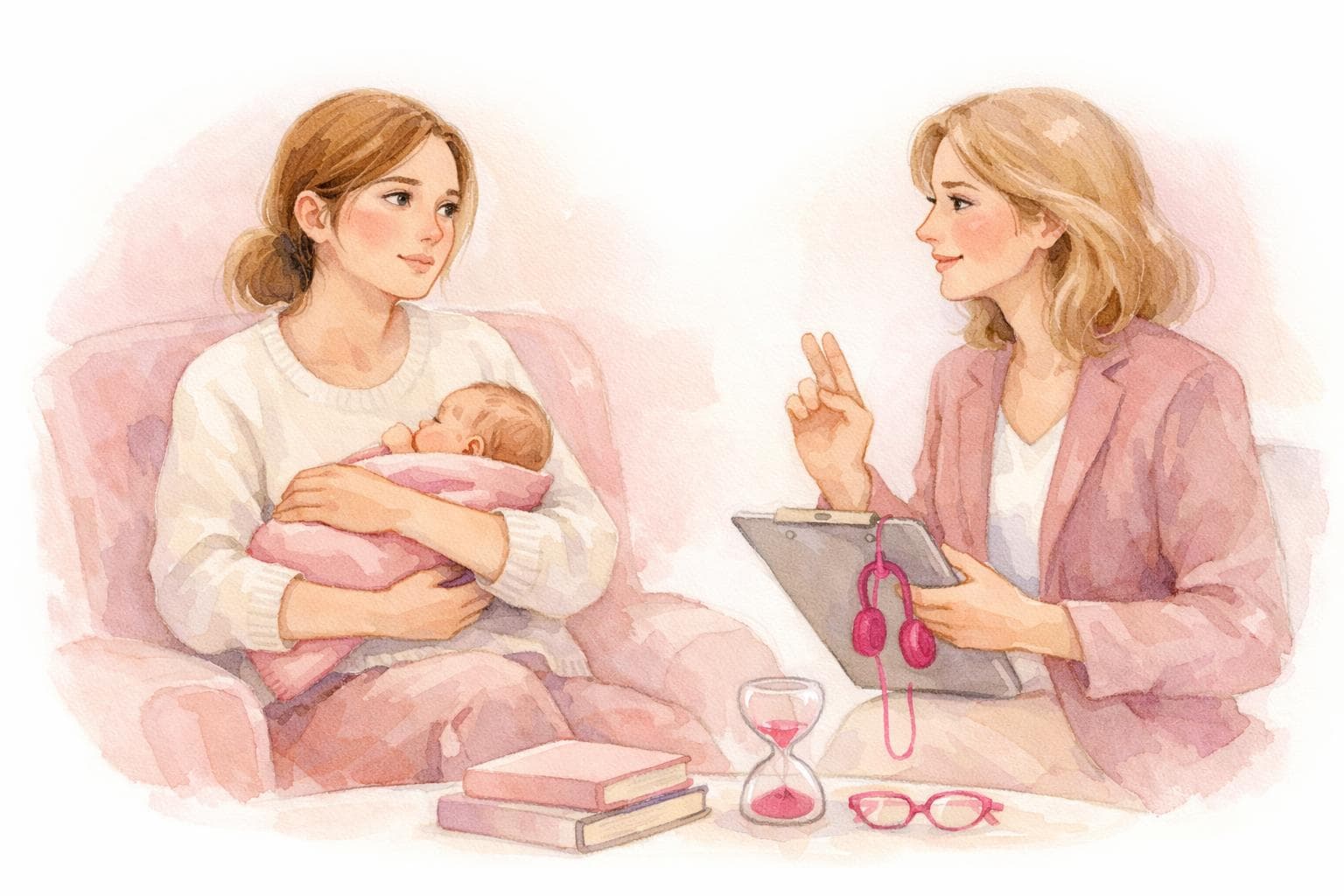
If burnout signs are persistent, professional support is effective and available. Mikolajczak's team found that targeted intervention reduced parental burnout by 37%, parental neglect by 35%, and cortisol levels by 36% over eight weeks. This is not a fixed state.
Emotional exhaustion in motherhood is real, measurable, and remarkably common. It is also not a verdict on you as a mother. It's what happens when demands consistently outpace resources, for long enough. Knowing what it actually is tends to be a useful first step toward changing the equation.
Further reading: Mom burnout: signs you shouldn't ignore | Why motherhood feels overwhelming even when you love your child | Simple self-care rituals that actually work for moms