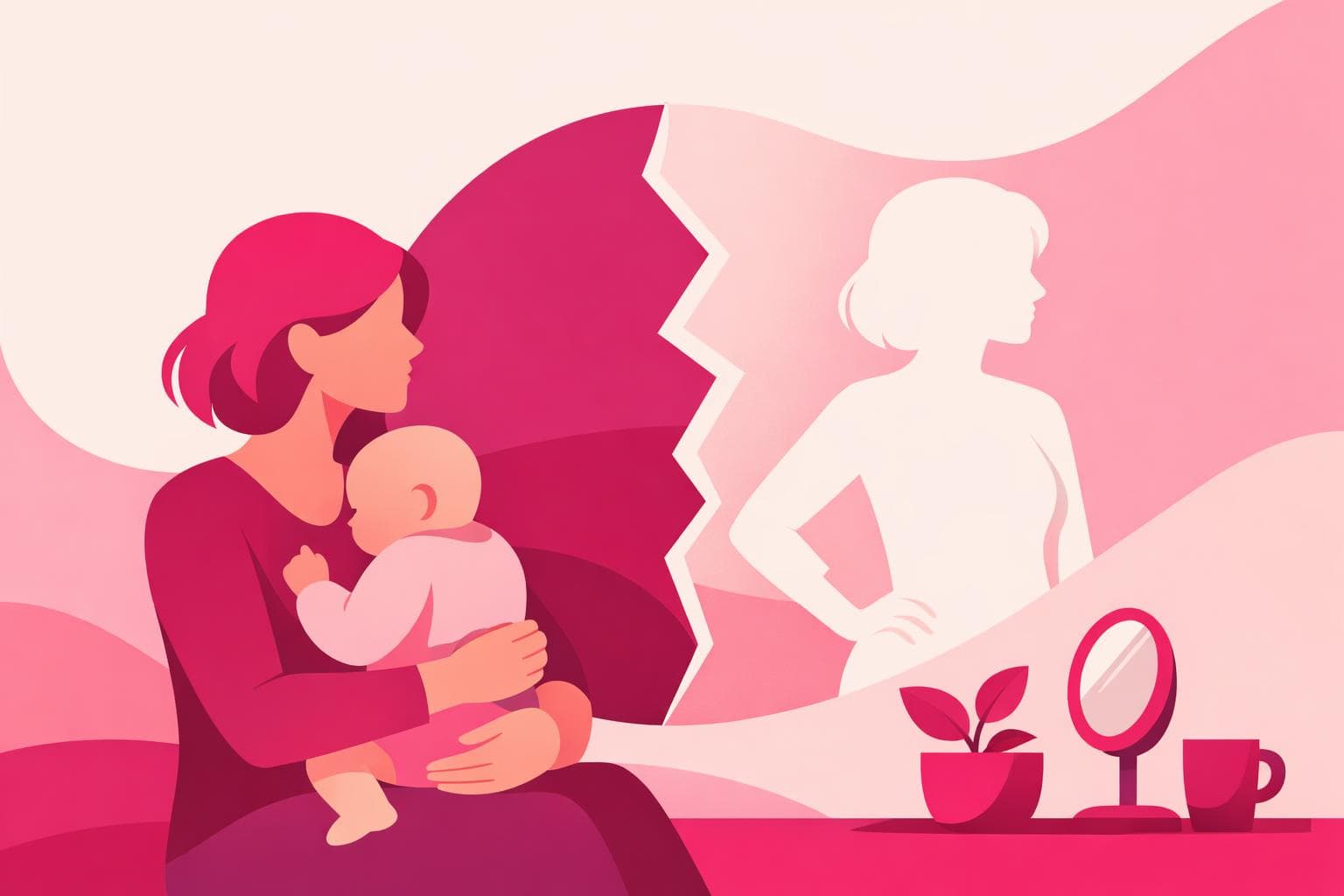
You love your child. That part was never in question. But somewhere between the feeds and the nappies and the relentless management of another person's entire existence, you noticed something else: you couldn't quite locate yourself anymore.
Maybe it crept up slowly. A friend asks what you've been up to and you realise your answer is entirely about the baby. You catch your reflection and feel a strange unfamiliarity. You try to think about what you actually enjoy — what you, specifically, enjoy — and come up blank.
This isn't a character flaw or an ingratitude problem. It has a name, and it's more common than anyone really prepares you for.
There's a Word for This, and It Changes Everything
The term is matrescence — first coined by anthropologist Dana Raphael in the 1970s, and later expanded by Dr. Aurélie Athan of Columbia University's Teachers College to describe "a developmental passage where a woman transitions, through pre-conception, pregnancy and birth, surrogacy, or adoption to the postnatal period and beyond" (Frontiers in Psychiatry, 2024).
Think of it as the motherhood equivalent of adolescence. Nobody expects a teenager to feel coherent and settled mid-way through puberty. The hormonal upheaval, the identity confusion, the sense that the self is being rearranged from the inside out — these are recognised, even expected, as part of that transition. But when the same thing happens in early motherhood, women are largely expected to feel joyful and complete.
A 2023 study published in Trends in Cognitive Sciences by researchers at Yale University and Monash University confirmed what many mothers have experienced viscerally: the transition to motherhood is a genuine neurodevelopmental stage, involving structural brain changes comparable to those seen in adolescence (Orchard, Rutherford, Holmes & Jamadar, 2023). The brain is being restructured. Identity confusion isn't a weakness — it's a by-product of real biological transformation.
And then there's the data on how common it actually is: a 2023 study found that nearly 62% of new mothers felt they had lost part of their identity since becoming a parent (Psychology Today, 2025).
Six in ten. Which means if you're sitting with this feeling, you are very much not sitting with it alone.
What Identity Loss in Motherhood Actually Looks Like
It doesn't always look like a crisis. Often it's quieter than that — more like a gradual dimming.
Signs that your sense of self may be suffering:
- Struggling to answer "so, what do you enjoy?" without mentioning your child
- Feeling like a different person in old photos — not because you look different, but because she feels like a stranger
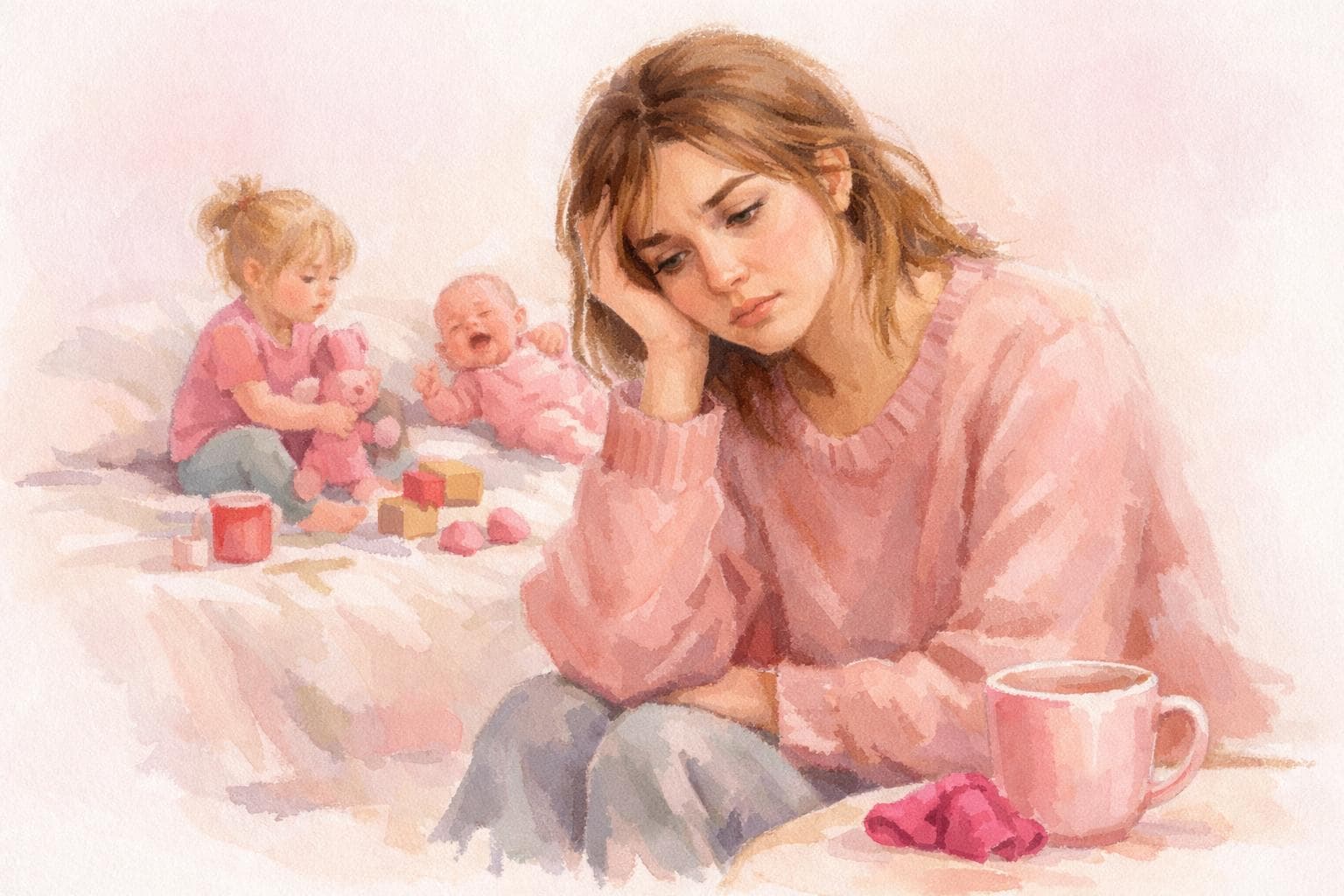
- A persistent flatness even on days when nothing is technically wrong
- Resentment that arrives unexpectedly, then guilt about the resentment
- Avoiding conversations about your pre-baby life because they feel too far away
- Feeling like the version of you that existed before has quietly closed up shop
These aren't signs of ingratitude or bad mothering. They're signs that a significant part of you has been set aside — and that the setting-aside has gone unacknowledged for too long.
"Everyone knows adolescents are uncomfortable and awkward because they are going through extreme mental and bodily changes, but when they have a baby, women are expected to transition with ease — to breeze into a completely new self, a new role, at one of the most perilous and sensitive times in the life course." — Lucy Jones, Matrescence: On Pregnancy, Childbirth, and Motherhood (2023)
Why It Happens: The Identity Structures That Shift
Becoming a mother doesn't just add a new role on top of the ones you already carry. It reorganises the whole structure.
Before motherhoodAfter motherhood
Identity built across multiple roles (professional, friend, partner, creative)
One role becomes dominant and all-consuming
Time and space to express personal values
Those values get deferred — sometimes indefinitely
A clear sense of preferences, rhythms, habits
Preferences shaped around another person's needs
Social identity maintained through diverse relationships
Social world often narrows to those with young children
Body as your own
Body as primarily functional — feeding, carrying, holding
This isn't a moral failure. It's the structural reality of early parenthood, especially when the division of labour and mental load falls disproportionately on one person. Research on the postpartum period describes this as a process of "rebirthing the self" — where previously established layers of identity are questioned, reinterpreted, and gradually integrated with the emerging maternal identity (MDPI Healthcare, 2026).
The challenge is that while babies have developmental milestones, mothers rarely do. Nobody checks in at six weeks to ask how you're doing. The question is almost always about the baby.
If you're also feeling overwhelmed by motherhood in ways you can't quite explain, the identity shift is often underneath it — the invisible architecture of the exhaustion.
How to Begin Finding Yourself Again (Without Abandoning Your Child)
This process isn't about reclaiming the exact person you were before. That would be both impossible and, honestly, not quite right. Matrescence changes you — and some of those changes are worth keeping. The goal is integration, not reversal.
What actually helps:
Name what's happened. The word matrescence itself does work here. Giving a name to something that felt shapeless — this loss, this disorientation — is not a small thing. It transforms private suffering into a recognised human experience.
Identify what you've missed, specifically. Not vaguely ("I feel like myself"). Specifically. Was it reading? Running? Making something with your hands? Conversations that didn't centre on childcare? The specificity matters because it points toward what to reclaim first.
Protect something that is only yours. Not "self-care" in the oversimplified sense — what self-care really means after kids is considerably more grounded than that. One small regular thing that belongs to you alone: a walk, a class, thirty minutes with a book that has nothing to do with parenting.
Resist the pressure to have a settled identity immediately. Just as adolescence takes time to resolve, matrescence is not something you move through in a month. The uncertainty is part of the process, not evidence that you're doing it wrong.
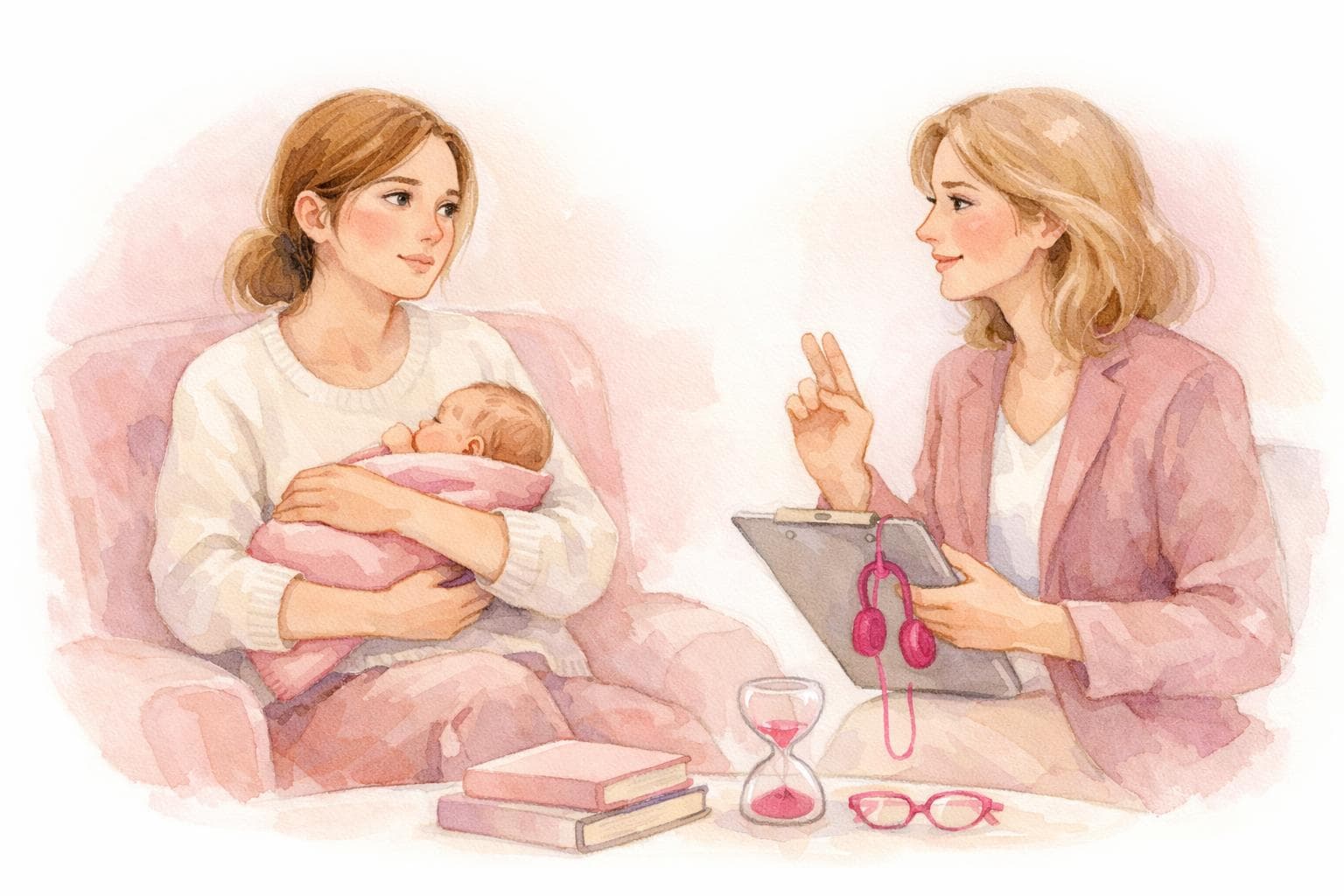
Talk to someone who isn't also in the thick of it. Whether that's a therapist, a trusted friend, or a support structure for managing postpartum anxiety, being witnessed in your experience — rather than just managing it alone — makes a real difference.
The Longer View
The neuroscience research on matrescence contains something quietly encouraging: while the early years involve genuine cognitive challenge, the long-term picture shows increased cognitive reserve in later life (Orchard et al., 2023). The brain isn't just depleted by this experience. Over time, it expands.
You are not disappearing. You are mid-transformation — which is a very different thing.
The person you're becoming isn't a diminished version of who you were. She's more complex. More layered. And she's still in there, even on the days when motherhood feels like it's taken everything.
You just need some space to find her again.
Further reading: How motherhood changes your relationships | Why self-care isn't selfish when you're a mother