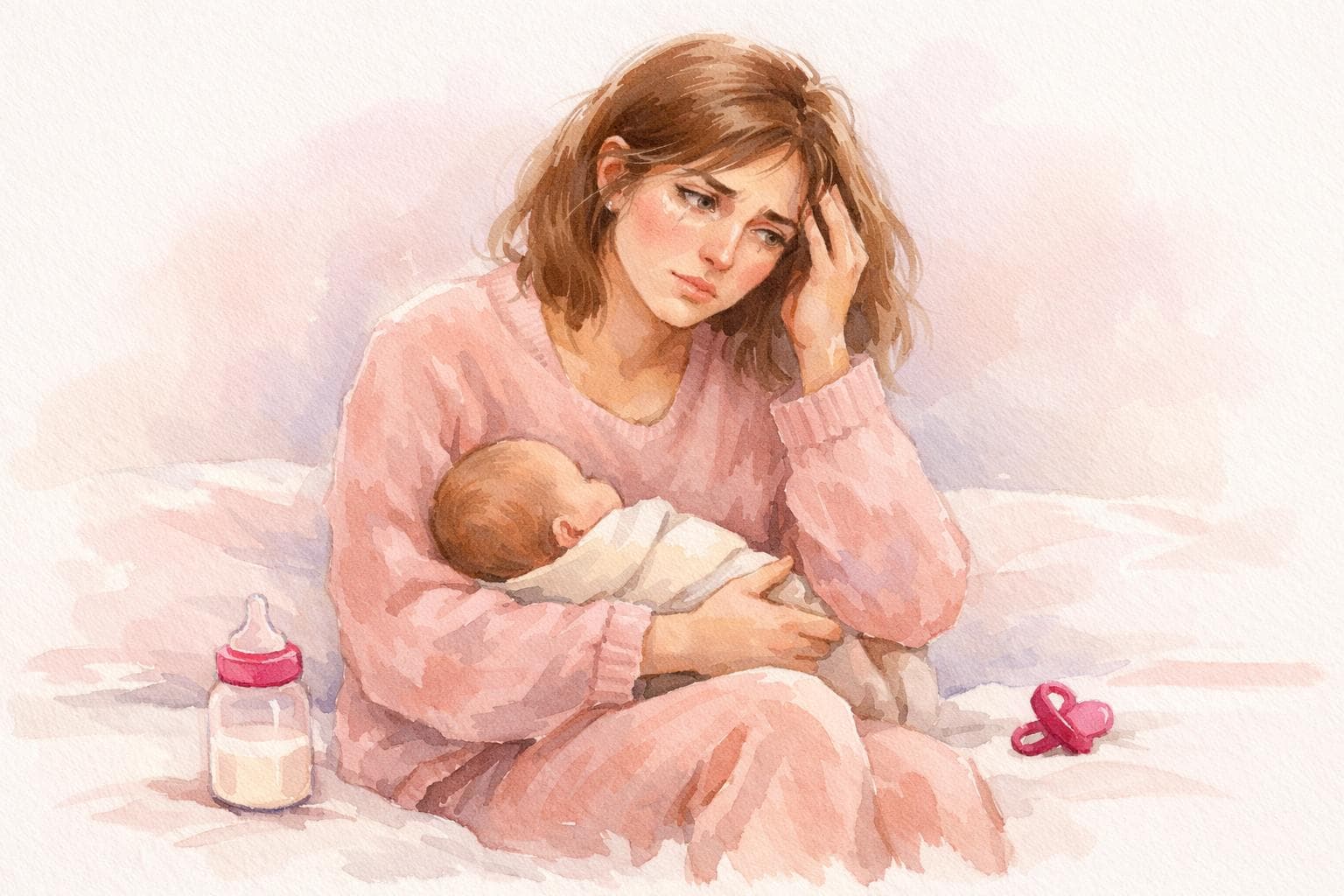
When people picture postpartum depression, they tend to imagine crying. Persistent sadness. A mother who cannot get out of bed, who stares blankly at her baby, who feels nothing.
That picture is real. It is also incomplete.
For a significant number of mothers, postpartum depression does not arrive as sadness. It arrives as fury. A rage that builds quickly and without warning. An irritability so constant it has become the background of every day. A short fuse that triggers over things that should not matter, followed by guilt, followed by the short fuse again.
If this sounds more familiar than the classic description of PPD, this article is for you.
Why anger is a symptom of postpartum depression
Depression, in both men and women, is increasingly understood as a condition that can present in multiple emotional registers, not only sadness. In the DSM-5, the clinical manual used by practitioners in the US, irritability is listed as a core symptom of major depressive disorder alongside low mood. The same is true in the ICD-11 used internationally.
In the postpartum context, anger and irritability as primary symptoms of depression are well documented in the research but consistently underidentified in clinical settings.
A 2021 study published in Archives of Women's Mental Health found that irritability and rage were among the most frequently reported experiences of mothers with confirmed postpartum depression, yet were significantly less likely to be screened for or assessed by health professionals than classic depressive symptoms. The anger was there. It was just not recognised as depression.
A separate 2019 review in Journal of Affective Disorders concluded that maternal anger, when persistent and disproportionate, should be treated as a red flag for perinatal mood disorders and assessed accordingly.
How to tell if rage might be a symptom of PPD
Occasional anger is normal. Everyone gets frustrated. The features that distinguish PPD-related anger from ordinary postnatal stress are different in degree and quality.
Signs that the anger may be a symptom of something more:
- It is frequent, not occasional. Episodes happen most days rather than now and then.
- It is disproportionate. The reaction does not match what triggered it.
- It is not improving over time. It has been weeks or months and things are not getting better.
- It is accompanied by other symptoms. Low mood, difficulty feeling pleasure, persistent anxiety, feeling disconnected from your baby, exhaustion that rest does not fix.
- It frightens you. You are disturbed by how intense the anger feels.
- It is affecting your relationships. Your partner, your children or other relationships are being regularly damaged by episodes of rage.
If several of these apply, the next step is a conversation with your GP, not more strategies for managing the anger alone.
Why it gets misdiagnosed or missed entirely
Several factors contribute to postpartum rage being overlooked.
Screening tools focus on sadness. The Edinburgh Postnatal Depression Scale (EPDS), the most widely used postpartum mental health screening tool, does not directly assess anger or irritability. Mothers whose primary experience is rage may score below the clinical threshold on the EPDS even when they are significantly unwell.
Anger carries different stigma than sadness. Admitting you feel sad after having a baby is difficult. Admitting you feel furious is, for many mothers, even harder. There is a specific shame around maternal anger that can prevent women from naming it, even to a doctor.
Healthcare providers may not ask. If the appointment runs to a standard check list and the mother says she is "a bit stressed," the anger underneath may not surface. Naming it specifically is often necessary.
What helps when anger is a symptom of PPD
The same treatments that are effective for postpartum depression are effective when anger is the primary presentation. The symptom looks different. The underlying condition is the same.
Treatment option | Evidence level | Notes |
|---|---|---|
Cognitive behavioural therapy (CBT) | High | NICE-recommended for perinatal depression |
Antidepressant medication (SSRIs) | High | Several are compatible with breastfeeding |
Interpersonal therapy (IPT) | High | Particularly effective for relationship-related stress |
Peer support programmes | Moderate | Useful alongside clinical treatment |
Combined therapy and medication | Highest | More effective than either approach alone |
The most important thing is that the right name gets attached to what you are experiencing. PPD presenting as rage is still PPD. It responds to the same treatment and deserves the same support.
What to say to your GP
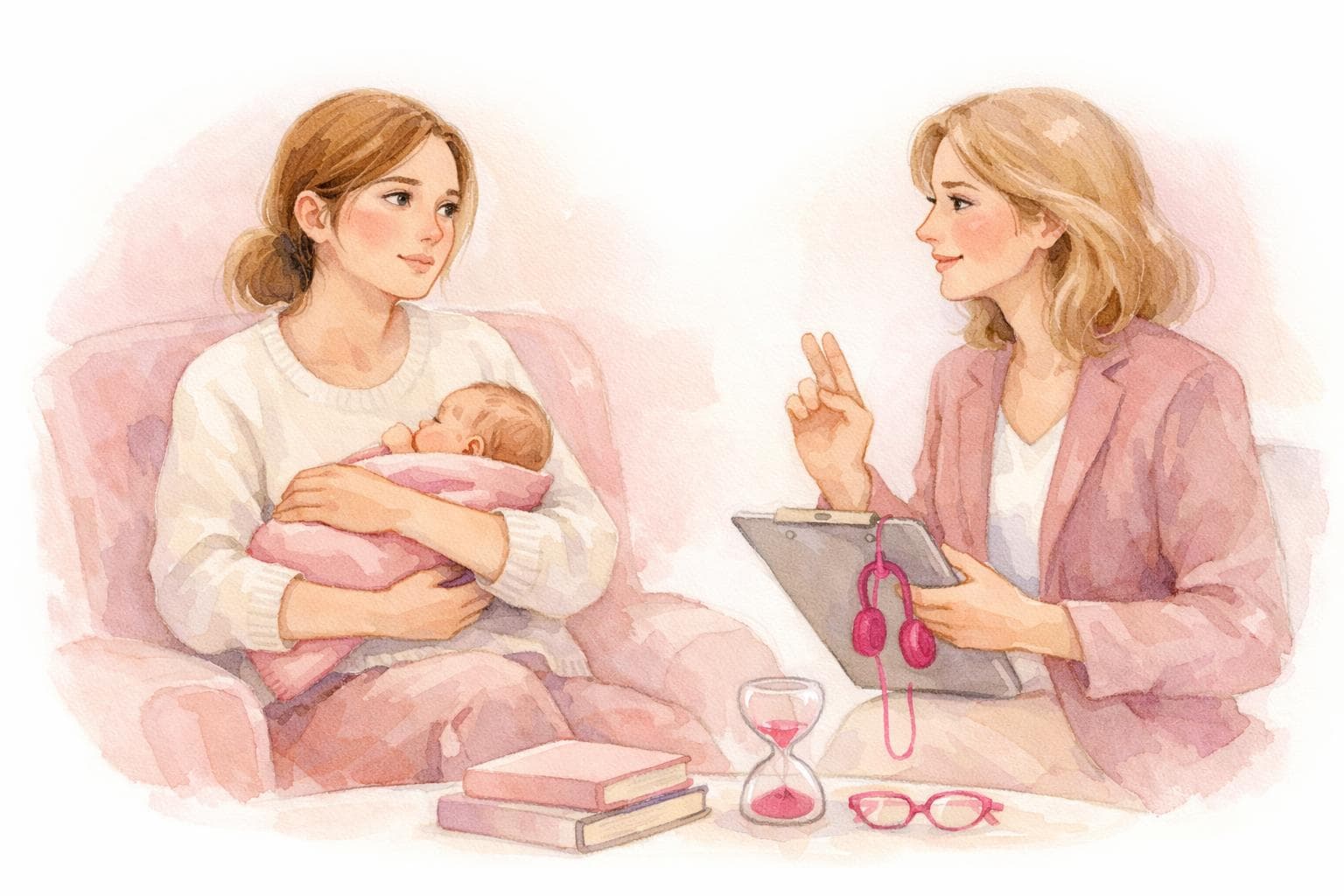
Many mothers find it difficult to name the anger in a clinical appointment. It can feel too extreme, too alarming, too likely to be misinterpreted.
A simple, specific description works. "I've been having frequent episodes of intense anger since having my baby. It's disproportionate to what triggers it, and it's not improving. I'd like to be assessed for postpartum depression."
That is enough to open the right conversation.
"Asking for help is not giving up. It is refusing to give up." - Charlie Mackesy, The boy, the mole, the fox and the horse
For a broader picture of what PPD looks like and how treatment works, how to cope with postpartum depression: getting help without the shame is worth reading alongside this. And if you want to understand postpartum rage specifically before deciding whether to seek help, what is postpartum rage and what causes it? starts at the beginning.
The anger is not who you are. It is a symptom of something treatable. That distinction matters enormously.
If you are experiencing thoughts of harming yourself or your baby, contact your GP or midwife immediately. UK: Samaritans 116 123. US: 988 Suicide and Crisis Lifeline. PSI: postpartum.net.
Further reading: Karen Kleiman & Valerie Raskin, This isn't what I expected (2013). Postpartum Support International: postpartum.net. PANDAS Foundation UK: pandasfoundation.org.uk.