Published: February 21, 2026 • Last updated: July 28, 2026
Everyone tells you about the sleep deprivation. They mention the crying, yours and the baby's. They might even warn you about the baby blues. But nobody prepared you for the constant, relentless worry that settled into your chest the moment you brought your child home and simply never left.
If you're reading this at 3am with one hand on your baby's chest just to feel it rise and fall, you're not losing your mind. You might be experiencing postpartum anxiety, and it's far more common than anyone told you.
Postpartum anxiety is a perinatal mood disorder marked by persistent, excessive worry that goes beyond normal new-parent concern, distinguished from ordinary worry by its inability to settle even when reassured, and from postpartum depression by its physical, agitated presentation rather than low mood. Research published in The British Journal of Psychiatry estimates that approximately 15% to 18% of women experience clinically significant anxiety symptoms in the first weeks after birth, and Mental Health America puts the figure at roughly 1 in 5, noting that partners can be affected too. Yet despite these numbers, postpartum anxiety remains drastically under-discussed, largely because most antenatal classes and screening tools focus on depression first.
What postpartum anxiety actually is
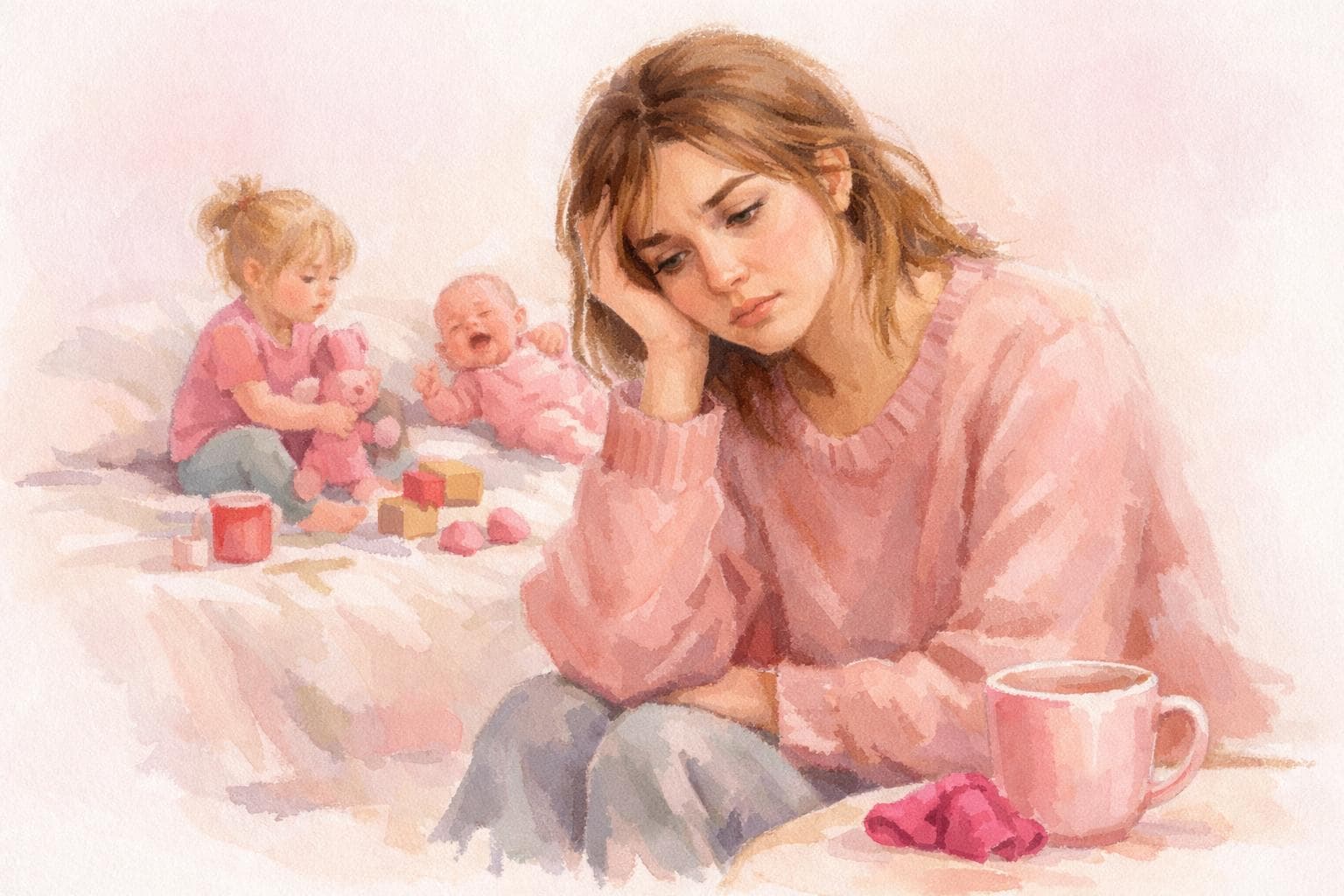
While some worry after having a baby is completely natural, PPA takes it further into racing thoughts, physical tension, and a sense of dread that doesn't ease even when everything is objectively fine.
Most mothers with PPA never get identified because they don't look depressed, they look busy, vigilant, and in control. Underneath, they're barely holding on. If you want a more detailed, symptom-by-symptom way to check where your own experience falls, our postpartum anxiety symptom checklist walks through the GAD-7 criteria that clinicians actually use, since standard postnatal screening still tends to ask about sadness far more than it asks about worry.
Why it happens: the biology you didn't ask for
Your body goes through a staggering hormonal shift after delivery. During pregnancy, levels of oestrogen and progesterone rise dramatically to support your baby's development. Within 24 to 48 hours after birth, those hormone levels plummet back to pre-pregnancy levels, creating a biochemical upheaval that directly affects mood regulation.
According to Johns Hopkins Medicine, this sudden drop in progesterone is linked to postpartum mood disturbances because the hormone acts on the brain to help balance mood. When it crashes, your nervous system is left exposed, more reactive to stress, more sensitive to perceived threat.
Add sleep deprivation, physical recovery from birth, the overwhelming responsibility of keeping a human alive, and a society that expects you to be glowing about it, and the conditions for anxiety are almost inevitable.
Risk factors for developing PPA include:
- a personal or family history of anxiety or depression
- a traumatic or complicated birth experience
- a baby with health complications or a high-needs temperament
- limited support from a partner, family, or community
- previous pregnancy loss
- a history of perfectionism or high need for control
The signs most people miss
Postpartum anxiety doesn't always look like panic attacks and hyperventilation. More often, it's quiet and constant, a low hum of dread that colours every interaction.
Common signs of postpartum anxiety:
- racing or intrusive thoughts about the baby's safety
- inability to sleep even when the baby is sleeping
- physical symptoms: racing heart, tight chest, nausea, dizziness
- checking on the baby repeatedly, even when you know they're fine
- irritability or a feeling of being constantly on edge
- difficulty concentrating or making simple decisions
- a sense that something terrible is about to happen, without reason
That last one is the hallmark. PPA often presents as a nameless, shapeless worry that attaches itself to whatever is nearest, the baby's breathing, the car seat installation, whether you sterilised the bottles properly. If irritability has started tipping into something closer to anger rather than worry, our guide to postpartum rage and how it connects to anxiety covers that specific, less-discussed presentation.
The worry isn't protecting you. It's exhausting you. And recognising the difference is the first step toward getting help.
Postpartum anxiety vs. baby blues vs. postpartum depression
These three conditions share some overlap, which is part of why PPA gets missed so often. Understanding the differences matters because the right support depends on knowing what you're dealing with.
Baby blues | Postpartum anxiety | Postpartum depression | |
|---|---|---|---|
When it starts | Days 2 to 3 after birth | Days to weeks after birth | Weeks to months after birth |
How long it lasts | Up to 2 weeks | Persists beyond 2 weeks | Months if untreated |
Main feeling | Tearfulness, mood swings | Constant worry and dread | Sadness, numbness, hopelessness |
Sleep | Disrupted but can rest | Can't sleep even when baby sleeps | Sleeping too much or too little |
Affects daily life | Mildly | Significantly | Severely |
Needs treatment | Usually resolves on its own | Yes, therapy and/or medication | Yes, therapy and/or medication |
How common | 50% to 75% of new mothers | 15% to 20% of new mothers | Roughly 14%, or 1 in 7 |
Sources: Johns Hopkins Medicine, Cleveland Clinic, NCBI StatPearls
It's also worth noting that PPA and PPD frequently coexist. A Croatian study of 272 new mothers found that 75% of those with postpartum depression also had anxiety. If you recognise yourself in more than one column, that's not unusual and it doesn't mean you're beyond help. Our guide to how to know if you have postpartum depression covers that side of the overlap in more depth.
What intrusive thoughts are and what they're not
One of the most frightening features of postpartum anxiety is intrusive thoughts. These are unwanted, often disturbing mental images or scenarios that flash through your mind, dropping the baby, the baby stopping breathing, something terrible happening while you're not watching.
They are not desires. They are not predictions. They are your anxious brain running worst-case simulations on a loop because it's trying to protect you.
Research from Postpartum Support International explains that these intrusive thoughts arise partly from the neurochemical changes after birth, drops in serotonin and dopamine combined with elevated cortisol create conditions where the brain's threat-detection system runs in overdrive.
If you're disturbed by the thoughts, that itself is evidence that you would never act on them. Mothers with PPA are terrified by what they think, which is the opposite of wanting it. If these thoughts feel frequent, ritualised, or accompanied by checking and avoidance behaviours rather than passing worry, our deeper guide on intrusive thoughts, anxiety versus OCD covers the specific distinction and why it matters for treatment.
Having a scary thought doesn't make you a scary person. It makes you a mother with an overloaded nervous system.
How to cope, honestly
There's no Instagram-friendly trick that fixes postpartum anxiety. But there are real, evidence-based strategies that help.
Talk to your GP or midwife. The Edinburgh Postnatal Depression Scale (EPDS) is the most widely used screening tool in postnatal care and can help identify both depression and anxiety, though it was designed primarily to catch depression. A score above 10 suggests further evaluation is warranted. If your healthcare provider only asks about sadness and not worry, tell them about the anxiety specifically, it's frequently overlooked, and ask directly for the GAD-7, a tool built specifically for anxiety rather than depression.
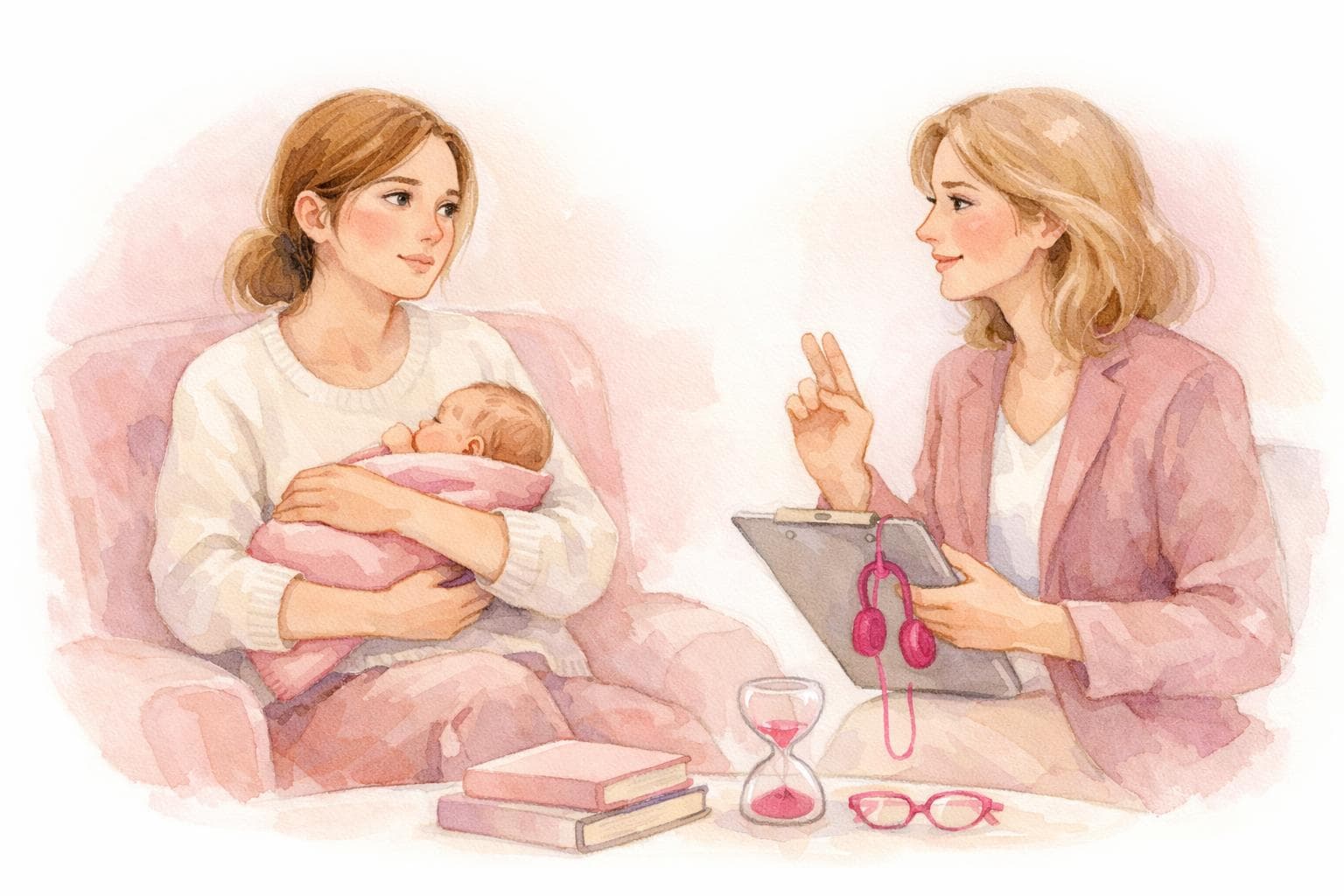
Consider therapy. Cognitive Behavioural Therapy (CBT) is one of the most effective treatments for postpartum anxiety. It helps you identify anxious thought patterns and build practical strategies for interrupting the cycle. If leaving the house feels impossible, many therapists now offer virtual sessions. Our guide to treating postpartum anxiety: 6 evidence-based options, ranked compares CBT against medication and other approaches by strength of evidence, and our 8 questions to ask when vetting a therapist helps you find someone specifically trained in perinatal mental health rather than general anxiety.
Don't dismiss medication. SSRIs are considered safe for breastfeeding mothers in many cases, and for some women, they're the thing that makes everything else possible. This isn't failure. It's chemistry.
Lower the bar for yourself. Perfectionism and postpartum anxiety feed each other directly. If you're the kind of person who researches everything, plans everything, and holds yourself to an impossible standard, your anxiety has excellent fuel. Give yourself permission to be a good enough mother, not a perfect one.
Tell someone. Isolation makes anxiety louder. Whether it's a partner, a friend, an online group, or a Postpartum Support International helpline, breaking the silence is one of the most powerful things you can do. You are not burdening anyone. You are being brave.
Protect your sleep. This sounds absurd with a newborn, but even one uninterrupted stretch of 3 to 4 hours can make a measurable difference to your nervous system. Ask your partner, a family member, or a postpartum doula to take one feed so you can rest.
You're not broken, you're overwhelmed
Postpartum anxiety is not a sign that you're not cut out for motherhood. It's a sign that your body and brain have been through a seismic event and your nervous system hasn't caught up yet.
The mothers who worry the most are almost always the ones who care the most. That worry is misplaced love, and with the right support, it doesn't have to run your life.
If anything in this article felt familiar, please talk to someone. You deserve to enjoy this time, not just survive it.
Key takeaways
- Postpartum anxiety affects roughly 15% to 20% of new mothers, yet remains under-discussed because most screening tools and antenatal classes focus on depression rather than worry.
- The core distinguishing feature is that worry does not settle with reassurance. A racing heart, checking behaviours and dread that persist even when everything is objectively fine separate PPA from ordinary new-parent concern.
- Intrusive thoughts about the baby's safety are common and are not a sign of danger. The distress they cause is itself evidence they will never be acted on; frequent, ritualised versions of these thoughts warrant a closer look at whether OCD, not just anxiety, is part of the picture.
- PPA and postpartum depression frequently coexist, with one study finding 75% overlap, so it is common and treatable to recognise yourself in more than one category.
- CBT and SSRIs both have strong evidence behind them, and asking specifically for the GAD-7, not just the standard depression screen, gives your provider a clearer picture of what you're actually experiencing.
Frequently asked questions
What are the main signs of postpartum anxiety?
Postpartum anxiety involves persistent, excessive worry, racing thoughts, physical tension, and a sense of dread that doesn't ease even when things seem fine. It can also include compulsive checking of the baby, insomnia, irritability, or difficulty concentrating.
How common is postpartum anxiety after childbirth?
Estimates vary, but research suggests roughly 15% to 18% of women show clinically significant anxiety in the weeks after birth, with some sources saying about 1 in 5 people are affected. Partners can also experience perinatal anxiety, and many cases go undiagnosed because symptoms don't always look like depression.
What causes postpartum anxiety?
Postpartum anxiety is driven by multiple factors including the sudden hormonal shifts after delivery, sleep deprivation, stress, and personal or family history of anxiety. Biological changes interact with the intense new responsibilities and lack of rest to increase vulnerability to persistent worry.
How is postpartum anxiety different from the baby blues or postpartum depression?
The baby blues are common, short-lived mood swings and tearfulness that typically resolve within two weeks, while postpartum anxiety involves ongoing, excessive worry and physical symptoms. Postpartum depression usually features persistent low mood, loss of interest and energy, and can co-occur with anxiety but has a different symptom profile and often requires targeted treatment.
When should I seek help and what can I do to cope right away?
Contact your healthcare provider if worry is overwhelming, interfering with daily functioning, or if you have thoughts of harming yourself or the baby; get immediate help in a crisis. Effective steps include talking with a clinician about therapy, like CBT, or medication, improving sleep and support, and joining support groups or asking partners and family for practical help.
Sources and further reading
- Dennis, C.L. et al. Prevalence of antenatal and postnatal anxiety: systematic review and meta-analysis. The British Journal of Psychiatry. cambridge.org
- Mental Health America. Postpartum anxiety. mhanational.org
- Johns Hopkins Medicine. Postpartum mood disorders: what new moms need to know. hopkinsmedicine.org
- Postpartum Support International. Navigating the biological landscape: hormones, genetics, and neurotransmitters in postpartum depression. postpartum.net
- Croatian cohort study (2024). Coexistence of postpartum depression and anxiety in 272 new mothers. pmc.ncbi.nlm.nih.gov
- Mikolajczak, M. & Roskam, I. (2018). Parental burnout and perfectionism. Frontiers in Psychology.