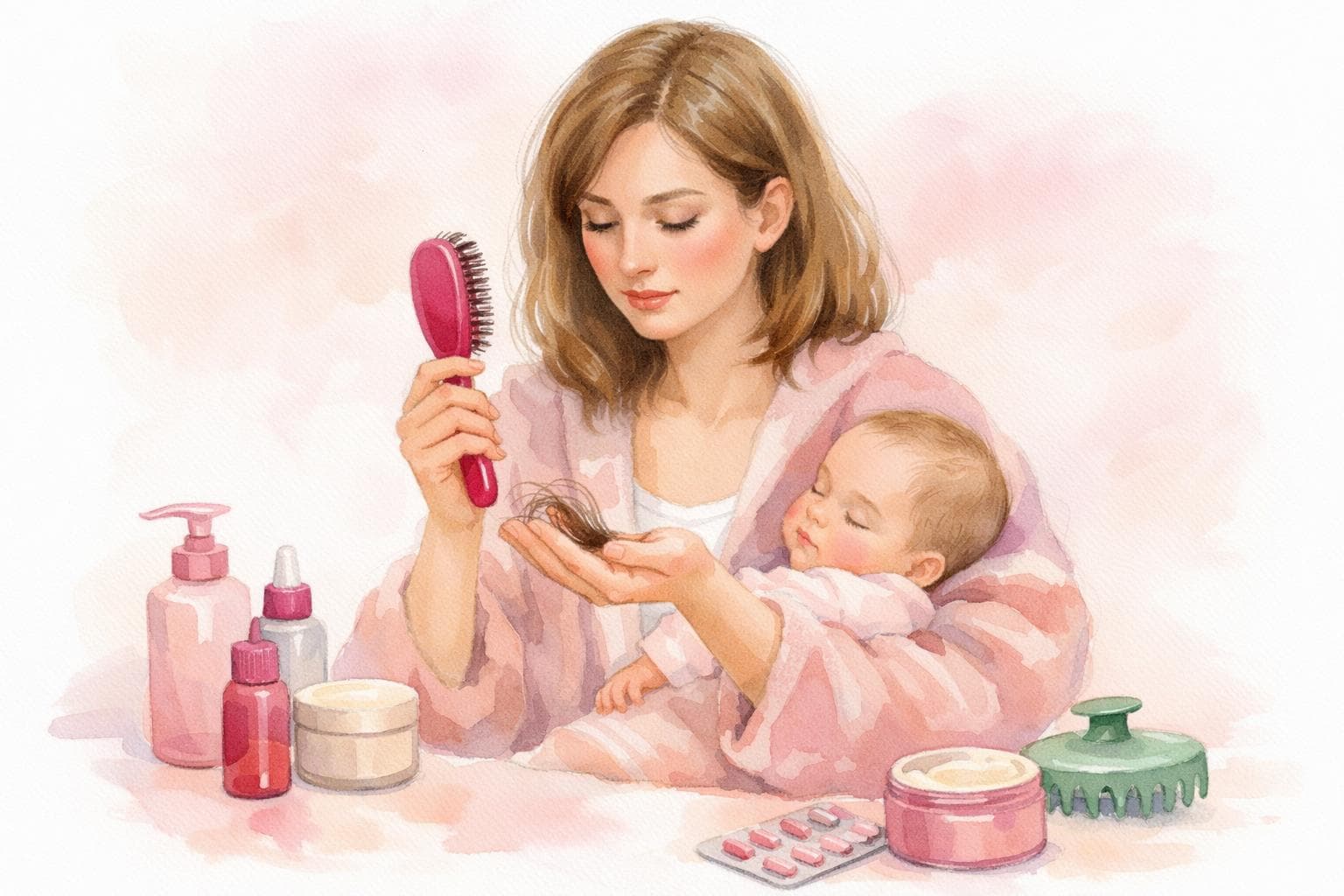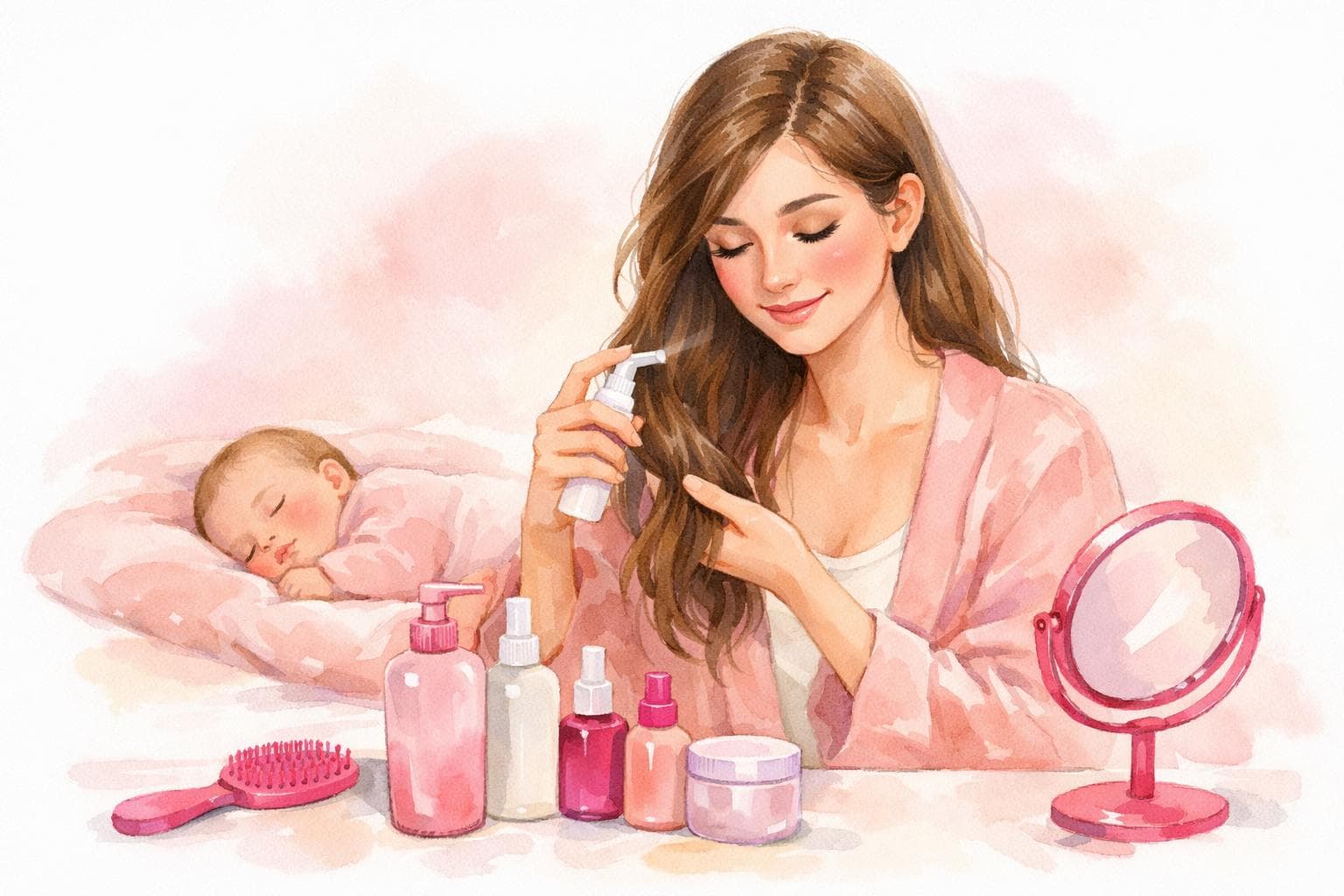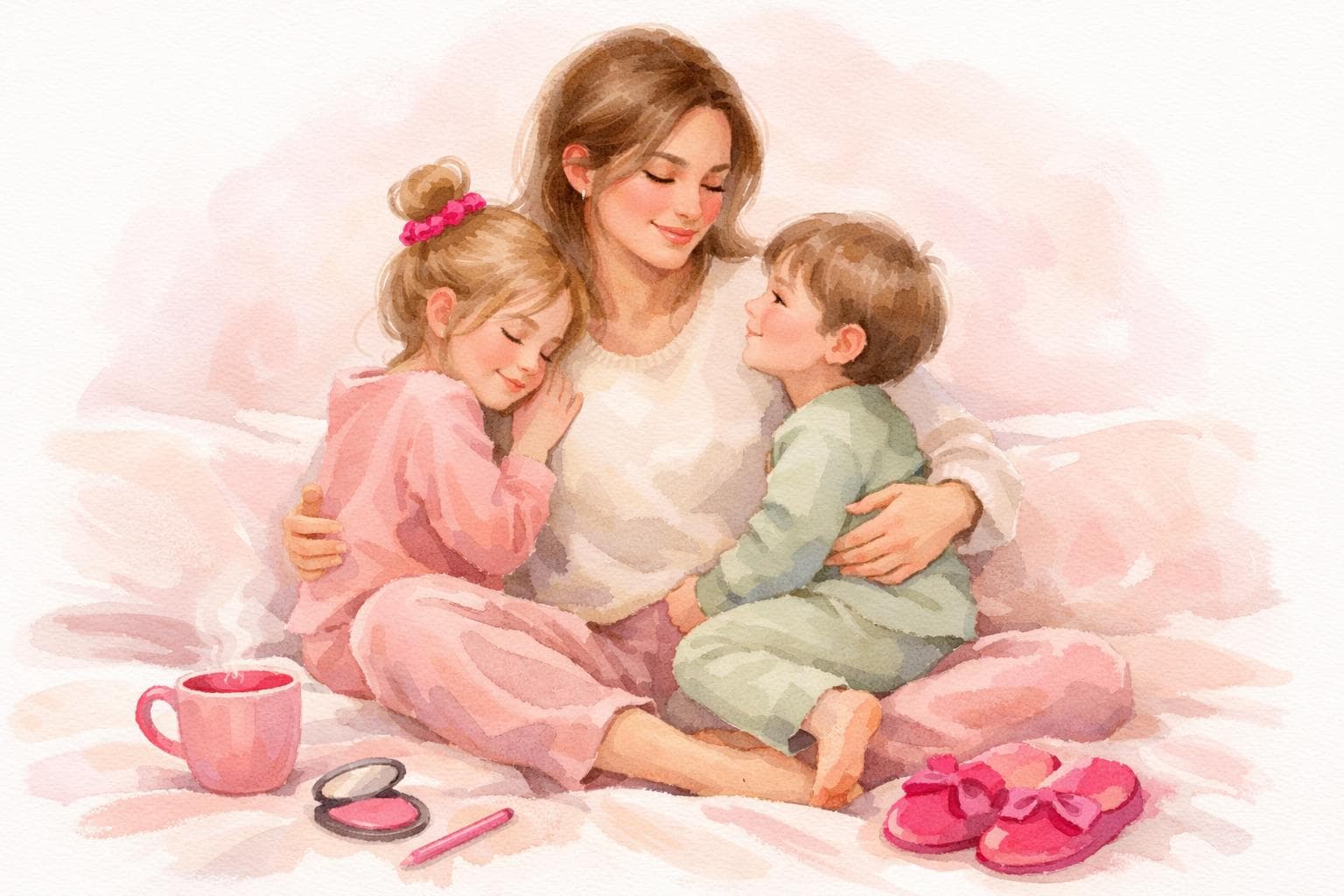
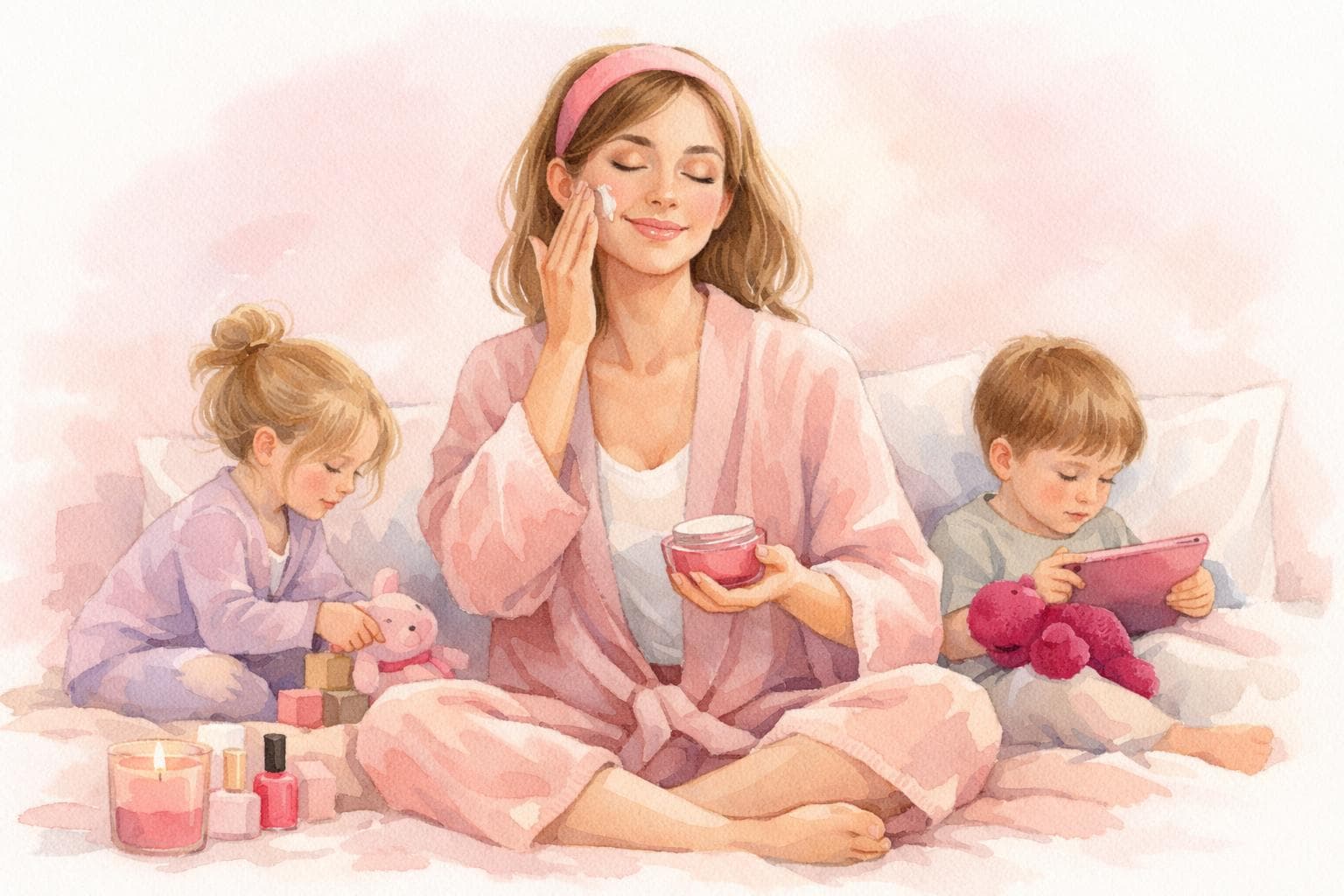
There's a particular kind of guilt that only mothers seem to carry. The guilt of the bath taken while the baby naps. The guilt of the coffee drunk hot. The guilt of wanting genuinely, quietly wanting an afternoon that belongs entirely to you.
It's there even when nobody is watching. Maybe especially then.
But here's what the research says, plainly and without sentiment: when a mother consistently neglects her own needs, it doesn't make her more devoted. It makes her more depleted. And depletion has consequences not just for her, but for the people she loves most.
Self-care for moms isn't a luxury. It's maintenance. And it's time we stopped treating it like something that needs to be earned.
Where the "Selfish" Myth Comes From
The idea that good mothering requires self-erasure is cultural, not biological. It's woven into the stories we tell about motherhood — the selfless mother, the endlessly patient mother, the mother who gives until there's nothing left, and is somehow admired for it.
Dr. Kristin Neff, Associate Professor at the University of Texas and one of the world's leading researchers on self-compassion, describes the bind this creates precisely: women are socialised to be tender and nurturing toward others, but not toward themselves. Being self-sacrificing is framed as virtue. Saying "I need something too" gets read as selfishness.
The problem is that this framing is not only unfair, it's counterproductive.
"Self-compassion provides an island of calm, a refuge from the stormy seas of endless positive and negative self-judgment." - Dr. Kristin Neff, University of Texas at Austin
Research consistently shows that self-compassion the ability to treat yourself with the same kindness you'd offer a friend is strongly linked to lower anxiety, lower depression, and greater emotional resilience (Neff, Annual Review of Psychology, 2023). For mothers specifically, higher self-compassion has been associated with reduced guilt around health-promoting behaviours and greater ability to actually follow through on them (ResearchGate, 2020).
In other words: being kinder to yourself makes you better at caring for others. That's not a self-help platitude. It's what the data shows.
What Happens When Mothers Stop Prioritising Themselves
The clinical term is parental burnout, and it's more widespread than most people realise.
A 2023 survey of more than 700 parents across the US found that 57% reported experiencing burnout and the drivers weren't random. They were directly tied to internal and external pressure to be "perfect": fear of judgment from others, impossibly high self-expectations, and a chronic sense of never doing enough (Ohio State University College of Nursing, 2024).
Parental burnout isn't ordinary tiredness. Researchers describe it as an exhaustion disorder — characterised by emotional depletion specific to the parenting role, distance from one's children, and the loss of satisfaction in being a parent (Mikolajczak, Aunola et al., Current Psychology, 2023). Crucially, burnout doesn't stay contained within the parent. Studies show it directly impacts children's emotional regulation, behaviour, and mental health.
If you've been feeling the signs of mom burnout the irritability, the emotional numbness, the sense of going through the motions these aren't signs of weakness. They're the predictable result of a system running without enough input.
What Self-Care Actually Looks Like (Versus What We're Sold)
The wellness industry has done something unfortunate to the concept of self-care. It's been repackaged as candles and face masks and expensive retreats things you feel vaguely guilty about purchasing, which rather defeats the purpose.
What research-backed self-care actually looks like for mothers is considerably more ordinary, and considerably more important:
What we're often told self-care looks like / What research says actually helps
Bubble baths, spa days, "treating yourself" / Regular sleep, even imperfect sleep
Scheduled "me time" blocked into a calendar / Feeling permitted to rest without justification
Mindfulness retreats / Brief moments of self-compassion throughout the day
Hitting the gym for an hour / 90 minutes of moderate activity across a week
Switching off completely / Maintaining one or two sources of personal identity outside of parenting
On that last point: a meta-analysis of 186,412 women found that 90 minutes of physical activity per week significantly reduced the risk of postpartum depression (Frontiers in Psychiatry, 2022). Not 90 minutes a day. 90 minutes a week — spread across however many sessions works.
Small, consistent, sustainable. That's the model.
The Permission Problem
The most common barrier to self-care isn't time, though time is genuinely scarce. It's permission. Many mothers find it almost impossible to rest without justifying it to themselves, to their partners, to the ambient judgement they've internalised from everywhere else.
This is where the guilt gets structural. It's not just a feeling; it shapes behaviour. Mothers who score higher on mother guilt scores consistently engage less in health-promoting behaviours, even when the time and access are available (Miller & Strachan, 2020).
Some of what makes this harder:
- The belief that needing rest is a reflection of inadequacy
- Comparing yourself to an imagined version of other mothers who "seem to have it together"
- Conflating self-care with selfishness because no one ever drew a clear line between the two
- Postpartum anxiety that shows up as hypervigilance the inability to actually switch off even when given the chance
And if motherhood already feels overwhelming before you even get to self-care, you're not starting from zero. You're starting from a deficit.
A More Honest Framing
Here's what might be worth holding onto.
Self-care is not the opposite of caring for your children. It is, in the most practical sense, part of it. A mother who sleeps, who has some version of a self outside of her role, who is permitted to feel and express her own needs, that mother has something left to give. Not infinite patience (that's not real for anyone), but genuine presence.
Dr. Neff frames it this way: self-compassionate individuals are more intrinsically motivated to make changes that serve their wellbeing not because they care less about others, but because they care about themselves too. That's not selfishness. That's a fully human way to live.
Three small places to start:
- Notice the internal voice that tells you rest needs to be earned, and question it once just once today
- Identify one thing that genuinely restores you (not what should restore you) and do it without apology this week
- Read about what self-care really means after kids not the Instagram version, but the honest one
You are not the last priority in your own life. That shift in thinking, small as it sounds, changes everything.
Further reading: How to stop feeling like you're failing as a mom | Mom burnout: signs you shouldn't ignore