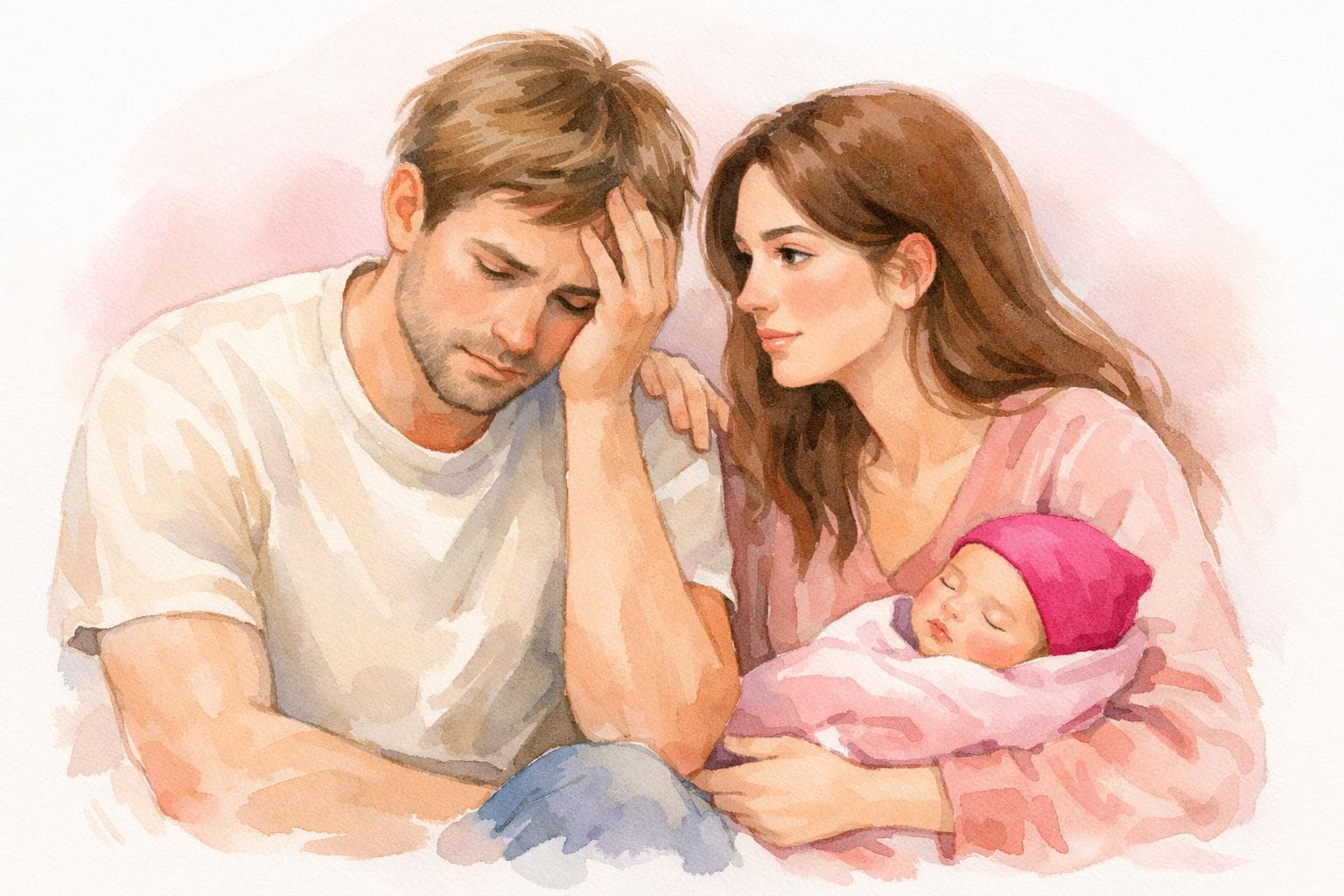
He is not sleeping. You assumed it was the baby. He is irritable. You assumed it was stress. He has pulled back from the things he used to enjoy. You assumed he was adjusting.
But what if it is not adjustment? What if the man standing next to you in this new chapter is experiencing the same thing you have been screened for, talked to about and warned about, while nobody has asked him a single question about how he is doing?
Paternal postpartum depression is real. It is common. And it is one of the most under-recognised conditions in family health.
How common is it?
A comprehensive meta-analysis of 47 studies involving over 20,000 fathers found that the prevalence of postpartum depression in dads is 8.75% across the first year. That means roughly 1 in 10 new fathers experiences clinical depression after the birth of a child.
A 2025 prospective study of 200 fathers in Singapore found that when screened with the standard EPDS, 5.26% met criteria for depression at one month postpartum. But when screened with the Gotland Male Depression Scale, which captures symptoms more commonly expressed by men, 14.3% showed moderate depressive symptoms. The gap between those two numbers tells you something important: the tools we use matter, and the standard ones were not built for men.
Postpartum Support International's 2026 clinical standards now recommend routine screening for partners at the 6-week and 4-month mark, using an adjusted EPDS cutoff of 5/6 for fathers.
"Most research on postpartum depression has predominantly focused on mothers, leaving a gap in understanding fathers' experiences and help-seeking behaviours." - Elyasi et al. (2025), PMC
Why it looks different in men
Paternal PPD does not always look like maternal PPD. The overlap exists, but the presentation often diverges in ways that make it harder to spot.
Maternal PPD (typical) | Paternal PPD (typical) |
|---|---|
Sadness, tearfulness, hopelessness | Irritability, anger, frustration |
Withdrawal from the baby | Withdrawal from the family as a whole |
Anxiety about the baby's safety | Reckless or impulsive behaviour |
Loss of interest in daily life | Overworking or emotional numbing through distraction |
Difficulty bonding | Difficulty engaging, feeling disconnected or inadequate |
Seeking help or expressing distress | Masking distress, self-medicating with alcohol or screens |
A narrative review published in Cureus (2024) noted that paternal PPD frequently presents with irritability, low mood, sleep disturbances, fatigue and loss of interest, but also with symptoms rarely flagged in maternal screening: increased aggression, substance use, risk-taking and withdrawal into work.
This matters because when depression looks like anger, partners and clinicians do not see it as depression. They see it as a difficult person.
What causes it
A 2024 systematic review identified the most influential risk factors for paternal postpartum depression:
- Maternal depression. This is the strongest predictor. When the mother is depressed, the father's risk increases significantly. The conditions feed each other.
- Relationship conflict. Couples who were already strained before the baby are at higher risk.
- Male gender role stress. The pressure to provide, to be strong, to not complain, creates an internal conflict that suppresses help-seeking.
- Sleep deprivation. The same biological mechanism that affects mothers affects fathers.
- Lack of social support. Men typically have fewer close friendships and fewer spaces where emotional disclosure is normalised.
- History of depression or anxiety. Pre-existing mental health conditions increase vulnerability.
A randomised controlled trial in China found that couple-based interpersonal therapy significantly reduced depressive symptoms in both mothers and fathers at 6 weeks and 6 months postpartum, suggesting that paternal PPD responds to treatment when it is actually offered.
How it affects the whole family
Paternal depression does not stay contained. A Health Affairs article on perinatal mental health and father inclusion described how paternal PPD impacts maternal mental health, the couple relationship, father-infant bonding and child developmental outcomes.
Research shows that children of fathers with untreated PPD are more likely to experience emotional and behavioural difficulties by age three. The mechanism is not mysterious: a depressed father is less emotionally available, less engaged in play and more likely to withdraw or react with frustration.
This is not blame. It is information. And it is the strongest argument for screening and treating fathers alongside mothers.
Why nobody screens dads
The system is built for mothers. Postnatal check-ups are booked for the woman who gave birth. The EPDS is handed to the person who delivered. Fathers sit in the waiting room, or they stay at home, and nobody asks them how they feel.
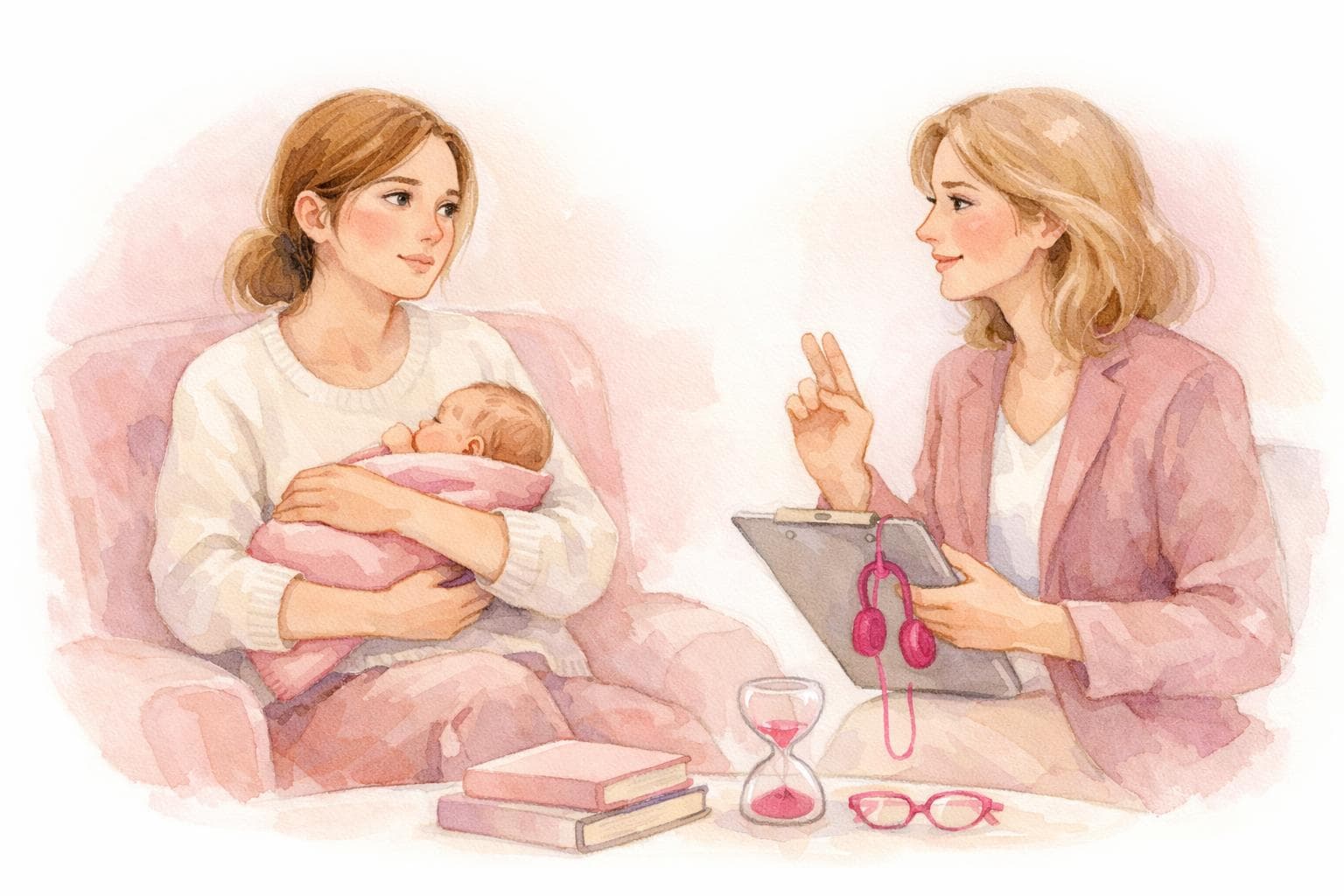
The AAP encourages paediatricians to consider screening the mother's partner at the 6-month infant well-child visit. But in practice, this rarely happens. And even when it does, the EPDS was validated for women. Using it on men without adjusting the cutoff can miss a significant proportion of cases, as the Singapore study demonstrated.
The Gotland Male Depression Scale, which includes items about irritability, aggression, alcohol use and self-blame, catches what the EPDS does not. It is not yet widely used, but it should be.
What you can do as a partner
If you are reading this as the mother, wondering whether your partner is struggling:
- Name what you see without diagnosing. "I have noticed you seem different lately. Not bad. Just different. How are you actually doing?" is a safer opening than "I think you are depressed."
- Share this article. Sometimes the most helpful thing is showing someone that what they are feeling has a name and a research base.
- Normalise the conversation. "1 in 10 dads go through this" removes the stigma faster than any reassurance can.
- Suggest screening, not therapy. For many men, "could you fill in this questionnaire?" is less threatening than "I think you need to see someone."
- Protect the relationship. If both of you are struggling, couples therapy is not a luxury. Gottman's And Baby Makes Three is a research-based starting point.
What you can do as the father
If you are reading this about yourself:
- Acknowledge what you are feeling. Not what you think you should be feeling. What is actually there.
- Talk to your GP. You can ask for a depression screen. It takes five minutes.
- Know that treatment works. CBT, IPT and SSRIs are all effective for paternal PPD. You do not have to live like this.
- Stop comparing your experience to your partner's. She carried the baby. You are carrying something else. Both are real.
- Read about what is happening. Our guides to CBT for postpartum depression, medication for PPD and choosing the right provider apply to fathers too.
This is a family condition
Postpartum depression does not belong to one parent. It lives in the household. When the mother is screened but the father is not, the family is half-assessed. When the father is struggling but invisible, the mother carries the weight of two unwell adults plus a newborn.
If your relationship is feeling the strain, our article on how a baby changes your relationship with your partner and the piece on emotional exhaustion in motherhood both touch on the relational pressure that intensifies when either parent is unwell.
You both deserve to be asked. You both deserve to be heard. And you both deserve treatment if you need it.
Sources and further reading
- Wang, T. et al. (2019). Prevalence of prenatal and postpartum depression in fathers: a comprehensive meta-analysis. Journal of Affective Disorders. sciencedirect.com
- Chua, J.S. et al. (2025). Struggles of fatherhood: incidence of paternal postpartum depression and associated factors. Journal of Clinical Nursing. pubmed.ncbi.nlm.nih.gov
- Attia Hussein Mahmoud, A. et al. (2024). Impact of paternal postpartum depression on maternal and infant health: a narrative review. Cureus. pmc.ncbi.nlm.nih.gov
- MDPI. (2024). Postpartum depression in fathers: a systematic review. Journal of Clinical Medicine. mdpi.com
- Health Affairs. (2024). Perinatal mental health: father inclusion at the local, state, and national levels. healthaffairs.org
- Phoenix Health. (2026). 2026 perinatal screening guide. PSI clinical standards. joinphoenixhealth.com
- Gottman, J.M. & Gottman, J.S. (2007). And Baby Makes Three. Harmony Books.