The version of new motherhood that gets celebrated does not include this part.
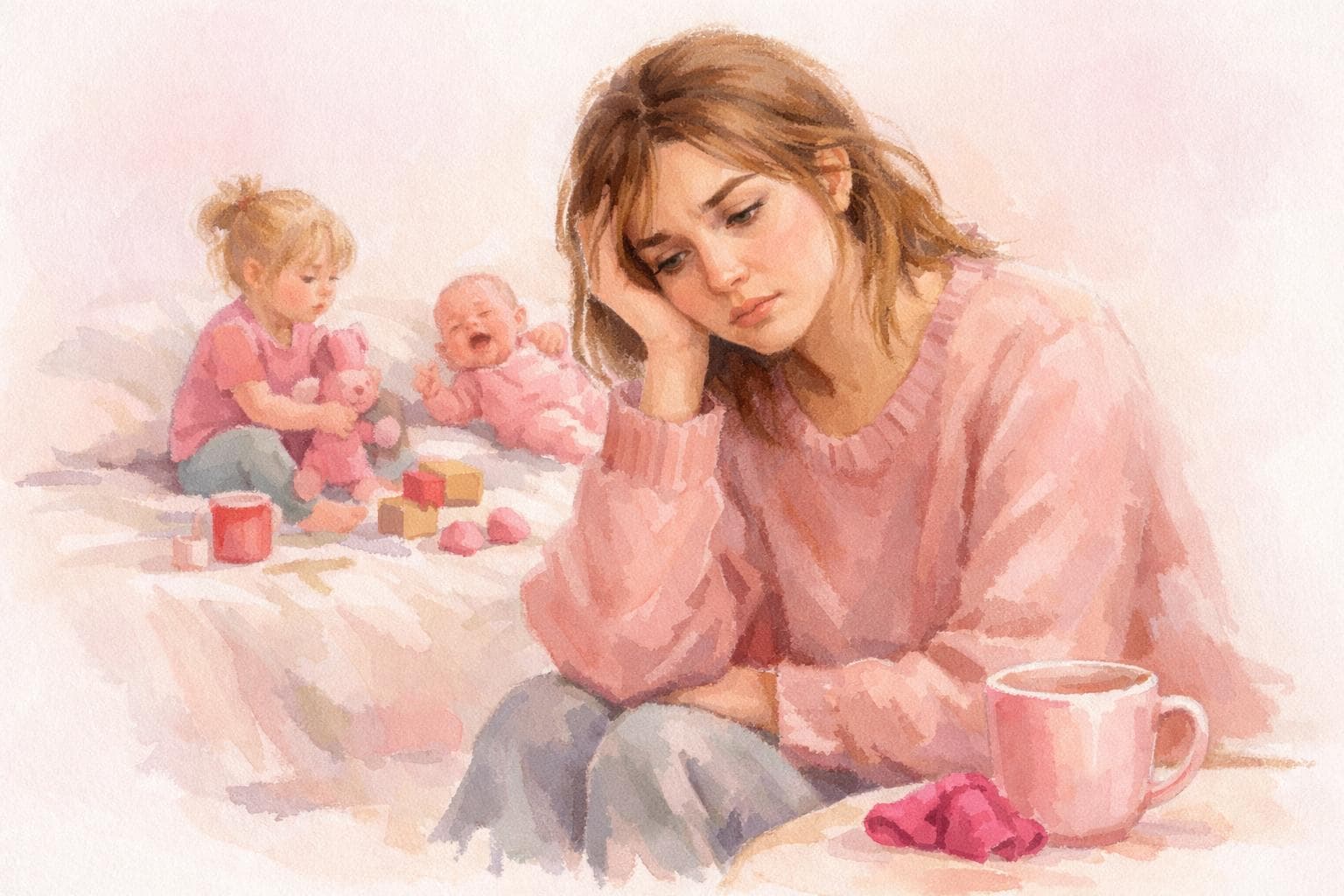
It does not include lying in bed at 3am unable to feel the love you're supposed to feel. It does not include the flatness that sits over days that should feel significant. It does not include looking at your baby and feeling, not the rush of tenderness you expected, but a strange emptiness, or a dread you can't explain, or simply nothing at all.
And because that version exists nowhere in the cultural picture of new motherhood, the mothers who experience it tend to conclude one of two things: that something is uniquely wrong with them, or that they must keep this hidden until it passes.
Both of those conclusions make recovery harder. Neither of them is true.
What postpartum depression actually is
Postpartum depression is a clinical mood disorder that affects approximately one in seven mothers following childbirth, according to the American Psychological Association. It is caused by a combination of hormonal shifts, sleep deprivation, the physical recovery from birth and the psychological weight of a major identity transition, none of which are within a mother's control or reflective of her character.
It is not baby blues, which resolve within two weeks and are experienced by up to 80% of new mothers. It is not a sign of weakness. It is not caused by insufficient love for your baby. And it is not a permanent state.
A 2019 study published in JAMA Psychiatry found that postpartum depression is the most common complication of childbirth in high-income countries, more common than gestational diabetes and more common than preterm birth. It is also consistently undertreated, with research suggesting that fewer than 20% of affected mothers receive evidence-based care.
The gap between how common it is and how rarely it gets treated is almost entirely explained by shame.
Why shame makes postpartum depression worse
Shame is not a minor inconvenience in the context of postpartum depression. It is a clinical obstacle.
Researcher Brené Brown, whose work on shame has informed both therapeutic practice and public understanding, defines shame as the belief that something is fundamentally wrong with us as people rather than with something we have done or experienced. In the context of postpartum depression, shame takes a specific form: the belief that not feeling well after having a baby means you are not a good mother. That if you loved your baby enough, felt sufficient gratitude, tried hard enough, you would not feel this way.
This belief is not supported by any evidence. It is, however, extremely common. And it produces specific behaviours that delay recovery: avoiding asking for help, performing wellness in professional and social settings, minimising symptoms to health professionals, withdrawing from relationships and trying to manage alone.
A 2021 study in Women and Birth found that shame was the single strongest predictor of help-seeking delay in mothers with postpartum depression, outweighing practical barriers including access to services and financial constraints. The mothers who got help soonest were not the ones with the best access. They were the ones who had found a way to believe they deserved it.
What coping with postpartum depression actually looks like
Not pushing through alone. Not waiting for it to lift. These are the things that tend to help.
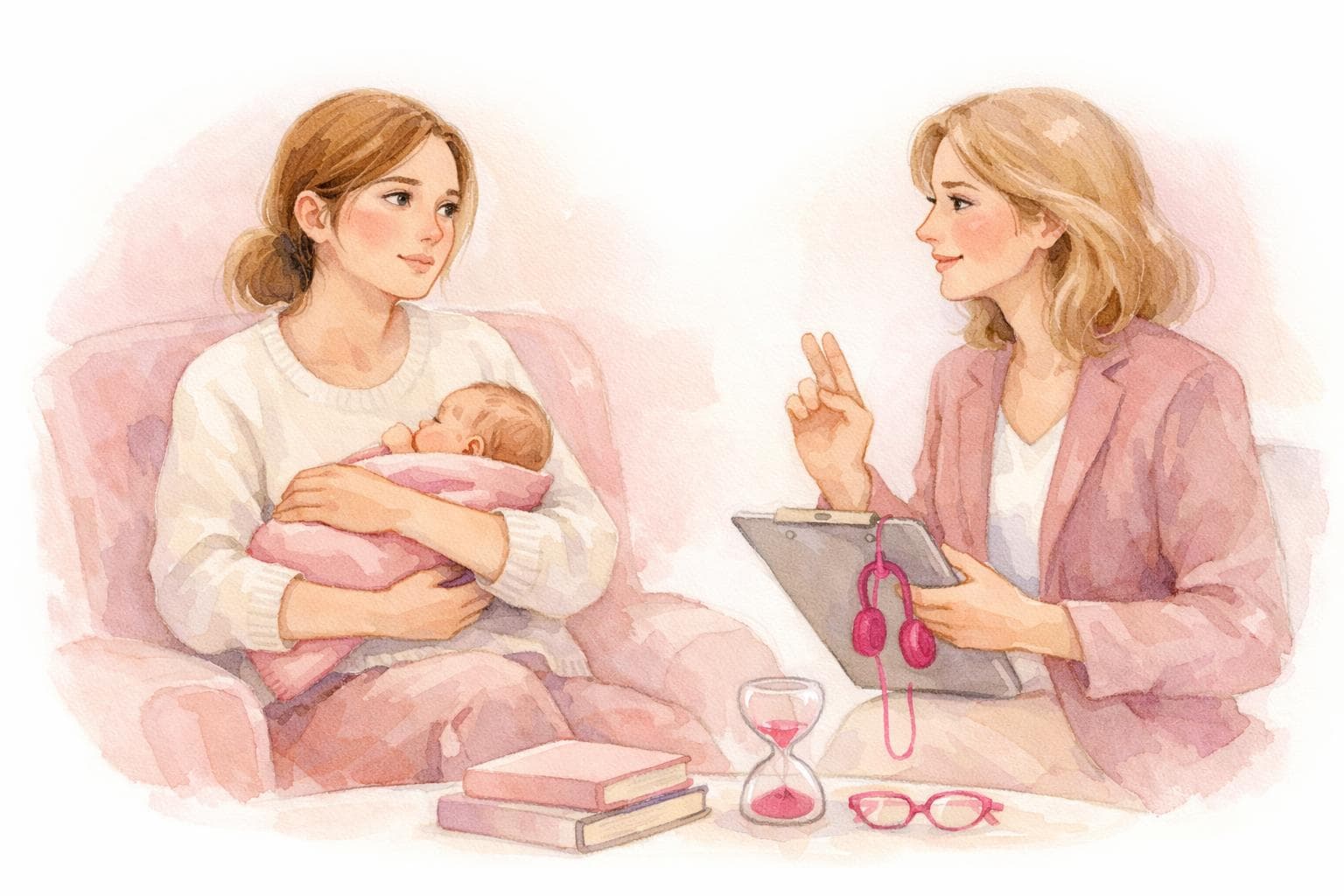
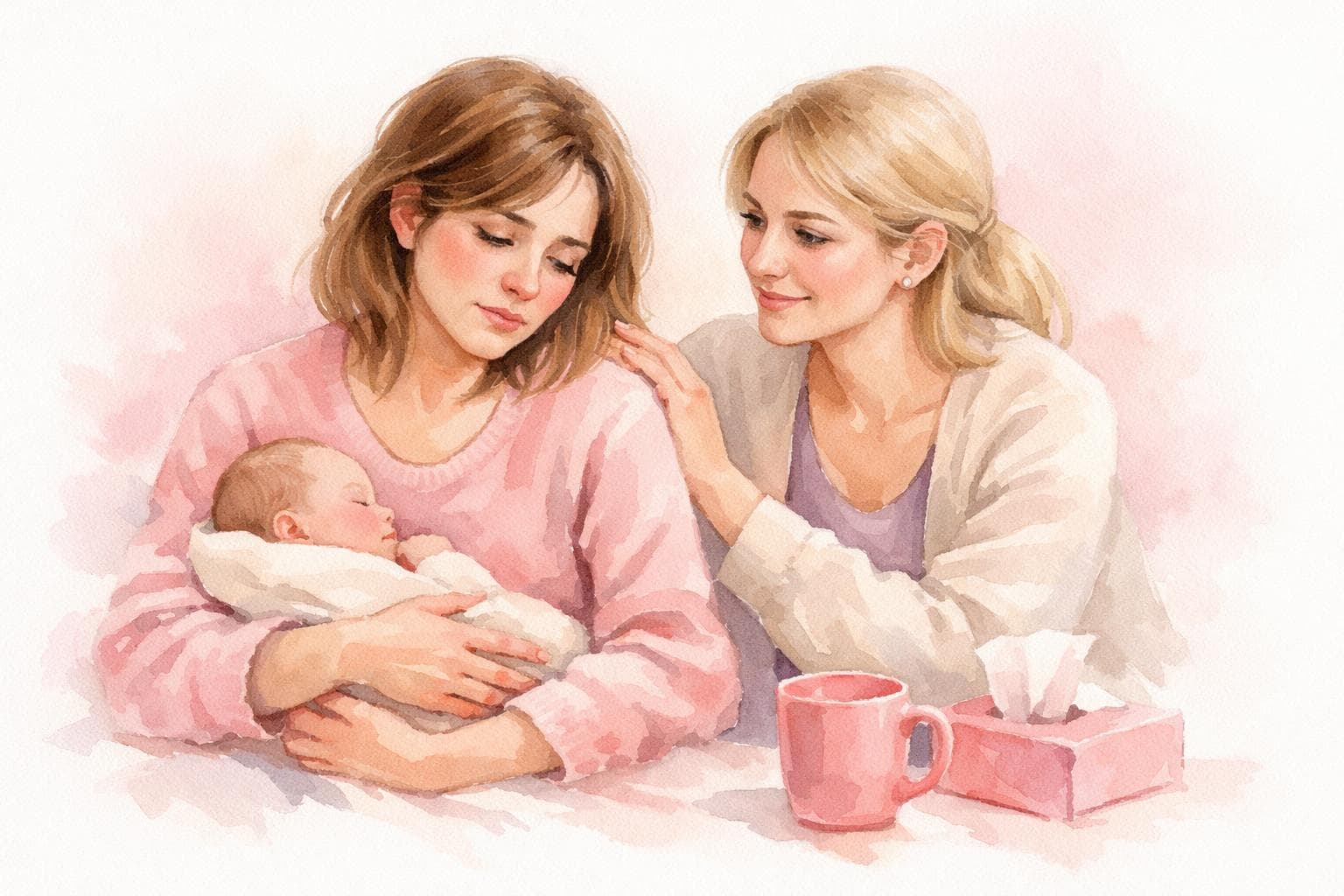
Tell someone, as specifically as you can. You do not need to have a neat account of what is happening. You can say "I'm not feeling well since having the baby and I think I need some help." To your GP, your midwife, your health visitor, your partner or a trusted friend. The telling is not the end of the process. It is the beginning of it.
Get a proper assessment. Postpartum depression exists on a spectrum and looks different for different people. A proper clinical assessment, which your GP can conduct or refer for, establishes what you are actually dealing with and what the most appropriate support looks like. Self-diagnosis followed by self-management is a much harder route.
Know that treatment works. Two forms of treatment have strong evidence behind them: psychological therapy, particularly cognitive behavioural therapy (CBT) and interpersonal therapy (IPT), and medication, specifically SSRIs, several of which are considered safe during breastfeeding. A 2018 Cochrane review confirmed that both approaches produce meaningful improvement, and that combined treatment is often more effective than either alone.
Reduce the things that are compounding it where you can. Sleep deprivation worsens depression. Isolation worsens depression. Sustained stress without relief worsens depression. None of these are things you can eliminate entirely in the postpartum period, but identifying which are most acute and addressing even one of them can shift the picture.
Be realistic about recovery. Postpartum depression does not resolve in a week. Treatment that is working may take four to six weeks to produce noticeable change. This does not mean it isn't working.
The things that don't help
What tends to be unhelpful | Why |
|---|---|
Waiting for it to pass without intervention | Untreated postpartum depression often persists and worsens |
Telling yourself you should feel grateful | Gratitude does not resolve a clinical mood disorder |
Comparing your experience to others who "had it worse" | Minimising your experience delays help and doesn't reduce the symptoms |
Performing wellness to protect others from worrying | Concealment extends the period of suffering |
Reading symptom lists obsessively without seeking assessment | Information without professional support increases anxiety |
On deserving help
The thing that keeps many mothers with postpartum depression from getting support is a specific, deeply held belief: that asking for help means admitting they cannot do this, and that not being able to do this reflects something essential and damning about who they are.
This belief is worth examining, because it is not accurate and it is costing a great deal.
"It's not about being fearless. It's about taking the next step even when you're afraid." — Brené Brown
If you are also experiencing anxiety alongside the depression, postpartum anxiety: signs your worry has gone too far and what to do addresses the overlap between the two. And if therapy feels like the right next step but also feels daunting, how therapy can help moms who feel stuck offers a grounded account of what that process actually involves.
You are not a bad mother. You are a mother who is unwell and who deserves support. Those are very different things. And the second one is true.
If you are having thoughts of harming yourself or your baby, please contact your GP or midwife immediately. In the UK: Samaritans on 116 123. In the US: 988 Suicide and Crisis Lifeline. Postpartum Support International: postpartum.net.
Further reading: Karen Kleiman, This isn't what I expected: overcoming postpartum depression (2013). Brené Brown, Daring greatly (2012). NHS: postnatal depression.