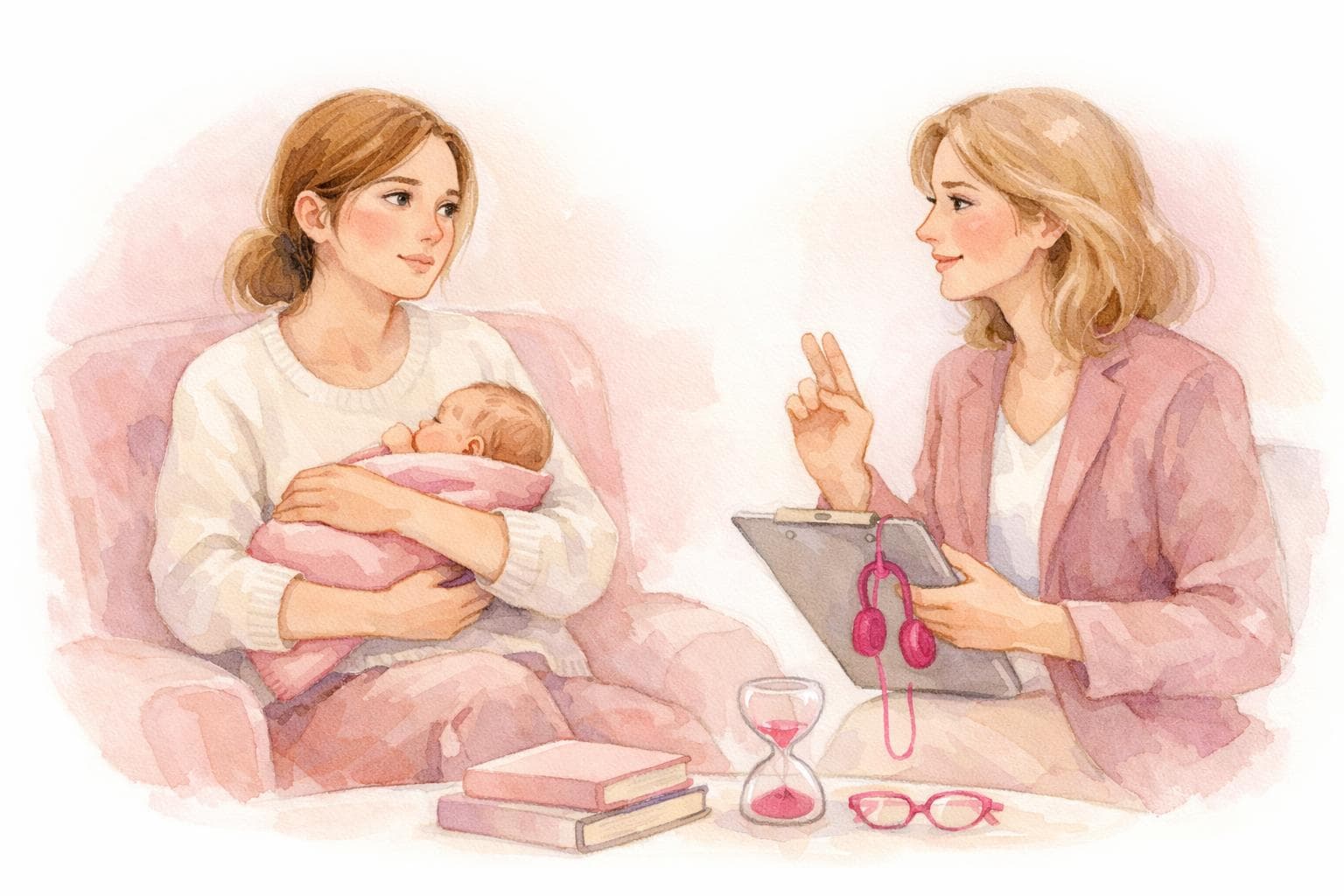

It is not sadness exactly. Sadness has a texture to it, a weight that you can feel. This is something else: a flatness, a dulling, a sense that the things that should land emotionally are landing somewhere that you can no longer quite reach.
You watch your child do something that would previously have moved you and feel very little. You go through the motions of a conversation and realise you were not really in it. You reach for how you feel about something and find less than you expected. Not nothing, necessarily, but muted. Like a radio that is on but turned most of the way down.
Emotional numbness in mothers is not rare. It is also not a character flaw. But it is a signal worth paying attention to, because what produces it tends to be something that isn't going to resolve without some kind of change.
What emotional numbness actually is
Emotional numbness is not the absence of emotion. It is a protective response to the sustained experience of more emotion than the system can process.
This is the part that most descriptions miss. Numbness is not emptiness. It is the nervous system's attempt to manage an overwhelming emotional load by dampening the signal. When you have been carrying too much for too long, when the grief, the exhaustion, the resentment, the anxiety and the love have all been running at high volume with insufficient space to process any of them, the brain begins to regulate by turning the volume down across the board.
Psychologist Bessel van der Kolk, in The body keeps the score (2014), describes emotional numbing as one of the primary responses to sustained stress and unprocessed experience. The nervous system, he argues, does not distinguish between suppressing painful emotions and suppressing all emotion: when you shut down access to the difficult material, you shut down access to the full range.
For mothers, the conditions that produce this are not difficult to identify. Chronic sleep deprivation. Sustained performance of emotional labour with insufficient recovery. The suppression of needs and feelings that don't fit the cultural expectation of grateful, loving, capable motherhood. The accumulation of unspoken things.
Why it happens specifically in motherhood
Motherhood asks mothers to produce emotional availability for others while having limited permission to attend to their own emotional experience. The job is to be present, responsive and regulated for the children. The internal experience of the mother is largely beside the point.
Over time, this produces a specific kind of disconnection. You learn to perform the outward version of emotional presence while the inner experience becomes harder to access. The performance becomes practised. The access becomes less reliable.
A 2020 study published in Frontiers in Psychology found that chronic emotional suppression, the repeated experience of not expressing or attending to one's own emotional states, was significantly associated with emotional numbing, reduced life satisfaction and increased rates of depression. The research found that the relationship was cumulative: the longer emotional suppression continued, the more pronounced the numbing effect.
This matters for mothers because emotional suppression is frequently the strategy that motherhood demands. Be calm for the children. Manage the atmosphere. Don't let your own feelings contaminate the room. The strategy works in the short term. In the long term, it produces exactly the flatness you're trying not to feel.
What emotional numbness can indicate
It is worth knowing the range, because emotional numbness in the postnatal period can be associated with several different conditions, each with different implications.
What it might indicate | Other signs to look for |
|---|---|
Postnatal depression | Persistent low mood, loss of interest, sleep disruption beyond normal newborn care |
Postnatal anxiety | Racing thoughts, hypervigilance, physical anxiety symptoms |
Burnout | Chronic exhaustion, cynicism, reduced sense of personal accomplishment |
Dissociation | Feeling detached from your body or surroundings, not just emotions |
Grief that hasn't been processed | A specific loss, transition or identity change that hasn't been given space |
Chronic stress response | Sustained high-stakes demands with insufficient recovery |
None of these are diagnoses you can make for yourself from a table. But recognising which column resonates is a useful starting point for a conversation with a GP or therapist.
What helps
Not "just feel your feelings," which is advice that assumes the access to feelings is the problem rather than the distance from them being the symptom.
Create space for things to surface without pressure. Numbness tends to lift gradually when the conditions that produced it change. This means creating moments in which you are not performing, not managing and not required to produce anything for anyone. Even brief ones. Even imperfect ones.
Move your body. Physical movement, particularly rhythmic movement like walking or swimming, has consistent evidence for its capacity to reconnect people with their emotional experience. Research on somatic approaches to emotional recovery consistently finds that the body often provides access to emotional material when the mind is defended against it.
Write something honest. Not for anyone else. James Pennebaker's research on expressive writing found that writing about emotionally significant experience, even briefly and without editing, produced measurable improvements in mood and emotional access over time. The writing does not need to be coherent or complete. It needs to be honest.
Reduce the suppression where you can. This is harder than it sounds, because the suppression is often structural: it is what the role requires. But identifying one relationship, or one context, in which you are allowed to not perform, in which honesty is possible and met with something other than panic, creates a small but real shift.
Get professional support if the numbness is persistent. Emotional numbness that has been present for more than a few weeks, or that is significantly affecting your ability to connect with your children or partner, is worth discussing with a GP. It is a treatable symptom, not a permanent state.
"What we don't need in the midst of struggle is shame for being human." — Brené Brown, Rising strong
If the numbness has the specific texture of postpartum depression, how to cope with postpartum depression: getting help without the shame addresses what getting support actually looks like. And if burnout is closer to what you're experiencing, emotional exhaustion in motherhood: what it really means distinguishes between the two with more precision.
The numbness is not who you are. It is a signal from a system that has been running too hard for too long without enough rest. That is worth taking seriously.
If you are concerned that what you are experiencing may be a perinatal mental health condition, please speak to your GP or midwife. In the UK: PANDAS Foundation at pandasfoundation.org.uk. In the US: Postpartum Support International at postpartum.net.
Further reading: Bessel van der Kolk, The body keeps the score (2014). Brené Brown, Rising strong (2015). James Pennebaker, Opening up by writing it down (2016).