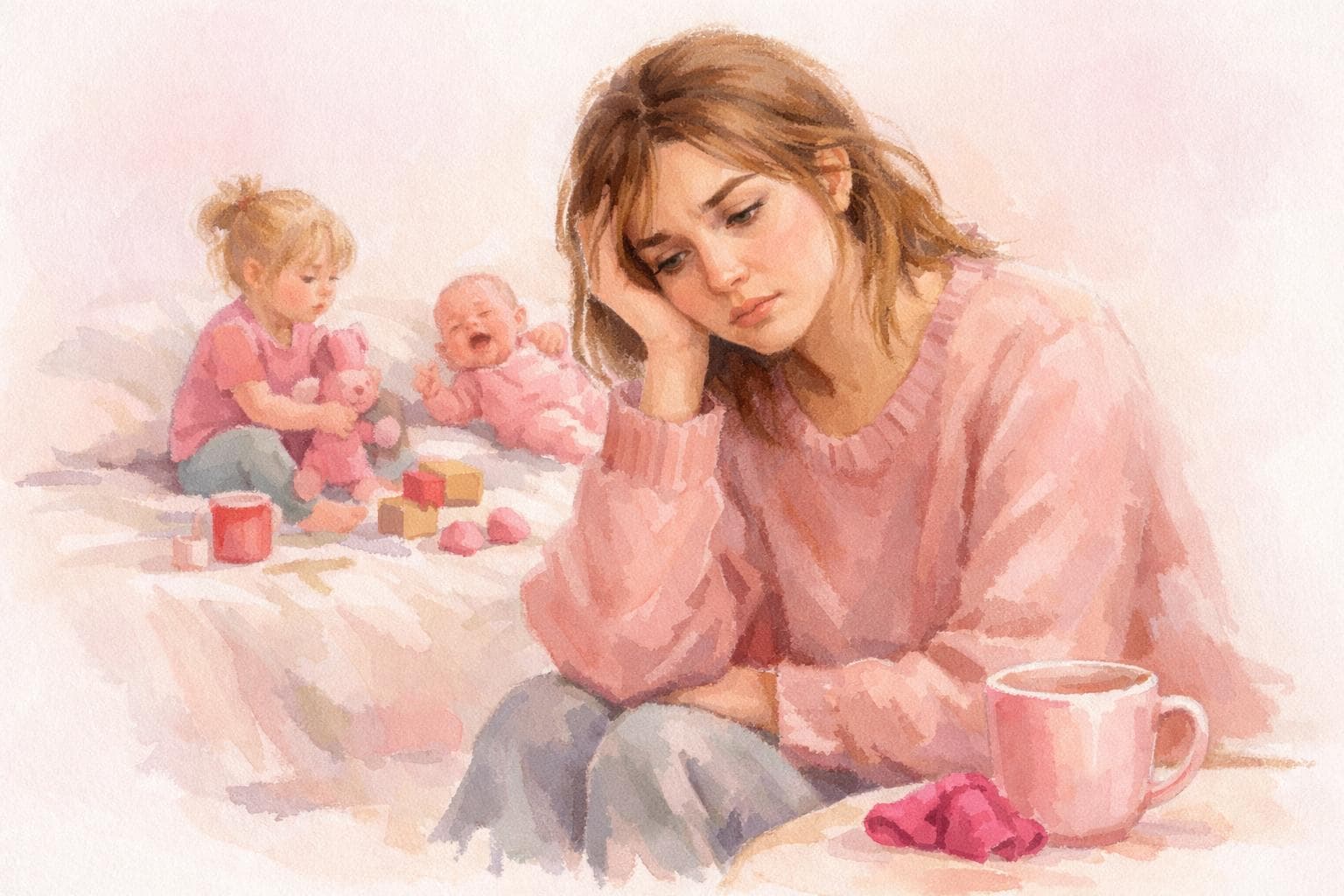
Nobody tells you that becoming a mother involves loss.
Not loss in the devastating sense, though sometimes it is that too. But a quieter, more socially complicated kind of loss: the loss of the person you were, the life you had and the freedom that existed before someone else's needs became the permanent centre of your own.
You are supposed to gain when you have a child. Everything in the cultural script around motherhood is about gain: love, purpose, perspective, the fullness of a life finally lived in its proper direction. And you do gain those things, genuinely and profoundly. But you also lose things. And the grief that comes from losing them is real, even when it sits inside a life you chose and would choose again.
Why maternal grief is so rarely named
The grief of motherhood does not have a clear social framework. There is no ritual for mourning the self you were before children. No acknowledged space for saying: I miss who I used to be, and I miss the life I used to have, and that missing coexists with everything I love about this one.
Psychologist Pauline Boss, whose work on ambiguous loss has been foundational in grief research, describes ambiguous loss as loss that has no official acknowledgment, no clear mourning process and no resolution. The loss that comes with becoming a mother fits this description in a specific way: something significant has changed or ended, but because the change was chosen, because it produced something wonderful, the grief attached to it feels illegitimate.
The illegitimacy of the feeling is what makes it harder. If you grieve a death, the world makes space for it. If you grieve the pre-children version of your life, you are expected to be grateful instead. The two responses are not mutually exclusive. But the cultural pressure to perform gratitude rather than acknowledge loss tends to drive the grief underground, where it does not disappear but accumulates differently.
What maternal grief actually looks like
Not always like sadness. Sometimes, but not always.
It looks like looking at old photographs and feeling something you can't quite name. Like a song that takes you back to a version of yourself who moved through the world with more lightness. Like a moment alone in a coffee shop, before the family arrives, where you catch a glimpse of a different pace and feel the ghost of who you were in it.
It looks like standing in your kitchen at 6am, feeding a child who will not sleep through the night, and thinking about the morning you used to have: slow, quiet, entirely your own. Not ungrateful for this one. Just aware of what is no longer there.
Research by reproductive psychiatrist Dr Alexandra Sacks on the concept of matrescence, the developmental transition into motherhood, found that ambivalence, the simultaneous presence of love for the new life and grief for the old one, is not a pathology. It is a normal feature of a genuine developmental passage. The mothers who fared best were not the ones who felt least ambivalent. They were the ones who had permission to name it.
What you might be grieving specifically
It helps to name it rather than letting it remain a general ache.
- Freedom and spontaneity. The ability to make decisions about your own time without coordinating with the needs of another person. To leave the house without logistics. To change plans without consequence.
- Your body as it was. Not just how it looks, but how it felt: the particular relationship with your own physical self before pregnancy, birth and the ongoing demands of caregiving changed it.
- Professional identity and momentum. The career trajectory, the sense of professional purpose, the daily use of skills that felt central to who you were.
- Your social world. The friendships that assumed an availability you no longer have. The version of your social life that operated on your own schedule.
- Time that belongs to you. Not spare time, not leisure exactly, but time in which you were the primary person responsible for how it was spent.
- Certainty about yourself. The working theory of who you were and what you wanted that existed before motherhood reorganised it.
Why allowing the grief actually helps
The counterintuitive finding from grief research is that suppressing ambivalent grief, trying to resolve it by focusing only on the gains, tends to produce a more persistent and less manageable form of the feeling. Acknowledgment, even partial and private, tends to produce relief.
Psychologist Susan David, in Emotional agility (2016), describes emotional suppression as one of the primary mechanisms through which manageable feelings become stuck feelings. The grief that is allowed to exist, named and acknowledged, tends to shift. The grief that is denied tends to surface sideways.
This does not mean dwelling. It means allowing the feeling to be what it is for long enough that it can move.
What tends to prolong grief | What tends to allow it to shift |
|---|---|
Performing contentment while suppressing the loss | Naming the loss honestly, even privately |
Comparing your feelings to others who "have it harder" | Treating your loss as legitimate regardless of its context |
Waiting until things are easier to process it | Creating small moments for honest acknowledgment now |
Treating the grief as a sign you made the wrong choice | Holding the grief and the love as simultaneously true |
Holding both things at once
You are allowed to love your children completely and to miss your previous life. You are allowed to be grateful for what you have and to grieve what is gone. These are not contradictions. They are the ordinary complexity of a significant life transition, and they deserve to be held with more honesty than the cultural script usually allows.
"The reality is that you will grieve forever. You will not 'get over' the loss of a loved one; you will learn to live with it." - Elisabeth Kübler-Ross
The life you had before was not a lesser version of your life. It was a real chapter, and it ended, and you are allowed to mourn it. That mourning does not diminish what came after. It honours what was there.
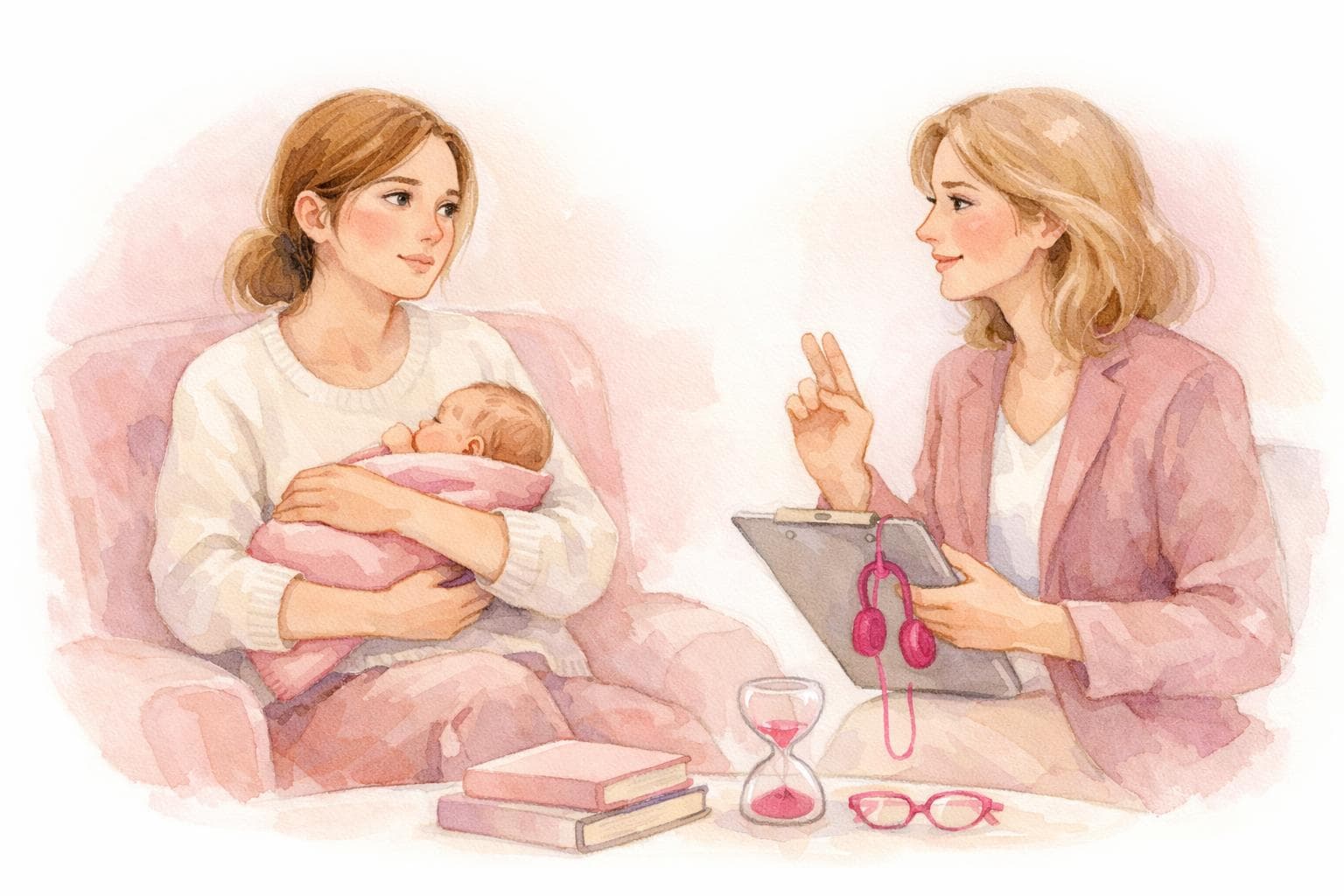
If the grief has the quality of something that feels unprocessed and heavy rather than acknowledged and gradually shifting, how therapy can help moms who feel stuck is worth considering as a space in which to do that processing with proper support. And if identity loss rather than life loss is the more dominant experience, how to feel like yourself again after kids addresses the retrieval of self with more depth.
Further reading: Pauline Boss, Ambiguous loss: learning to live with unresolved grief (1999). Susan David, Emotional agility (2016). Alexandra Sacks & Catherine Birndorf, What no one tells you (2019).