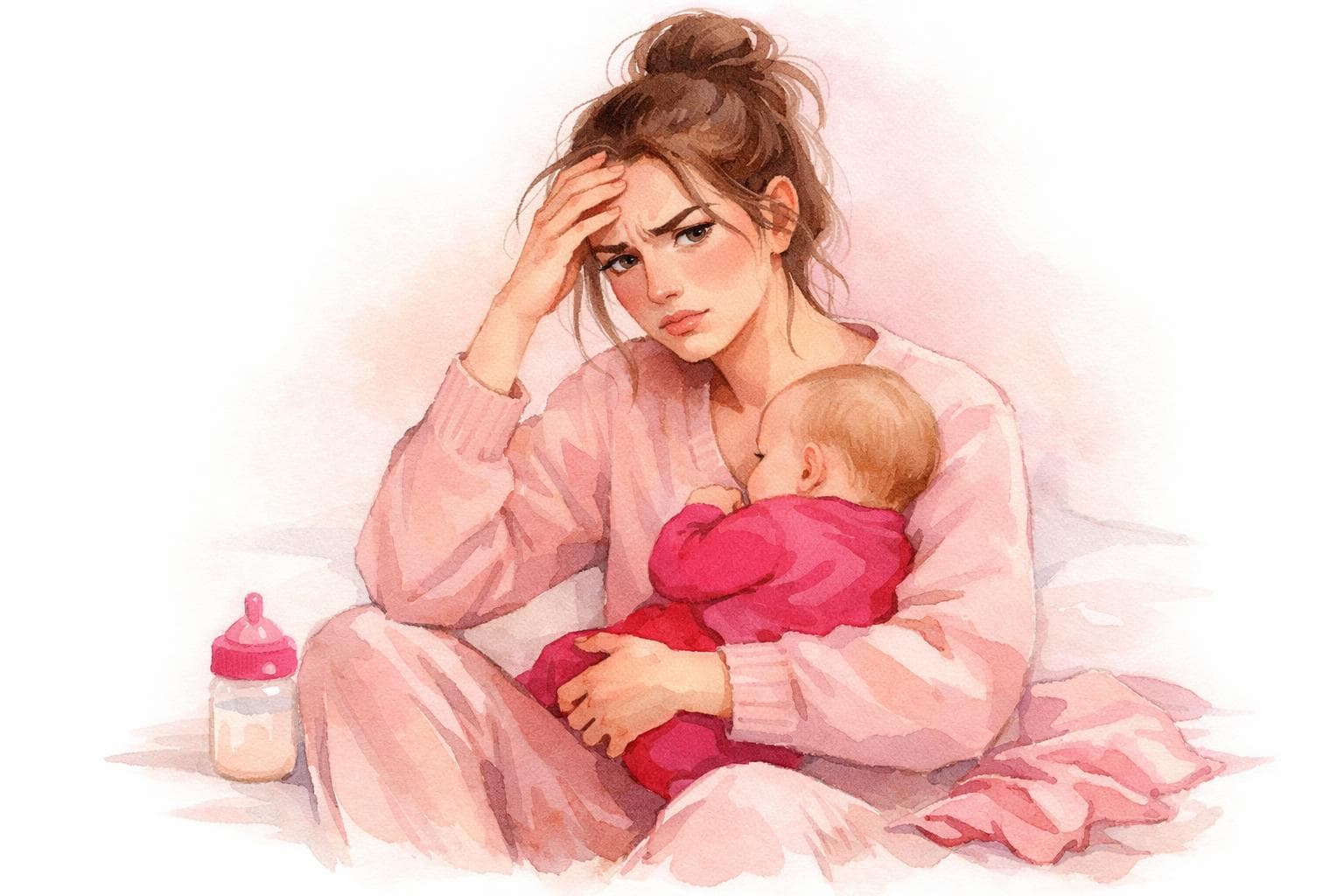
Your partner forgot to wash the bottles. Again. And something comes up in you that is not sadness, not the tearfulness everyone warned you about. It is rage, sudden and disproportionate, the kind that makes you want to throw the bottle across the kitchen. It scares you. And right behind the anger comes the shame: what kind of mother feels this way?
You are not broken, and you are far from alone. This has a name, and it is one of the most under-discussed symptoms of the postpartum period.
Postpartum rage refers to intense, sudden feelings of anger, irritability or frustration that arise in the weeks and months following childbirth, often disproportionate to the trigger and frequently accompanied by urges to yell, scream or break something. It is not a standalone diagnosis in the DSM-5, but it is a well-documented symptom of postpartum depression and postpartum anxiety, and it can also occur independently of either. Research published in Birth (2020) found that postpartum anger was strongly associated with depressive symptoms, unmet relationship expectations and a lack of emotional support. A 2022 Canadian cross-sectional study found that approximately 21% to 31% of new mothers report experiencing significant anger during the postpartum period, according to Pathlight Behavioral Health's 2025 clinical review. This is common. It is rarely spoken about, and that silence is part of what makes it feel so isolating.
Why anger and anxiety are more connected than people realise
Anger and anxiety share the same underlying physiology: the sympathetic nervous system's fight-or-flight response. Anxiety is often described as the flight response, the racing thoughts, the checking, the dread. Rage is the fight response, the same activation expressed outward instead of inward.
Kathryn Emerick, MD, a perinatal psychiatrist at the University of Arizona College of Medicine, describes irritability as a check engine light rather than a character flaw, a signal that something underlying needs attention rather than evidence of a personal failing. When postpartum anxiety goes unrecognised or unaddressed, particularly because standard screening tools focus heavily on sadness and low mood, anger is often the symptom that surfaces instead, and it frequently gets misread as a personality problem rather than a treatable clinical pattern.
Postpartum rage vs postpartum sadness: how they differ
Postpartum mood symptoms are not one uniform experience. Recognising which pattern you are in changes how you and your provider approach it.
Postpartum depression, sadness-dominant | Postpartum rage, anger-dominant | |
|---|---|---|
Primary emotion | Sadness, hopelessness, crying | Anger, irritability, urges to yell or break something |
Physical sensation | Heaviness, fatigue, emptiness | Heat, tension, a feeling of blood boiling |
Typical trigger | Often no clear trigger; persistent low mood | A specific, often minor incident that ignites a disproportionate reaction |
What follows the episode | Continued low mood | Intense shame and guilt, often more acute than the anger itself |
Common self-description | "I feel numb" or "I feel like I'm failing" | "I don't recognise myself" or "I'm scared of what I might do" |
Recognition by others | Often noticed by partners and family | Frequently hidden, minimised or misread as a bad temper |
Both patterns can occur in the same person, sometimes in the same day and both are legitimate expressions of the same underlying strain.
What actually triggers postpartum rage
Research and clinical practice point to several overlapping contributors, rarely a single cause.
- Hormonal withdrawal. The abrupt drop in oestrogen and progesterone after delivery affects mood regulation broadly, not only in the direction of sadness.
- Sleep deprivation. A 2022 study published in BMC Pregnancy and Childbirth examining Canadian mothers found a measurable relationship between poor maternal sleep quality and postpartum anger.
- Unmet relationship expectations. The Birth (2020) study specifically identified unequal division of labour and a lack of emotional support from a partner as strongly correlated with postpartum anger.
- Trauma history. A 2025 study published in the Journal of Traumatic Stress examined postpartum anger among low-income women with high rates of trauma exposure and found a meaningful link between prior trauma and postpartum anger presentation.
- Touch and sensory overload. Being physically needed around the clock, feeding, holding, soothing, can produce a state some mothers describe as "touched out," which frequently precedes an anger episode.
- Lack of support. Across nearly every study on this topic, inadequate practical and emotional support is one of the most consistent predictors.
What postpartum rage actually looks like
Cleveland Clinic identifies the following as common signs, distinct from ordinary short-temperedness:
- Punching objects, slamming doors, or other physical expressions of anger
- Dwelling on an incident far longer than feels proportionate
- Losing control of your temper in a way that frightens you
- Swearing, screaming or yelling more than is typical for you
- Feeling constantly on edge, frustrated or irritable
- A sense of being unable to cope with your own emotional intensity
If any of this involves fear that you might hurt your child, that is a different and more urgent concern requiring immediate support, distinct from the anger itself, which is not associated with an increased risk of harming your baby in the way the fear itself suggests.
Why so few mothers talk about it
A Forbes piece covering a viral TikTok about postpartum rage in 2024 noted that public reaction split sharply, some viewers sympathetic, others alarmed, reflecting how poorly understood this experience remains even in public discourse. Psychology Today notes that new mothers are told to expect love, joy and bliss, which leaves little cultural space for an experience that contradicts that script entirely. The shame that follows an episode of rage is often more distressing than the rage itself, and that shame is precisely what keeps mothers from disclosing it to a provider, a partner or even themselves.
What helps
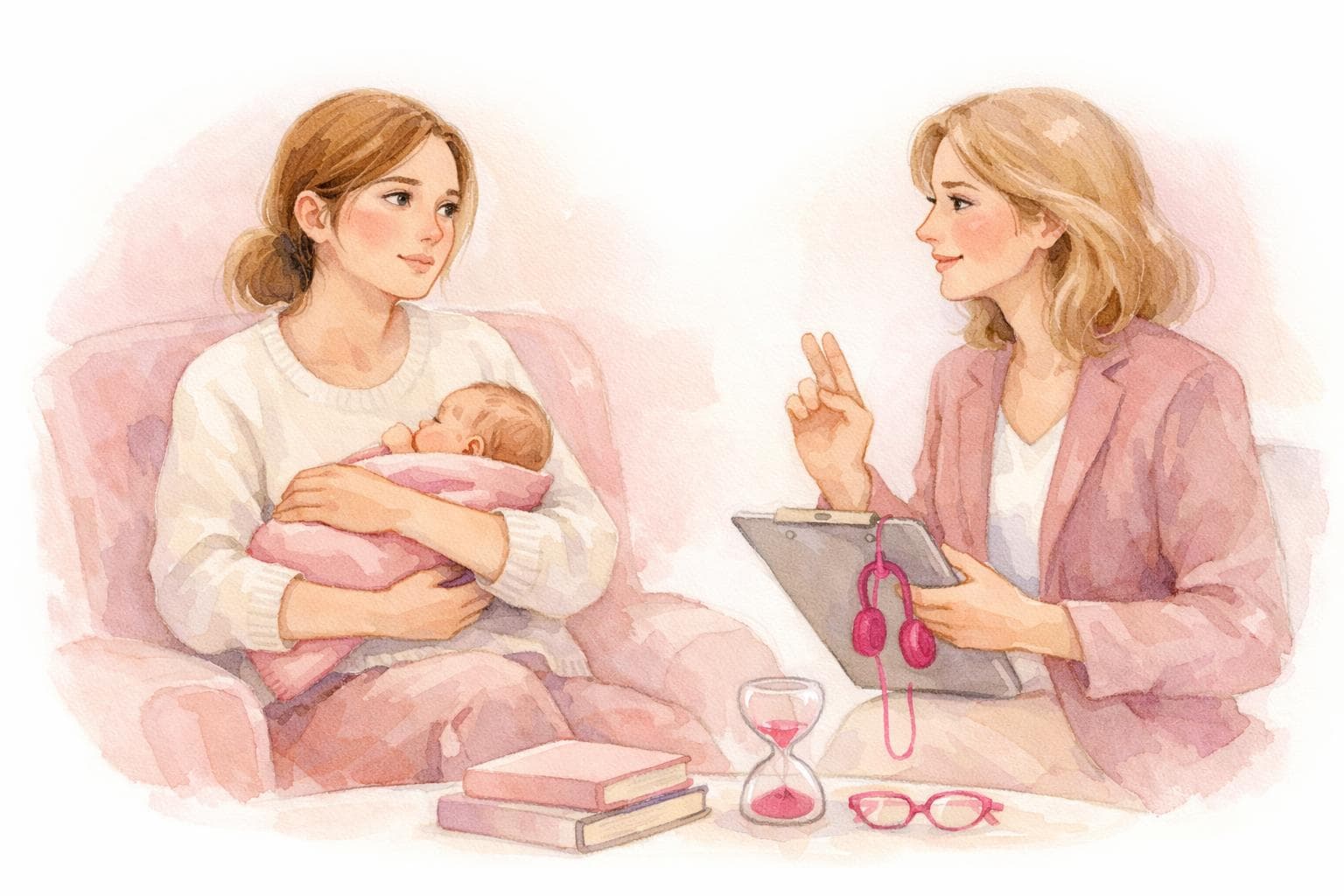
Screening for the underlying condition. Since rage frequently signals postpartum depression or anxiety rather than existing entirely on its own, a full clinical screening, not just a conversation about mood, is the right starting point. Our EPDS self-test is a reasonable first step, and our guide to postpartum anxiety vs normal worry can help you assess whether anxiety is part of the picture.
Therapy. Interpersonal psychotherapy and CBT both have evidence for reducing postpartum anxiety and associated anger. A randomised controlled trial published in PMC (2024) found that interpersonal psychotherapy produced measurable reductions in postpartum anxiety among study participants. Our guide to CBT for postpartum depression covers the broader approach.
Addressing sleep and support directly, not just mood. Given the documented link between maternal sleep quality and anger, and between support deficits and anger, practical interventions, more sleep, more help, matter as much as any clinical treatment.
Self-compassion instead of self-judgment. Dr. Emerick's framing, that irritability is a signal rather than a flaw, is a genuinely useful reframe. The rage is information about what needs to change, not evidence of who you are.
If emotional exhaustion is compounding the anger, addressing the underlying depletion often reduces the frequency and intensity of rage episodes more effectively than trying to manage the anger in isolation.
Key takeaways
- Postpartum rage is not a formal diagnosis but a well-documented symptom, occurring in an estimated 21% to 31% of new mothers, closely linked to both postpartum depression and postpartum anxiety.
- Anger and anxiety share the same physiological root: the sympathetic nervous system's fight-or-flight activation, expressed outward as rage instead of inward as worry.
- Sleep quality, relationship support and trauma history are all documented contributors, meaning postpartum rage rarely has a single cause.
- The shame following a rage episode is often more distressing than the anger itself, and that shame is a major reason this symptom remains underreported and undertreated.
- Screening for underlying depression or anxiety, rather than treating the anger in isolation, is the clinically supported approach.
Sources and further reading
- Psychology Today. (2025). Postpartum rage: what it is and why we need to talk about it. psychologytoday.com
- Pathlight Behavioral Health. (2025). Postpartum rage: balancing emotions and motherhood. pathlightbh.com
- Ou, C.H.K. et al. (2022). Correlates of Canadian mothers' anger during the postpartum period: a cross-sectional survey. BMC Pregnancy and Childbirth, 22(1), 163. ncbi.nlm.nih.gov
- Plummer Lee, C. et al. (2025). Postpartum anger among low-income women with high rates of trauma exposure. Journal of Traumatic Stress, 38(1), 124-134.
- Cleveland Clinic. (2026). Postpartum rage: symptoms, diagnosis and treatment. my.clevelandclinic.org
- University of Arizona Health Sciences. (2023). Postpartum rage: what new moms need to know. healthsciences.arizona.edu