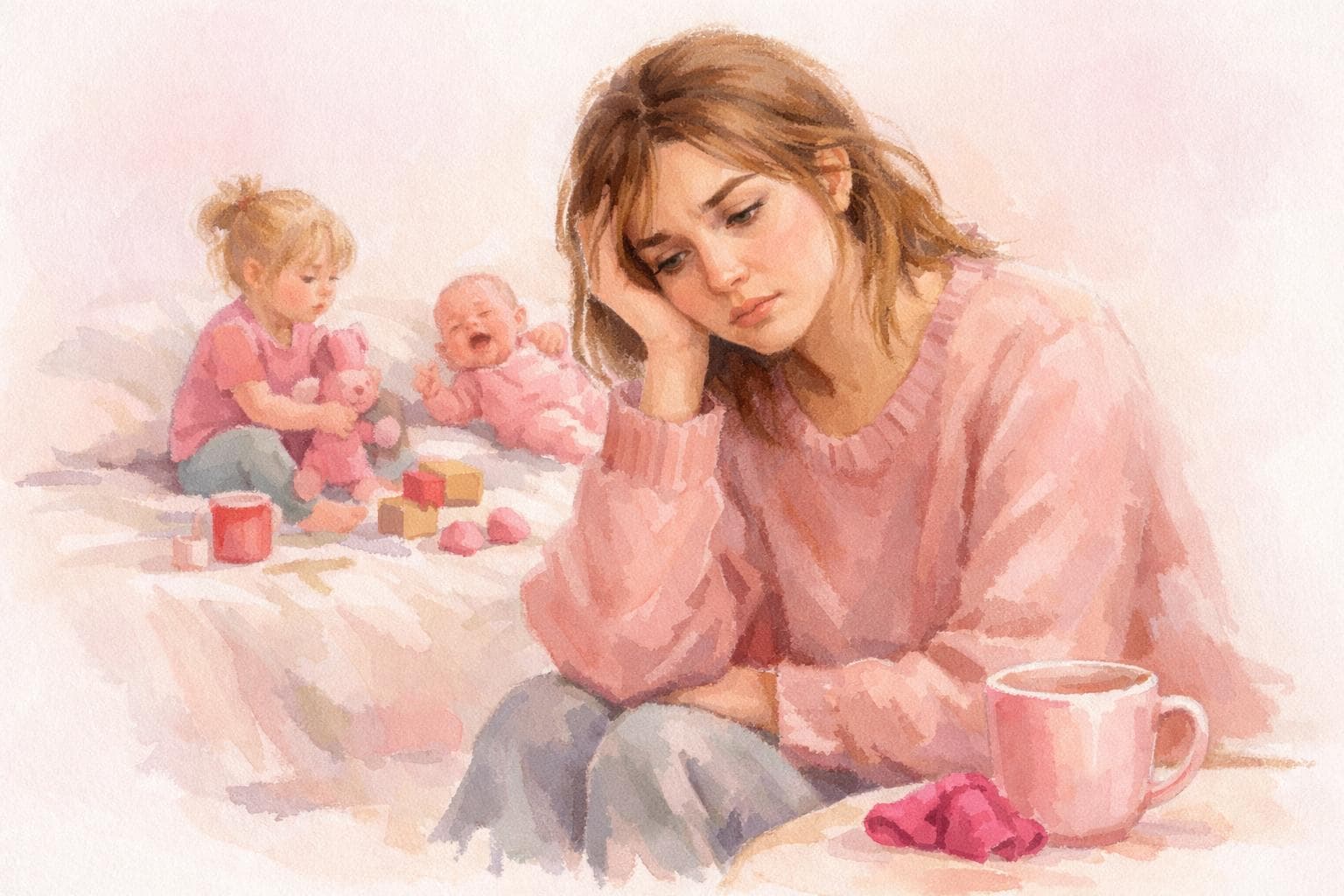

At some point — maybe in the quiet of 3am, maybe in a rare hour alone — you catch yourself thinking about what your life used to feel like. Sleeping in. A spontaneous evening. Finishing a thought without interruption. A version of yourself that didn't have to think about whether someone else had eaten, or slept, or had clean clothes.
And then the guilt arrives. You love your child. So what does it mean that you miss the life you had before them?
It means you're human. And it has a name.
The Word for What You're Feeling
The ambivalence of early motherhood — loving your child deeply and, in the same breath, grieving your previous life — is one of the most well-documented and least-talked-about experiences in psychology. Researchers and clinicians who study matrescence (the developmental passage of becoming a mother, coined by Dr. Dana Raphael and expanded by Dr. Aurélie Athan at Columbia University) consistently describe this ambivalence as not only normal, but structurally predictable.
A 2024 qualitative study published in the Journal of Reproductive and Infant Psychology — interviewing eleven first-time mothers using Interpretative Phenomenological Analysis — found that all participants experienced maternal ambivalence. The researchers concluded that these mixed feelings "are normal and have positive psychological consequences" when acknowledged, and that the distress attached to them was largely caused not by the feelings themselves, but by the belief that having them was unacceptable (PubMed, 2024).
This is the central trap. You feel grief about a past life. Then you feel shame about the grief. Then you feel guilty about both. The feelings weren't the problem — the silence around them was.
What You're Actually Grieving
Missing your life before children is a form of real loss. Not loss of love, and not loss of commitment to your child. But loss of:
- Spontaneity — the ability to make a decision without considering seventeen knock-on effects
- Solitude — the quiet that belonged to you and only you
- A version of yourself that wasn't yet a mother, with a different kind of freedom and a different relationship to time
- Social ease — friendships that didn't require logistics, evenings that didn't involve negotiation
- Your pre-mother identity — the professional, the partner, the person with interests that had nothing to do with anyone's needs but your own
As author and journalist Lucy Jones writes in Matrescence: On the Metamorphosis of Pregnancy, Childbirth, and Motherhood (2023): this isn't a failure to appreciate what you have. It's the accurate recognition that something has ended — and that something ending, even for something better, warrants mourning.
A pilot study published in Maternal Health, Neonatology and Perinatology (PMC, 2025) described the matrescence experience as falling in a "messy middle" — most mothers occupying the space between clinical disorder and straightforward flourishing, characterised by coexisting joy and grief, satisfaction and exhaustion. This is not pathology. It is the normal texture of a profound developmental transition.
"It is entirely possible to be deeply in love with your baby and, in the same moment, desperately miss your old life. You can adore being a mother and also resent the loss of your freedom. This ambivalence isn't a sign you're ungrateful; it's a sign that you're human." — Phoenix Health, on matrescence
The Shame That Makes It Worse
What tends to compound these feelings is the expectation that they shouldn't exist. The cultural script of the "good mother" — always grateful, always happy to be in this role, always putting the child first without internal conflict — leaves no room for the ordinary human grief of significant life change.
Research published in Sex Roles (Springer Nature, 2025) — studying 499 mothers of children aged 0–5 in the UK — found that the gap between how mothers perceived themselves and how an "ideal mother" was supposed to feel was directly linked to shame. And shame, unlike the underlying ambivalence, was what predicted depression and anxiety. The ambivalence alone was not the problem.
Here is a helpful frame:
The feelingWhat it actually signals
"I miss having time to myself"
You had an identity before this role, and it still matters
"I miss being spontaneous"
You've experienced a profound change in how life works
"I miss who I used to be"
You're in the fracturing phase of a real developmental transition
"I love my child but I grieve my old life"
Normal maternal ambivalence — not a contradiction, a coexistence
"I feel guilty for feeling this way"
The cultural standard was unrealistic, not your feelings
What Doesn't Help — and What Does
What doesn't help is pretending the feelings aren't there. Research on maternal ambivalence consistently finds that acknowledging mixed emotions — rather than suppressing them — is associated with greater parenting confidence and equanimity over time. The mothers in the 2024 IPA study who were able to view their conflicting feelings with self-compassion reported more agency and competence in their parenting, not less.
What does help:
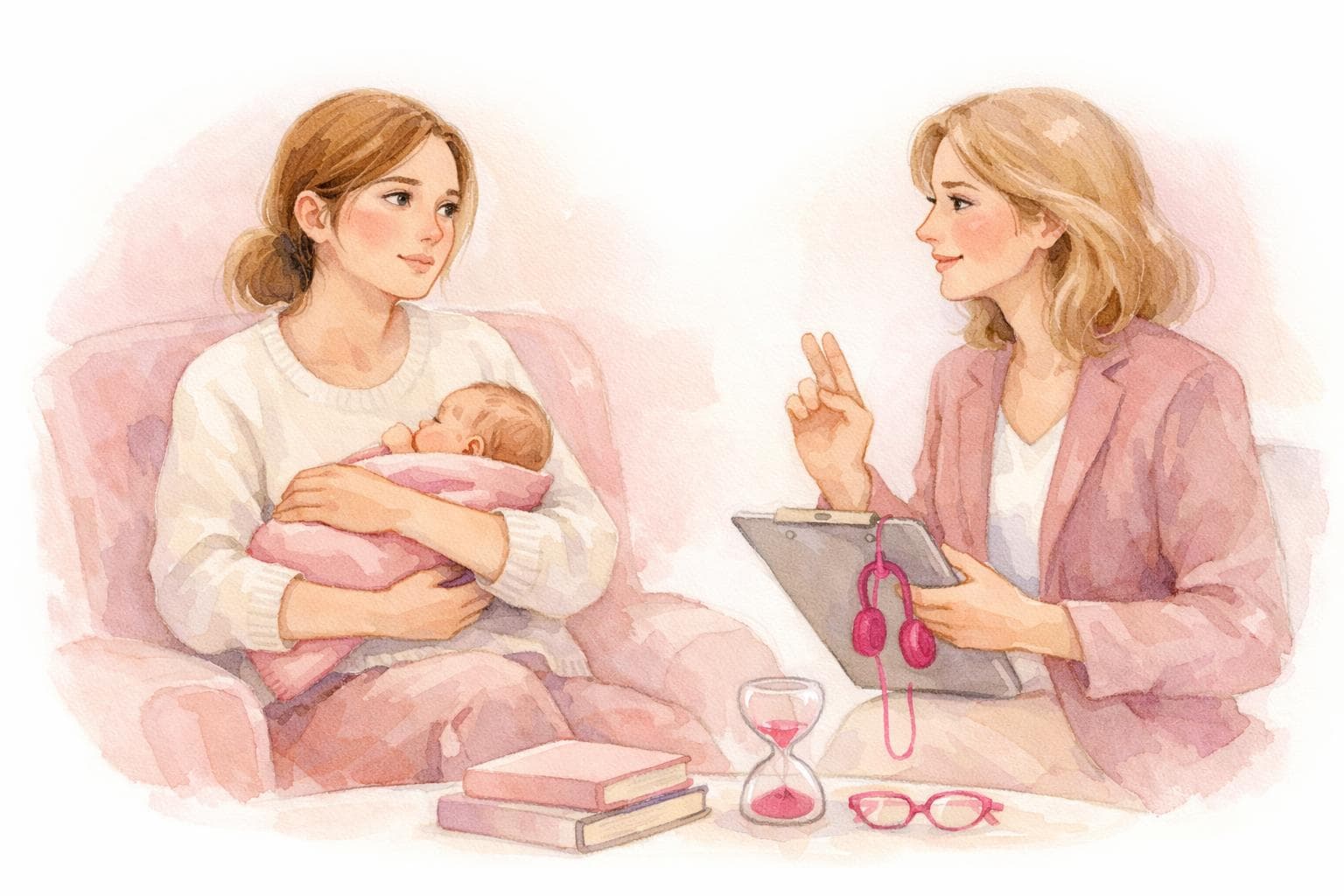
Naming it, privately or out loud. The feeling loses some of its power when it's articulated honestly. A journal, a trusted friend, a therapist — any of these provide the container that shame prevents you from building in your own head.
Separating grief from ingratitude. Grief for what was doesn't negate love for what is. These are parallel emotional truths, not competing ones. The person who misses their old life and loves their child deeply is not confused. They're having an accurate response to a complex reality.
Understanding it as a stage, not a permanent state. The acute ambivalence of early motherhood does not last forever. Research suggests that a clearer sense of integrated identity tends to emerge by 12–18 months postpartum for most mothers. Reconnecting with yourself is a process, not a moment — and it's possible.
Noting when the feeling tips into something more. Missing your old life is different from being unable to find any pleasure in your current one. If the grief is persistent, pervasive, or accompanied by anxiety, it may warrant a conversation with a healthcare provider.
The woman who loves her children and misses her old self is not contradictory. She is, in fact, describing the experience of identity loss that most mothers navigate in some form — and she is doing so honestly, which is usually where the path through begins.
Further reading: How motherhood changes the way you see yourself | How to deal with mom guilt without blaming yourself | How to reconnect with yourself after motherhood