You noticed it first in your relationships, not your childhood. The way you apologise for things that were not your fault. The panic that shows up when someone seems slightly disappointed in you. A friend used the word "narcissist" about her own mother, almost casually, and something in your chest went very still. That word had never occurred to you before, and now you cannot stop turning it over.
A narcissistic parent is one whose narcissistic personality traits, or in some cases diagnosable narcissistic personality disorder, cause them to relate to their child primarily as an extension of themselves rather than as a separate, autonomous person with their own needs, feelings and identity. Research suggests narcissistic personality disorder affects roughly 1% to 6% of the general population, according to psychologist Ramani Durvasula, cited by TODAY, though the broader narcissistic personality type, distinct from the clinical diagnosis, is likely far more common. A 2025 systematic review published in Cureus, analysing eight empirical studies, confirmed that parental narcissism is consistently associated with poorer relational and psychological outcomes in children, with effects varying by narcissism subtype and developmental stage. This guide covers the eleven signs that most adults recognise only in hindsight, often decades after leaving home.
Why this is so hard to spot from the inside
Narcissistic parenting rarely looks dramatic from the outside. Psychiatry Magazine's 2026 clinical summary describes the core mechanism precisely: a narcissistic parent can be charming, publicly devoted and materially generous, while the damage happens in the private, relational texture of daily life, in the way a child's feelings are dismissed as inconvenient, achievements are appropriated as the parent's own accomplishment, and expressing a genuine preference produces either indifference or punishment.
Because the harm is relational rather than physical, and often invisible to outsiders, most adults spend years attributing the resulting patterns to their own personality, their anxiety, their sensitivity, rather than to the environment that shaped them.
The 11 signs, explained
1. You struggle to name your own preferences. Psychology Today's 2025 clinical summary notes that narcissistic parents rarely teach necessary life skills tied to self-knowledge, leaving adult children unable to easily identify their own values or wants independent of what others expect.
2. You feel responsible for your parent's emotions. If your parent's mood dictated the emotional temperature of the household, you likely learned early to monitor and manage their feelings before your own.
3. Your achievements were treated as your parent's accomplishments. A recurring pattern in the clinical literature: a child's success gets absorbed into the parent's own identity and image rather than celebrated as the child's independent achievement.
4. You have a persistent fear of disappointing people. This often traces back to conditional love, love that depended on performance, compliance or reflecting well on the parent.
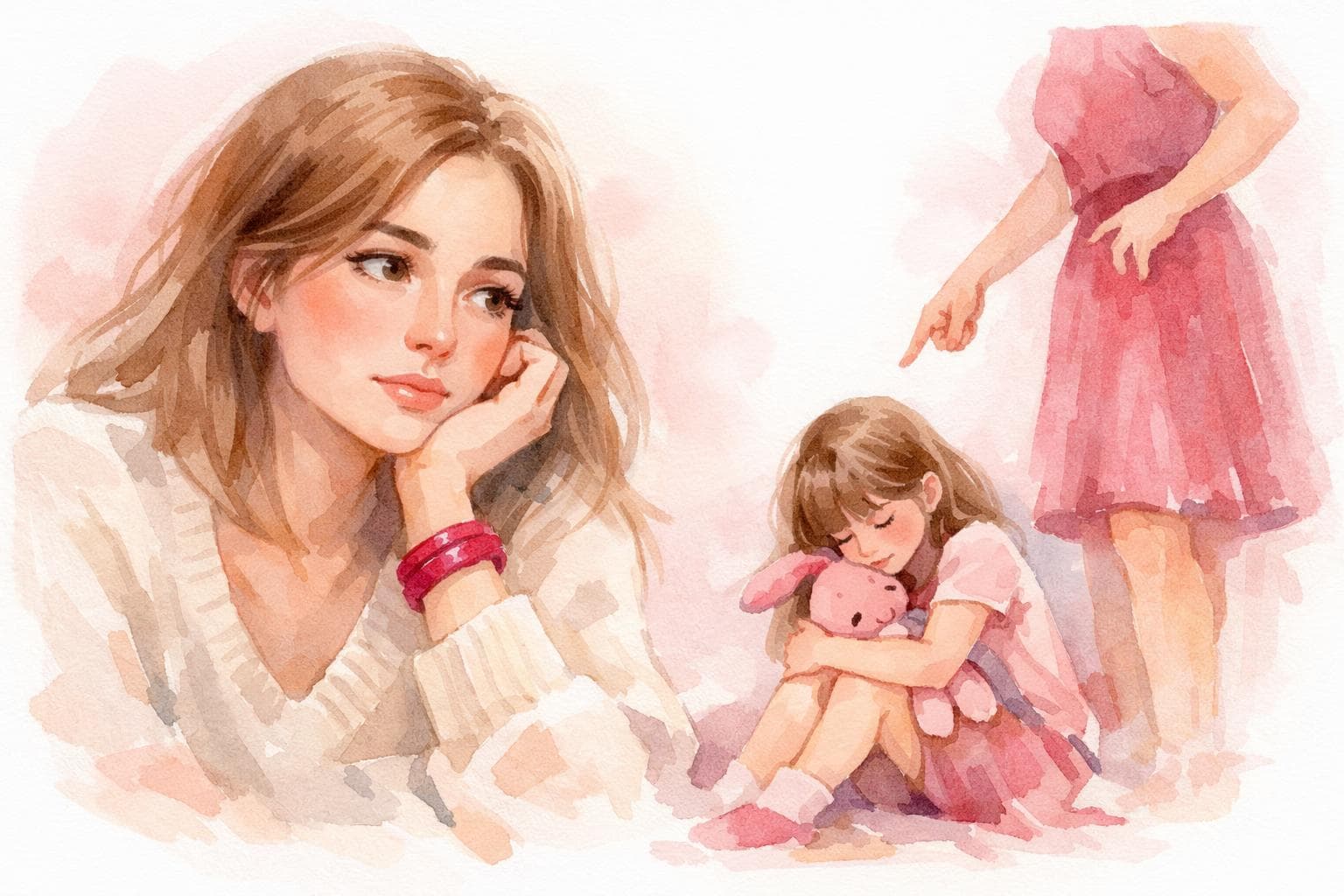
5. You were assigned a fixed family role. Family systems research describes common roles in narcissistic families: the golden child, who can do no wrong, and the scapegoat, who absorbs blame regardless of fault. A 2025 study of 504 Australian adults, published in the Journal of Psychology, found that perceived parental narcissism predicted anxiety and depression in adult children specifically through the mechanism of scapegoating.
6. You struggle with boundaries, in either direction. Either you find it very difficult to say no, or you swing hard toward rigid self-protection, both common adaptations to growing up without your own boundaries being respected.
7. You feel like an impostor even after real success. When achievement was about performing for someone else rather than pursuing your own genuine interest, success can feel hollow or unearned well into adulthood.
8. You have an anxious or avoidant attachment style. A longitudinal study by Hewitt and colleagues, described by Psychology Today as the first-ever such study on parental personality disorders and child development, found that parental narcissism predicted later child depression, anxious attachment and avoidant attachment.
9. You unconsciously seek partners who need completing. Psychology Today's 2025 analysis notes that adults raised this way may unconsciously seek relationships that reflect undeveloped parts of themselves, emotional steadiness, stability or guidance they never received.
10. You struggle to trust that love is unconditional. If love was routinely withdrawn as punishment or granted as a reward, trusting it as a stable, unconditional force in adult relationships takes deliberate, ongoing work.
11. You minimise your own experience by comparison. It wasn't that bad is one of the most common phrases adult children of narcissistic parents use about their own upbringing, frequently because the parent was never physically abusive, only emotionally inconsistent and self-centred, patterns that are real but harder to name.
Grandiose vs vulnerable narcissism, compared
Not all narcissistic parenting looks the same, and the distinction matters for recognising it.
Grandiose narcissistic parent | Vulnerable narcissistic parent | |
|---|---|---|
Outward presentation | Confident, charming, seeks admiration openly | Fragile, easily wounded, plays the victim |
How they seek validation | Direct praise, status, being the centre of attention | Sympathy, being seen as misunderstood or self-sacrificing |
Common child role assigned | Golden child, to reflect well on parent, or scapegoat, to blame | Caretaker, emotionally responsible for the parent's wellbeing |
Effect on child, per Cureus 2025 review | Linked directly to child anxiety and depression | Linked indirectly to anxiety and depression, largely via scapegoating |
How it is often mistaken for | Simply a strong personality or ambition | Simply sensitivity or being a lot of work |
What actually helps
Recognising these patterns is not about diagnosing your parent from a distance, and it is not about assigning blame as an end point. It is about gaining accurate insight into your own experience so the patterns stop running on autopilot.
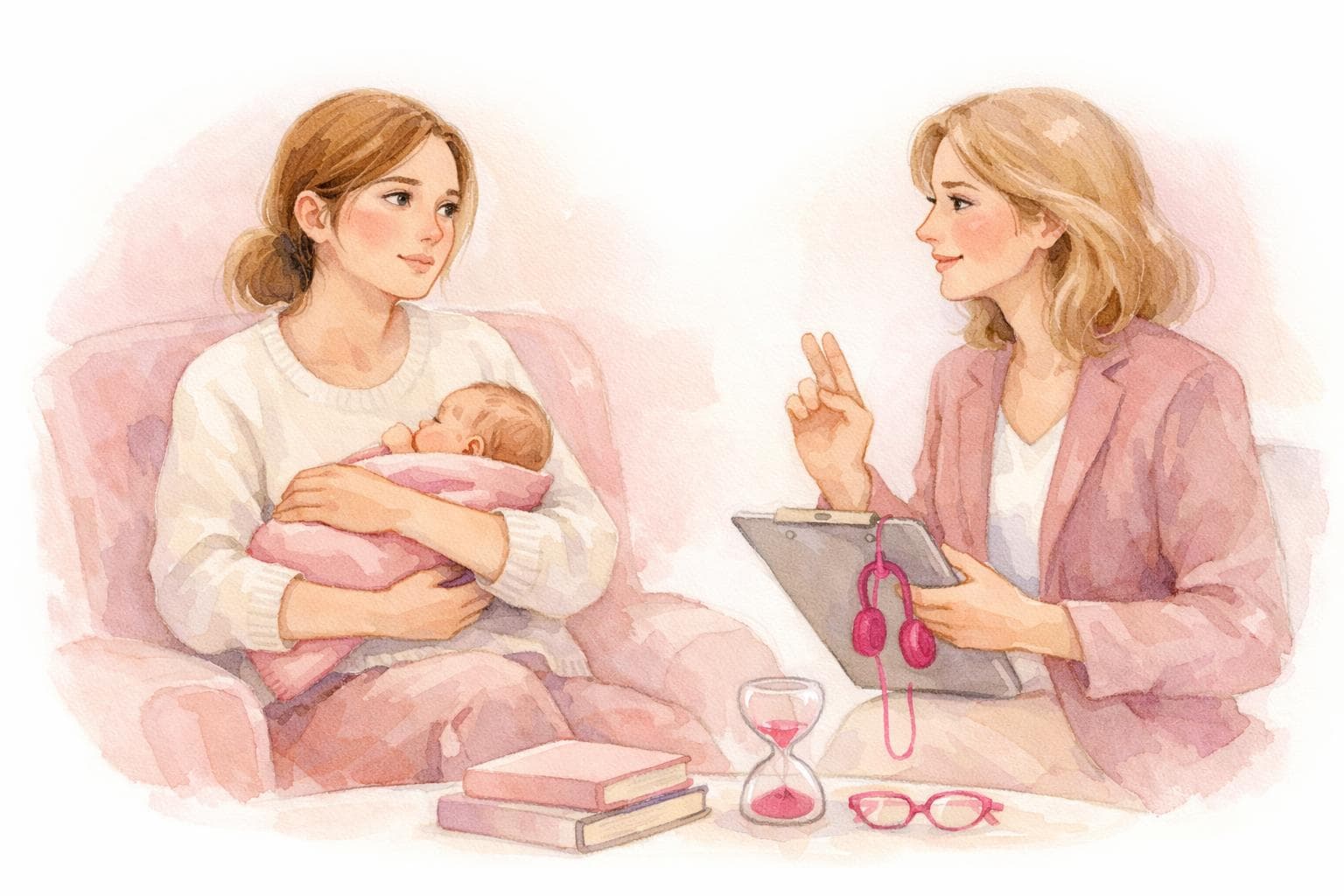
Our guide to therapist vs counselor vs psychologist: how to choose can help if you are considering professional support to work through this, and our piece on identity beyond mom: rediscovering who you are covers related identity work that many adult children of narcissistic parents find useful, particularly around rebuilding a sense of self separate from a caretaking role.
"The narcissistic parent often has a poor sense of differentiation from their child. Their child is an extension of themselves." - Dr. Ramani Durvasula, psychologist and narcissism researcher, cited by TODAY (2025)
Key takeaways
- Roughly 1% to 6% of the population meets criteria for narcissistic personality disorder, while the broader narcissistic personality type, which still shapes parenting significantly, is considerably more common.
- A 2025 systematic review of eight empirical studies confirmed that parental narcissism consistently predicts poorer relational and psychological outcomes in children, with effects differing by narcissism subtype.
- Scapegoating is a documented mechanism, not just a family label. A 2025 study of 504 adults found it directly links parental narcissism to adult anxiety and depression.
- The signs are often invisible from the outside and misattributed to the adult child's own personality, since the harm is relational rather than physical and frequently coexists with outward charm or generosity.
- Recognising these patterns is about accurate insight, not diagnosing someone from a distance, and is often the first genuine step toward changing inherited relational habits.
Sources and further reading
- Orovou, E., Jotautis, V., Vousoura, E., Koutelekos, I., Rigas, N. & Sarantaki, A. (2025). Impact of Parental Narcissistic Personality Disorder on Parent-Child Relationship Quality and Child Well-Being: A Systematic Review. Cureus, 17(12), e100229. cureus.com
- TODAY. (2025). The No. 1 sign you were raised by a narcissist, according to a psychologist. today.com
- Psychology Today. (2025). Signs a narcissistic parent has affected your adult life. psychologytoday.com
- Psychology Today. (2024). How a parent's narcissism affects a child's mental health. psychologytoday.com
- Vignando, M. & Bizumic, B. (2025). Parental Narcissism Leads to Anxiety and Depression in Children via Scapegoating. Journal of Psychology: Interdisciplinary and Applied.
- Psychiatry Magazine. (2026). Narcissistic parent: hidden psychological damage in adult children. psychiatrymagazine.com