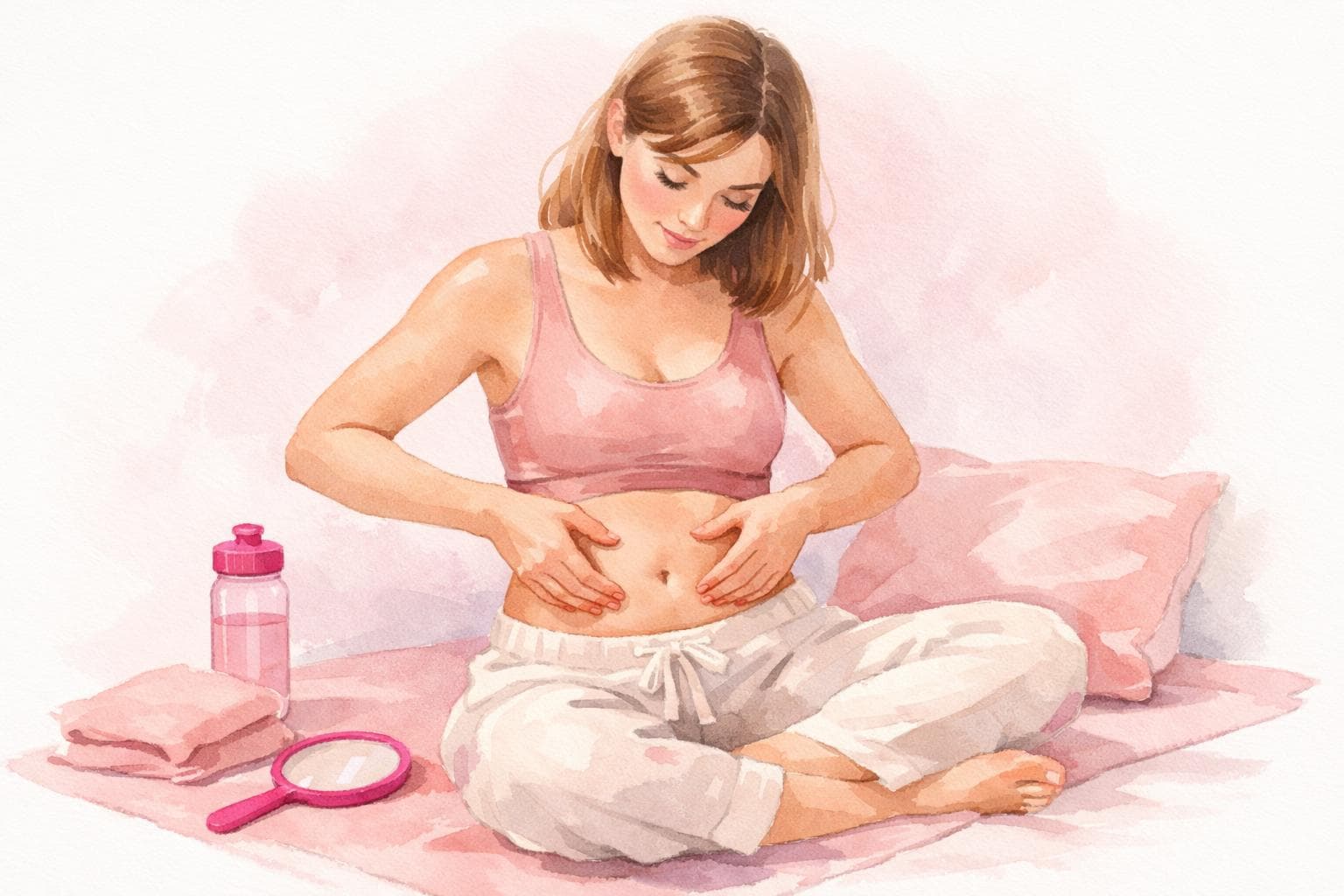
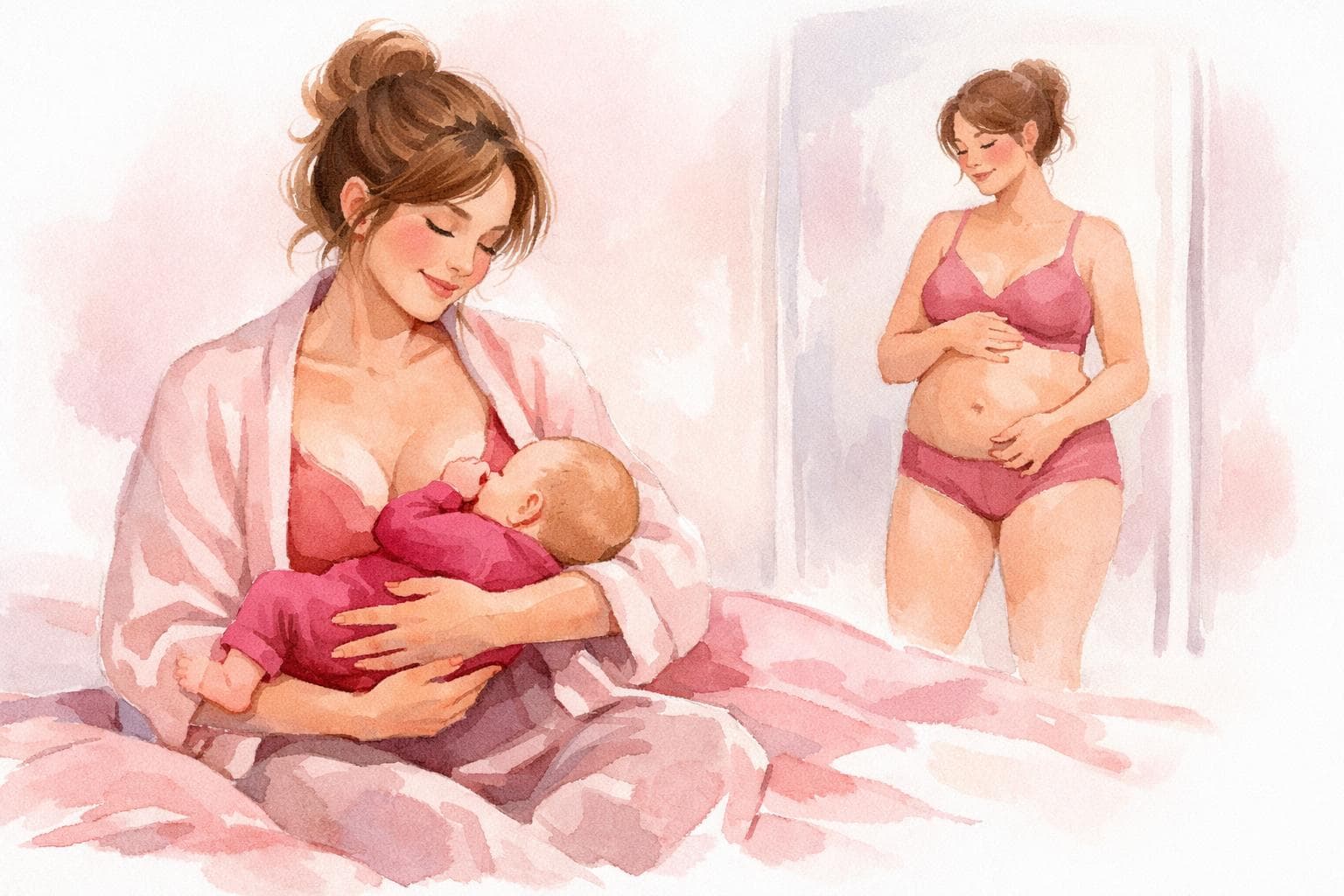
The language around the postpartum body is almost entirely borrowed from weight loss marketing.
Bounce back. Get your body back. Snap back to your pre-pregnancy shape. As though the body were a piece of elastic that had been stretched temporarily and needed only sufficient effort to return to its previous configuration. As though what happened during pregnancy and birth were a detour from the real version of yourself rather than a significant, permanent, deeply physical experience of being human.
Most mothers encounter this language before they are out of the first week. Sometimes from magazines, sometimes from social media, sometimes from people they love who mean well. And it lands on a body that is still bleeding, still leaking, still healing from an experience that no amount of core work will fully undo. The gap between the expectation and the reality is large and almost universally unacknowledged.
What the postpartum body actually is
The body after birth is not a project. It is a person. Specifically, it is a person who has recently accomplished something that involved sustained physiological intensity, significant structural change and a transition that took nine months and is not resolved in six weeks.
The changes that pregnancy and birth produce are not all temporary. The widening of the pelvis. The way the ribcage expands and does not always fully contract. The changes to breast tissue. The specific relationship between hormones and skin and hair and mood that takes months to rebalance. The ways the core and pelvic floor have been reorganised in order to carry and deliver a child.
Some of these changes are visible. Many are not. Most are permanent in the sense that they are part of the body's history now, incorporated into who you are physically rather than being aberrations to be corrected.
Research published in Nature Neuroscience (2016) documented that brain structure itself changes during pregnancy in measurable ways, with alterations persisting for at least two years. The postpartum body includes the postpartum brain, and neither returns to its pre-pregnancy state exactly as it was. They integrate the experience rather than erasing it.
Where the before-and-after story comes from
The before-and-after narrative around the postpartum body is not accidental. It is embedded in a culture that treats women's bodies as primarily aesthetic projects, and it intersects with a diet and fitness industry that has specific financial interests in mothers believing that their postpartum bodies require correction.
Sociologist Angela McRobbie, whose work on postfeminism and body culture has been influential in the field, describes the pressure on postpartum women to return their bodies to a pre-pregnant state as one of the most visible expressions of the wider cultural expectation that femininity involves the constant management and improvement of the body. The baby is acknowledged as an achievement. The body that produced the baby is treated as a problem.
The consequences of this framing are measurable. A 2021 study published in Women's Health found that negative postpartum body image was one of the strongest predictors of low maternal wellbeing in the first year, more consistently associated with depression and anxiety than sleep deprivation in the samples studied. How a mother feels about her body affects her mental health in ways that go beyond the cosmetic.
What a different relationship with the postpartum body looks like
Not loving your body unconditionally at all times, which is not a realistic standard for any body at any time. Something more practical and considerably more achievable: regarding the body with something approaching neutrality and functionality rather than judgment and improvement.
This means:
- Dressing the body you have right now rather than the one you are waiting to return to. Clothes that fit, that feel comfortable, that do not serve as daily evidence of a gap between the current body and the target one.
- Feeding the body what it needs rather than what the diet culture of your pre-pregnancy life said it should have. A postpartum body is doing significant work and requires appropriate fuel, not restriction.
- Moving in ways that feel good rather than performing exercise as a form of correction. Movement that comes from enjoyment or energy or physical pleasure is different from movement motivated by the desire to return to a previous size.
- Allowing the body time to settle without assigning a timeline to that settling. Recovery from pregnancy and birth is measured in months and years rather than weeks.
The before-and-after story and what it misses
What the before-and-after narrative says | What is actually true |
|---|---|
The goal is to return to your pre-pregnancy body | The goal is a body that is healthy and functional in its current form |
Change happened to your body | Your body changed in order to do something extraordinary |
The postpartum body is a temporary state | The postpartum body is a permanent part of your physical history |
You should look like you didn't have a baby | You had a baby. That is visible in many bodies and does not require correction. |
Recovery is linear and time-limited | Recovery is individual, non-linear and cannot be assigned a deadline |
"Your body is not a before-and-after. It is a home that has been lived in." - Unknown
If breastfeeding is part of how your relationship with your body has become complicated, breastfeeding and body image: navigating a complicated relationship addresses that specific intersection with more depth. And if getting dressed in the morning has become its own form of daily confrontation, how to dress for your postpartum body without hating every mirror offers something practical without requiring the body to be different first.
Your body did something. It is still doing something. The story of it is not finished, and it is not a before-and-after.
Further reading: Lexie and Lindsay Kite, More than a body: your body is an instrument, not an ornament (2020). Christy Harrison, Anti-diet: reclaim your time, money, wellbeing and happiness through intuitive eating (2019). Sonya Renee Taylor, The body is not an apology: the power of radical self-love (2018).