Nobody told me postpartum massage was a thing I could have.
I spent the first six weeks after birth dealing with the standard recovery toolkit: rest when you can, gentle movement when ready, eat well, ask for help. Massage was not on anyone's list. It felt like a luxury that belonged to a different version of the postpartum period, one with more sleep and fewer opinions from relatives about how I was holding the baby.
But postpartum massage is not a luxury add-on. It is, for many women, a genuinely useful recovery tool with a real evidence base behind it. Here is what you actually need to know.
What postpartum massage is
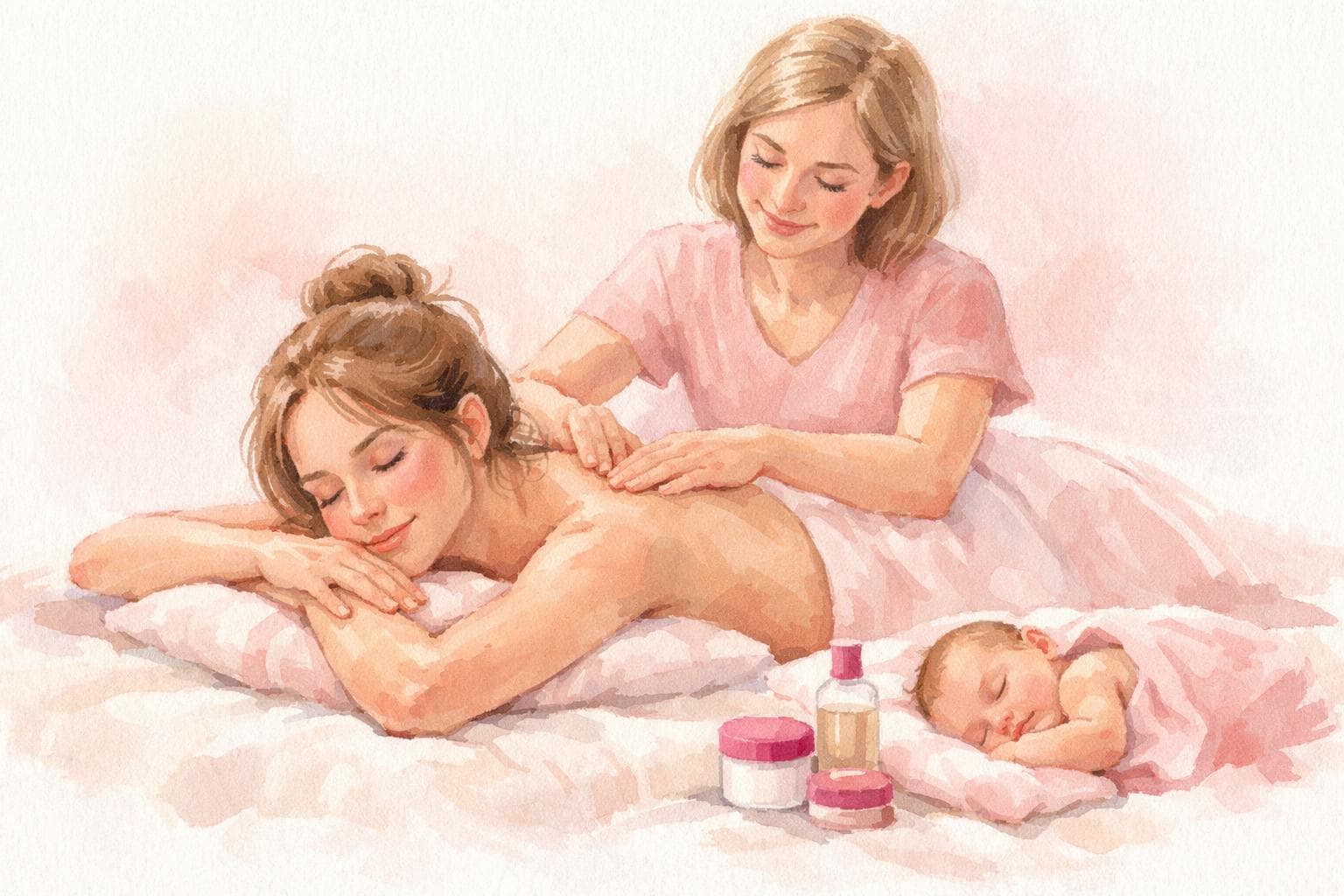
Postpartum massage is therapeutic massage provided to a mother after childbirth. It differs from a standard relaxation massage because it takes into account the specific physical changes of the postpartum body: hormonal shifts, uterine involution, breast tissue changes, altered posture from feeding and carrying, musculoskeletal recovery from birth and, in the case of caesarean births, scar tissue management.
It can be provided by a trained massage therapist, a specialist postnatal bodyworker or, in some traditions, a postpartum doula with massage training. Different cultures have formalised postpartum massage in very specific ways: Malay and Indonesian traditions prescribe abdominal binding and massage as standard postnatal care, as do many Ayurvedic traditions in South Asia.
What the research says about the benefits
The evidence is solid, particularly for certain outcomes.
A 2012 study published in the Journal of Bodywork and Movement Therapies found that postpartum massage significantly reduced cortisol levels and improved reported mood in new mothers, with effects comparable to those found in general depression research. A separate randomised controlled trial found that mothers who received regular postpartum massage showed reduced symptoms of postnatal depression compared to a control group.
Research on postpartum recovery more broadly identifies several mechanisms through which massage may support wellbeing:
- Reduced cortisol. Therapeutic touch reduces the stress hormone cortisol, which is consistently elevated in the postpartum period.
- Improved sleep quality. Massage promotes the kind of physical relaxation that supports deeper sleep in the windows when sleep is available.
- Reduced musculoskeletal pain. Neck, shoulder and upper back pain from feeding, carrying and the biomechanical demands of new parenthood respond well to therapeutic massage.
- Oedema reduction. Post-birth swelling in legs and feet can be reduced through specific lymphatic drainage techniques.
- Hormonal support. Oxytocin release during massage may support bonding and milk production in breastfeeding mothers, though the evidence here is less robust than for cortisol and mood.
The risks and when to wait
Postpartum massage is not appropriate in all situations or at all times. Knowing when to wait or what to avoid is as important as knowing the benefits.
Wait until at least six weeks for abdominal massage if you have had a caesarean. Scar tissue needs time to stabilise before direct pressure is applied, and abdominal massage before this can disrupt healing.
Avoid deep tissue massage on the legs in the early postpartum period. Deep vein thrombosis (DVT) risk is elevated for up to six weeks after birth. Vigorous leg massage during this period could potentially dislodge a clot. Light, gentle work on legs is generally considered safe. Always disclose recent birth to your therapist.
Avoid the abdomen in the first few days after a vaginal birth. The uterus is still contracting and the tissues are actively healing.
Consult your GP or midwife first if you have had complications including pre-eclampsia, haemorrhage, infection or wound healing issues.
Postpartum timing | What is generally safe |
|---|---|
Days 1 to 7 | Gentle back, neck, shoulders and feet only |
Week 2 to 6 (vaginal birth) | Extended body work, excluding deep leg work |
Week 6+ (vaginal birth) | Abdominal work can begin with a qualified practitioner |
Week 6 to 12 (caesarean) | Light abdominal work around (not on) scar |
Week 12+ (caesarean) | Scar tissue massage can begin if fully healed |
What to ask your therapist
Not all massage therapists are trained in postpartum considerations. Before you book, it is worth asking a few specific questions.
- Do you have specific training or experience in postpartum massage?
- Are you aware of DVT precautions in the early postpartum period?
- How do you adapt your approach for caesarean recovery?
- Can you work around breastfeeding or do you have a room I can feed in?
- What do you need to know about my birth and recovery before we start?
A good postnatal massage therapist will ask these questions themselves before you get on the table. If they do not, that is useful information.
Making it accessible
Postpartum massage does not require a spa booking. Many practitioners offer home visits for exactly the early postpartum period, when leaving the house is genuinely difficult. Some maternity hospitals and birth centres offer postnatal massage as part of their provision. It is worth asking.
Cost is typically £50 to £90 per session in the UK, depending on location and practitioner type. Some practitioners offer a reduced rate for postpartum clients in the first twelve weeks.
"The body is the guardian of its own integrity. The role of the therapist is to support rather than direct that process." - Deane Juhan, Job's body
For moms managing the full physical weight of postpartum recovery alongside the emotional one, always tired even after resting: what it means for moms addresses whether the exhaustion has a physical cause worth investigating. And for the emotional dimension of the postpartum period, how to cope with postpartum depression: getting help without the shame remains the companion resource.
Your body did something significant. It is allowed to be cared for.
Further reading: Sheila Kitzinger, The complete book of pregnancy and childbirth (2011). Association of Postnatal Illness: apni.org. NHS: recovering after birth.