It usually starts with something small.
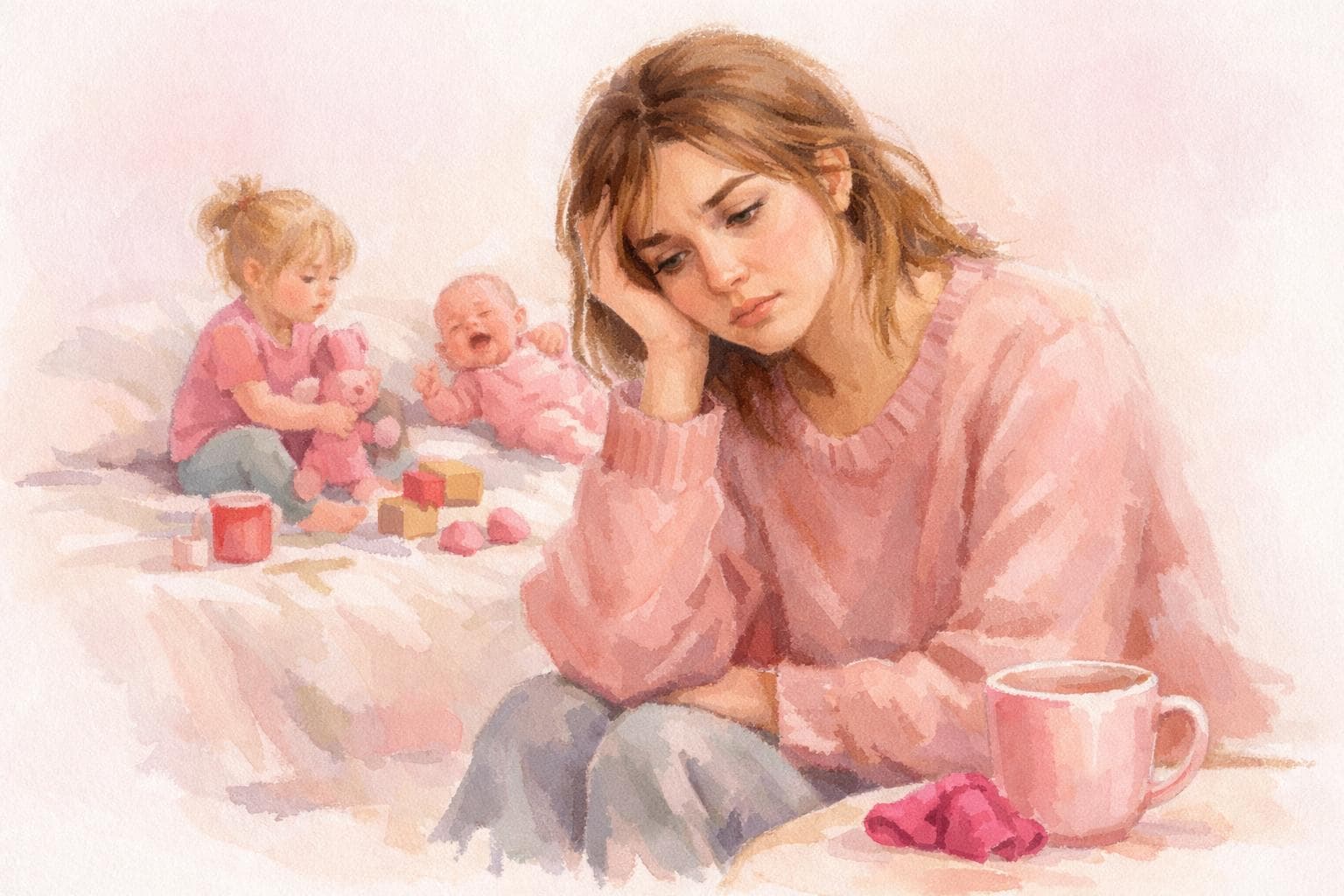
A spilled drink that lands on a clean floor. A question asked for the fourteenth time. Someone touching you when you have been touched all day and just need one minute where your body belongs only to you. And then something shifts, and the response that comes out of you is nothing like what the situation called for.
Afterwards, the shame arrives. You look at this small person who caused none of the underlying conditions and feel like someone who doesn't deserve to be their mother.
Mom rage is real. It is common. And it is almost never actually about the spilled drink.
What mom rage is and why it matters that we name it
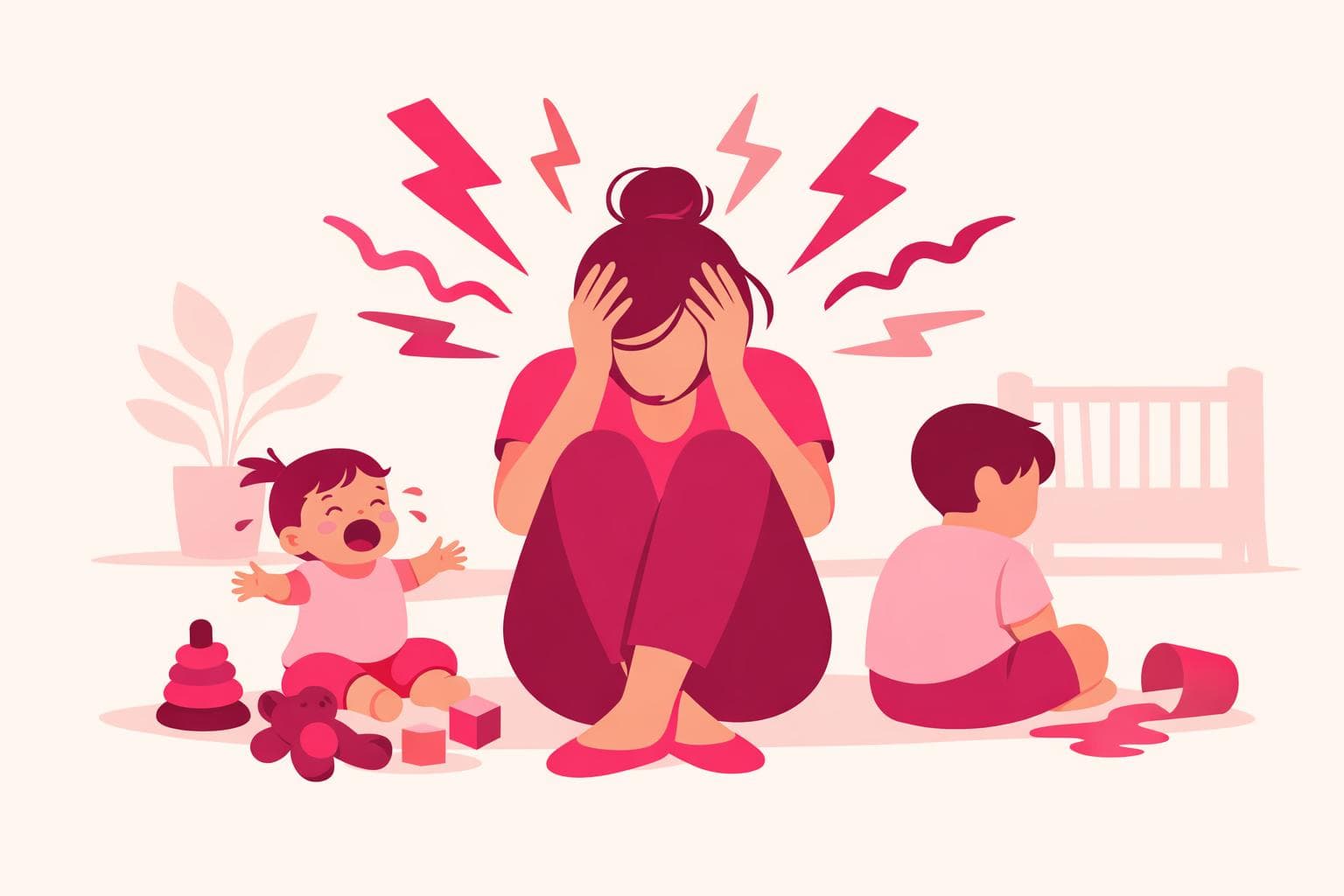
Mom rage is the term used to describe sudden, intense anger in mothers that feels disproportionate to its immediate trigger. It's distinct from ordinary irritability in its intensity and in the sense of coming from somewhere the person didn't know was there. Many mothers describe it as feeling hijacked: a reaction that overrides their intention before they've had a chance to choose it.
The fact that we have a name for it matters, because naming a phenomenon allows us to examine it rather than simply feel ashamed of it. Shame tends to keep behaviour hidden and unchanged. Understanding tends to create the conditions for something different.
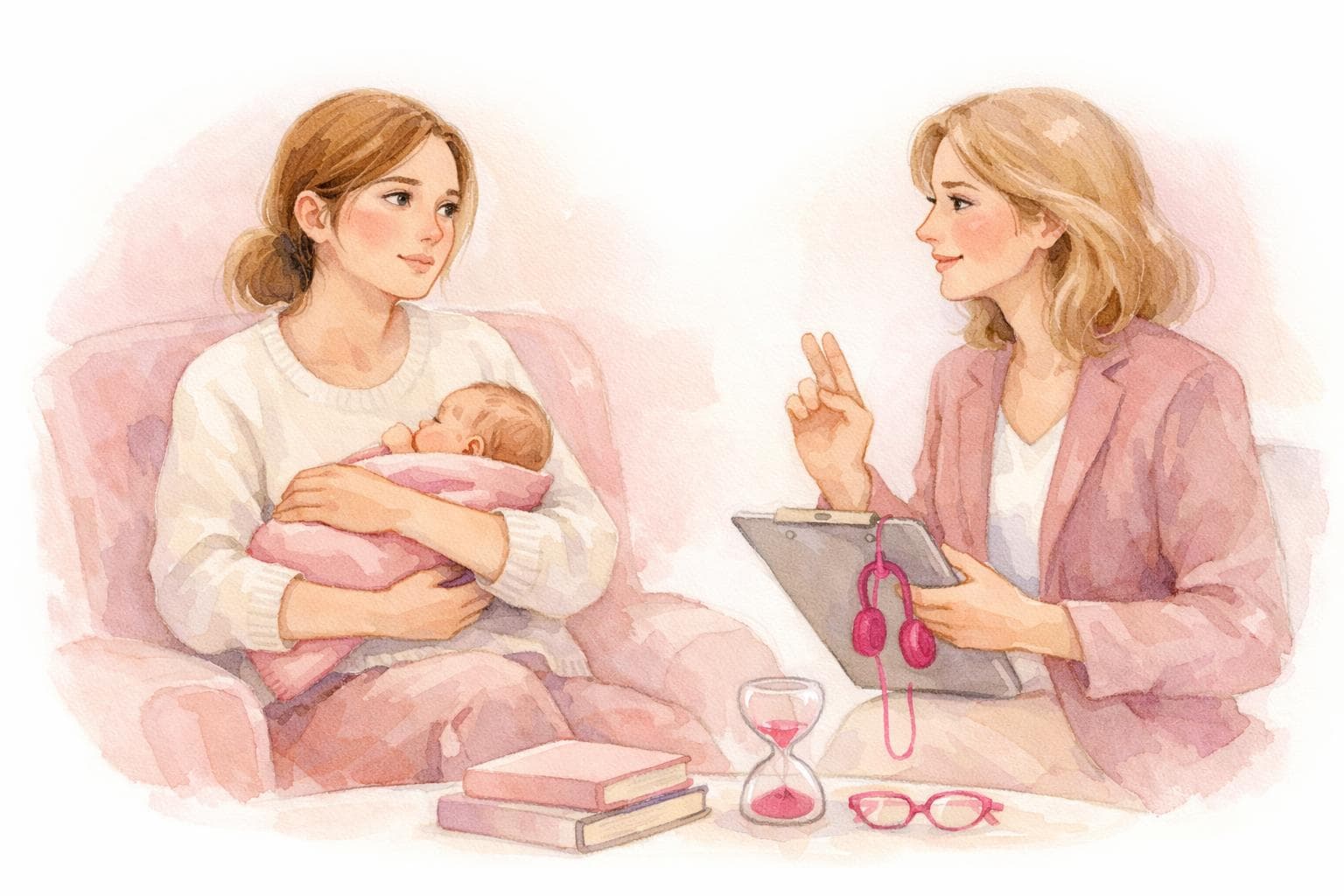
A 2021 study published in BMC Psychiatry found that maternal anger was significantly underreported in clinical settings, with most mothers hesitant to disclose it to health professionals out of fear of being judged as unfit parents. The study noted that this reticence meant that anger, as a postpartum symptom, was routinely missed, even when it was a primary indicator of a treatable condition like postnatal depression or postpartum anxiety.
Anger is not always the presenting face of these conditions, but it frequently is.
Where it actually comes from
Mom rage doesn't come from becoming a bad person. It comes from a very specific set of conditions colliding.
Sleep deprivation is part of it. Research consistently shows that even moderate sleep loss increases emotional reactivity and reduces the prefrontal cortex's ability to regulate limbic responses. In plainer terms: a tired brain cannot moderate anger as effectively as a rested one. This is not a character failing. It is neurological.
Sensory overload is part of it. The experience of being touched, needed, listened to and called upon constantly, without sufficient physical and cognitive space, pushes the nervous system toward a state where even small inputs produce large responses. This is particularly relevant for mothers who also have sensory sensitivities and often goes unnamed as a contributing factor.
Chronic unmet needs are part of it. Psychologist Harriet Lerner in The dance of anger (1985) describes anger as a signal that something important to us is being violated or neglected. Mom rage in that framework is not an explosion without cause. It is what happens when unmet needs have accumulated silently for long enough that the container stops holding.
And the invisible labour is part of it. A person carrying the full weight of mental, emotional and physical household management without adequate recognition or relief, is carrying something that produces pressure. That pressure needs somewhere to go.
What's usually underneath it
Surface trigger. What's often underneath
The spilled drink
Exhaustion and the sense that you can't get one moment of ease
The repeated question
Depletion and the feeling of being everyone's only resource
Being touched again
Touch deprivation of the self alongside touch saturation as a caregiver
A partner doing something "wrong"
Resentment that has been building without a voice
A child not listening
The accumulated frustration of not being heard yourself
Looking at the second column is not about explaining away the anger or deciding it doesn't matter. It's about understanding what the anger is trying to communicate because that's where the useful information is.
What to do in the moment
There is a gap between the trigger and the reaction. It is very small. But it exists and the goal of most anger management approaches is to use it.
- Name it internally first. Before it comes out, something like "I am about to lose it and I need a pause" gives the prefrontal cortex a chance to re-engage. Labelling an emotion reduces its intensity, a phenomenon researchers call "affect labelling," demonstrated in neuroimaging studies by Matthew Lieberman at UCLA.
- Create physical distance if you can. Not to avoid the child, but to break the sensory and situational loop. A brief exit to another room, a minute in the bathroom, a walk to the kitchen. Distance buys time.
- Lower your voice rather than raising it. This sounds counterintuitive but speaking more slowly and quietly when you feel like shouting has a genuine physiological effect: it signals to your own nervous system that the threat level is lower than it felt a moment ago.
- Repair afterwards without excessive self-punishment. Losing your temper with your child is not ideal, but the response that follows it matters more than the incident itself. A simple acknowledgment ("I got very angry and I shouldn't have shouted. I'm sorry") models something valuable without requiring extended self-flagellation.
The longer-term picture
Managing mom rage in the moment is possible and worth practising. But if the rage is frequent, severe or accompanied by feelings of shame and low self-worth, it deserves more than coping strategies. It deserves investigation.
Postpartum depression and anxiety frequently present as anger rather than sadness. Hormonal conditions, including thyroid dysfunction, can cause irritability that looks and feels like rage but has a physiological cause. Burnout that has gone unaddressed long enough creates a baseline of reactivity that individual moments can't explain.
"Anger is information, not instruction." — Susan David, Emotional agility
If the anger feels like it's sitting on top of something larger, Emotional exhaustion in motherhood: what it really means explores what chronic depletion actually looks like from the inside. And if resentment is part of what you're noticing underneath the rage, Resentment in motherhood: where it comes from gets into the specifics of where that tends to build and why.
Mom rage is a signal. It is not a verdict on who you are.
Further reading: Harriet Lerner, The dance of anger (1985). Susan David, Emotional agility (2016). Daniel J. Siegel & Tina Payne Bryson, The whole-brain child (2011).