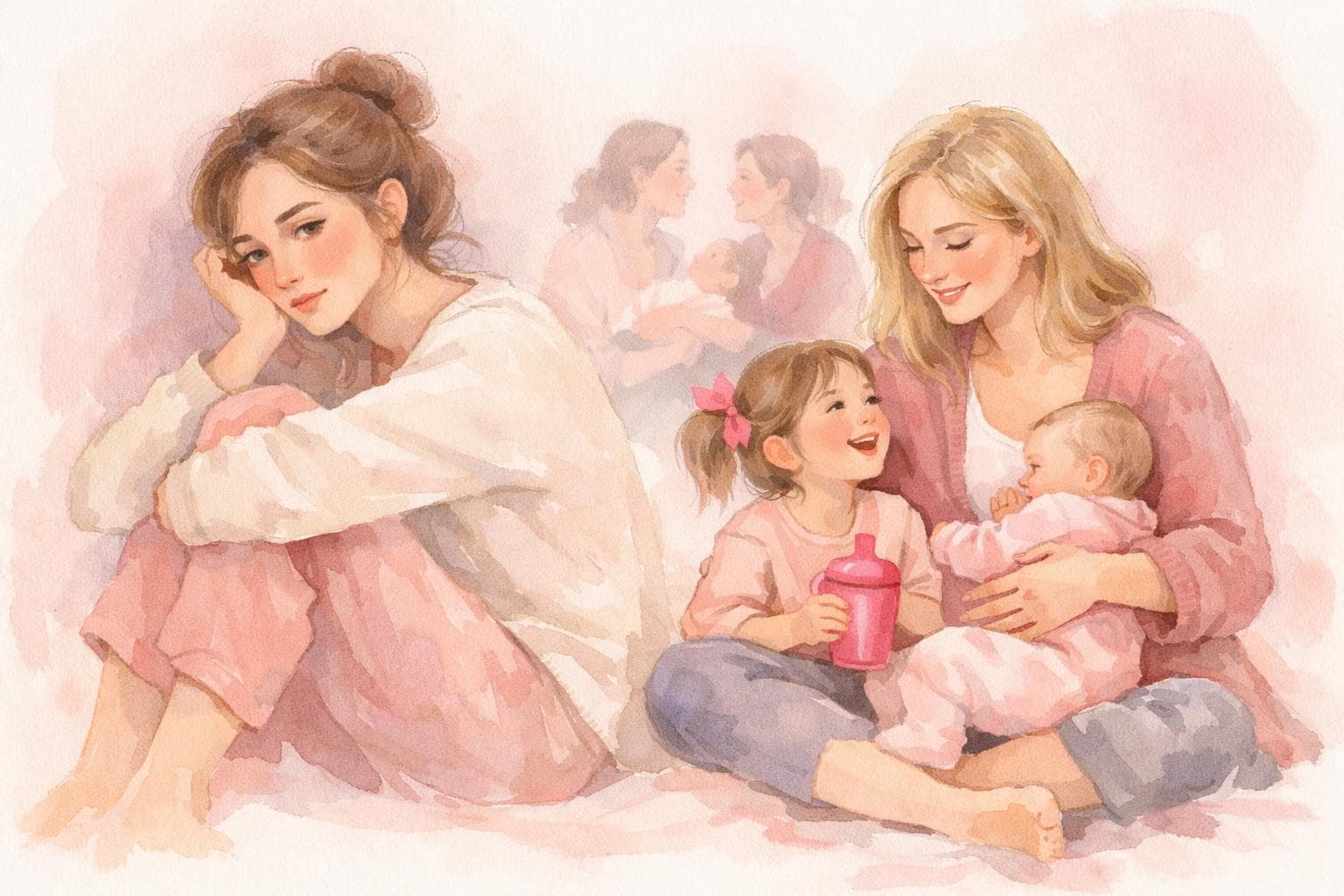
Making friends as a mother is supposed to be easy. You are surrounded by other people in the same situation, sharing the same exhaustion, the same schedule, the same small person who has reorganised your entire life. The conditions for connection seem obvious.
And yet most mothers describe it as surprisingly, sometimes mortifyingly, difficult.
The playgroup you attended three times before giving up. The promising exchange at the school gate that never turned into a coffee. The WhatsApp thread for the antenatal class that stayed exactly at the level of birth announcement and nothing more personal. If making friends as an adult is already harder than it was at twenty, making friends as a mother adds several additional layers of complication that nobody quite prepares you for.
Why making mom friends is genuinely hard
The difficulty is not social incompetence or lack of effort. It is structural.
Sociologist Jan Yager, whose work on adult friendship has been foundational in the field, identifies life transitions as the primary point at which adult friendships form or fail. The transition to parenthood is one of the most significant of those, but it comes with specific conditions that work against new connection: limited time, reduced energy, the particular social context of parenting settings and the way that shared circumstances do not automatically produce shared rapport.
Having a baby at the same time as someone else gives you a starting point. It does not give you a friendship. Friendship requires something beyond proximity: the particular click of two people who find each other genuinely interesting, who are willing to be honest rather than performative and who have enough available attention to invest in something new.
That last ingredient is precisely what early motherhood makes scarce.
A 2020 study from the University of Kansas found that building a close friendship requires, on average, around 200 hours of shared time. For new mothers managing childcare, work, households and their own recovery, that kind of accumulated time is genuinely difficult to find. And in parenting contexts specifically, much of the shared time is occupied by the logistics of the children rather than by the kind of conversation that builds real connection.
What makes mom friendship different from other adult friendship
A few things that don't apply in the same way to friendships made in other contexts.
Most parenting social settings are organised around the children rather than the adults. The conversation defaults to feeding schedules and developmental milestones. The time available is governed by nap windows and snack needs. The emotional availability of both people is, on average, lower than it would be in a setting with less demand.
There is also a specific social performance pressure in parenting contexts. The fear of being judged as a parent, of saying the honest thing about how hard this is and being met with raised eyebrows rather than recognition, keeps a lot of mothers at a surface level in exactly the places where real friendship might otherwise develop.
And there is the demographic lottery. Just because two people are parents at the same time does not mean they have anything else in common. The personality chemistry, the humour, the values alignment, the mutual curiosity that produces actual friendship: these are independent of parenting status.
What actually helps
Not attending more groups, necessarily. Doing the specific things that move potential connection from surface to depth.
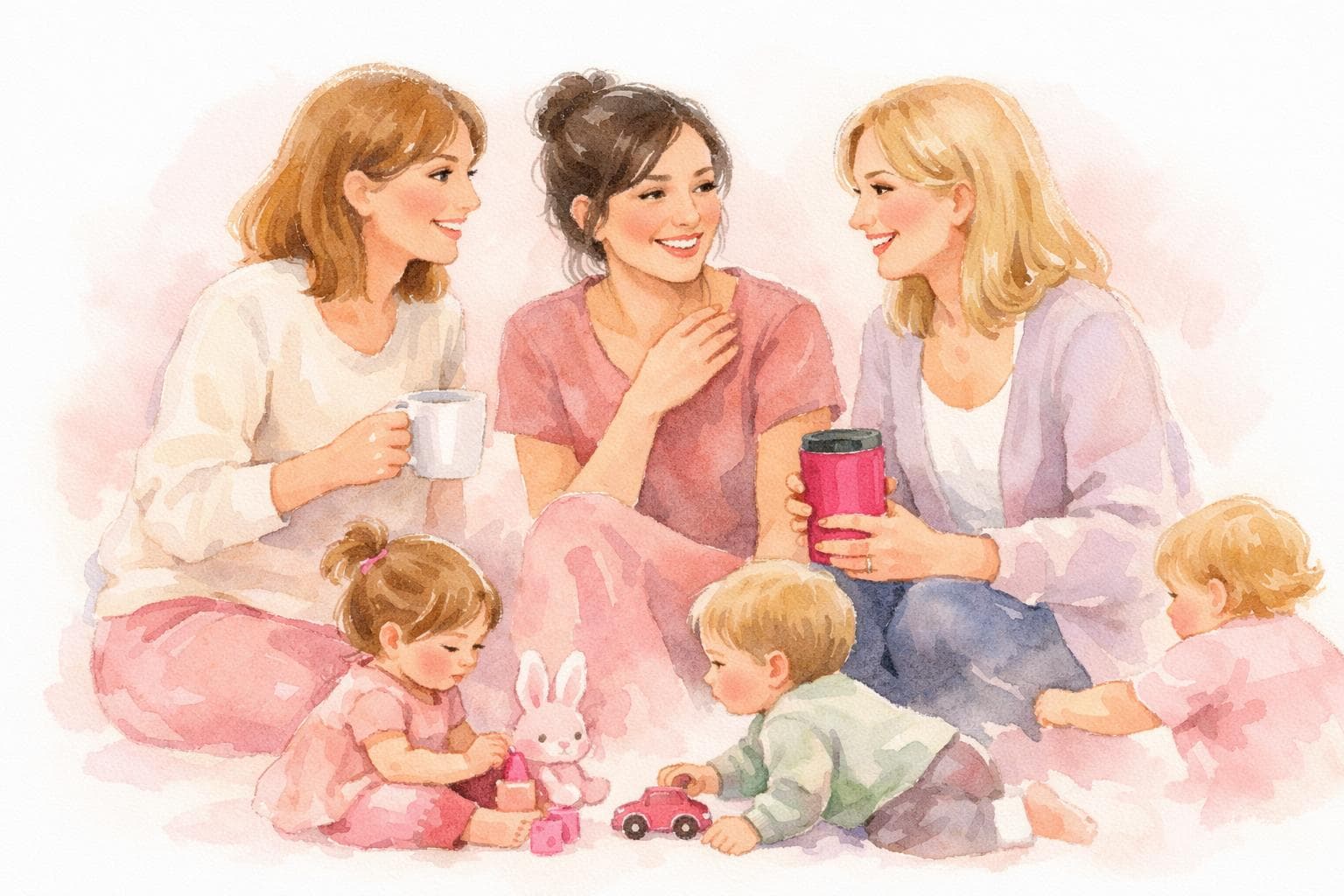
Be the one who says the real thing first. In most parenting social settings, everyone is waiting for someone else to admit that this is harder than expected, that they are struggling, that the joy is real and the exhaustion is also real. The person who says that first tends to create a space that everyone else was already wanting to enter.
Lower the bar for initiating. "Do you want to get a coffee sometime?" is a complete social offer. The version that never happens because you're waiting for a more comfortable moment is not. Discomfort is the cost of initiation. It is almost always worth paying.
Separate quality from quantity. One friendship where you can be genuinely honest is worth more than ten where you are performing fine. If a particular setting is not producing real connection, it is worth redirecting the limited time and energy toward the things that are.
Try settings organised around something other than parenting. A class, a community group, a volunteer role: these produce friendships rooted in shared interest rather than shared circumstance, which tend to have more staying power and feel more like the friendships that existed before children.
What the research says about friendship and maternal wellbeing
Type of social connection | Effect on maternal mental health |
|---|---|
Frequent but surface-level contact | Limited protective effect against loneliness and depression |
At least one close, honest friendship | Strongly associated with reduced postpartum depression risk |
Peer support groups with facilitation | Measurable improvement in mood and parenting confidence |
Online community without real-world contact | Moderately helpful but does not replace in-person connection |
A 2018 study published in Maternal and Child Health Journal found that mothers with at least one close supportive friendship showed significantly lower rates of postpartum depression than those without, independent of relationship status, income or other factors. The friendship itself was a protective variable.
That finding is worth sitting with. A single real friendship is not a nicety. It is, in measurable terms, a health resource.
"Friendship is born at the moment when one person says to another: what, you too? I thought I was the only one." - C.S. Lewis, The four loves
If loneliness is a significant feature of where you are right now, loneliness in motherhood: why it happens and how to find connection addresses the broader experience with more depth. And if your social world narrowed when you had children in ways that have left friendships strained or lost, when friendships fall apart after kids and what to do is worth reading alongside this.
Most mothers who describe their closest friend in this period also describe the specific moment when the friendship became real: the first time one of them said something honest and the other one didn't flinch.
That moment is available to you. It just requires someone to go first.
Further reading: Jan Yager, When friendship hurts (2002). Lydia Denworth, Friendship: the evolution, biology and extraordinary power of life's fundamental bond (2020). Brené Brown, Braving the wilderness (2017).