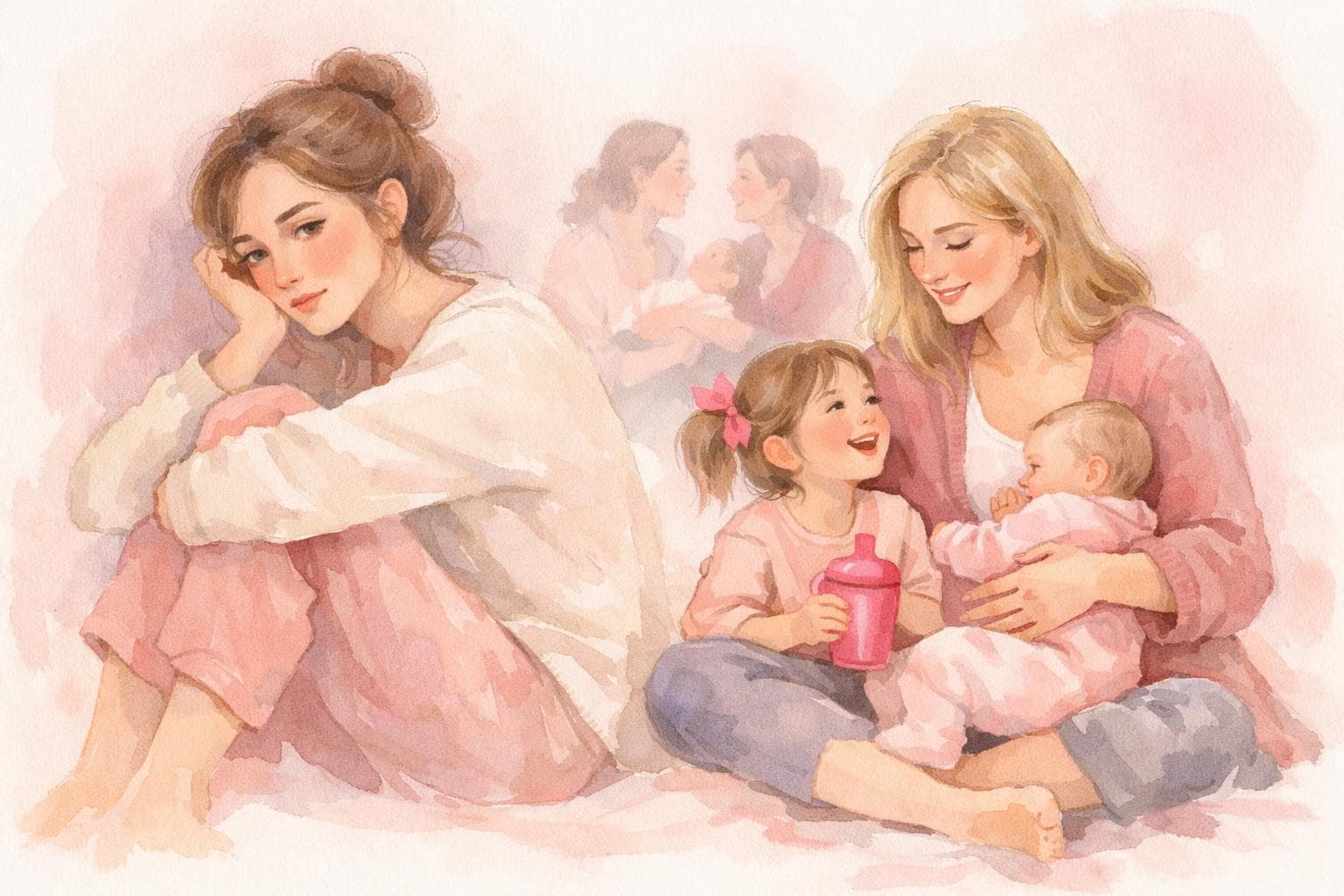
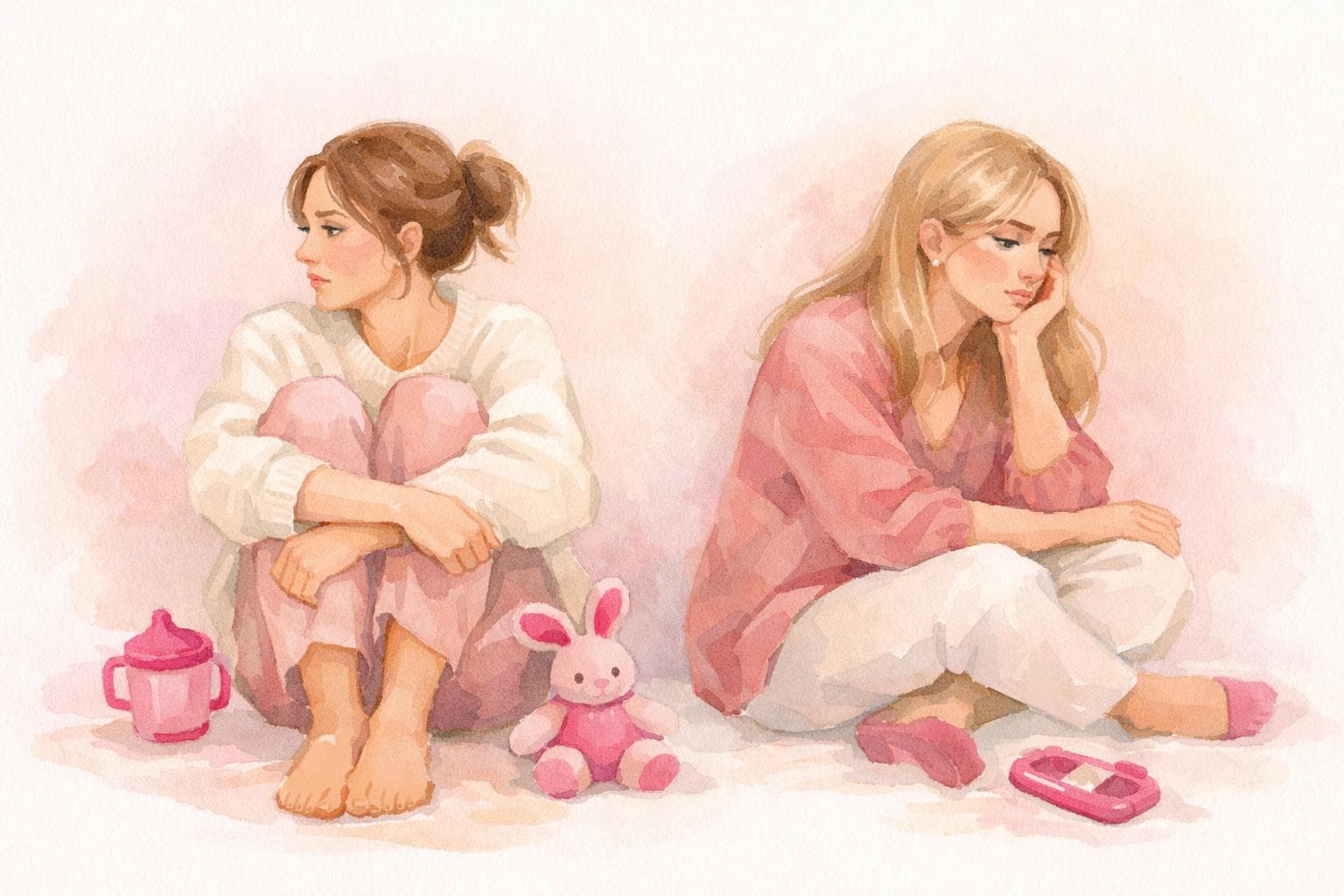
There's a specific grief that comes with losing a friendship in adulthood. It doesn't have the drama of a breakup. There's no conversation, no official ending, no moment you can point to and say: there, that's when it happened. It just quietly gets harder to arrange, and then harder to sustain and then one day you realise you haven't spoken in four months and neither of you has done anything about it.
Having children accelerates this process in ways nobody warns you about. The friendships that seemed solid before the ones built over years, through shared history and easy availability start to show their fault lines the moment your life restructures itself around a small person who needs you constantly.
Some of those friendships survive. Some don't. And figuring out which is which, and what to do about it, is one of the lonelier parts of early motherhood.
Why it happens and why it's not anyone's fault
The friendship fallout after children isn't usually caused by conflict. It's caused by divergence two lives that were roughly parallel suddenly moving in different directions at different speeds.
Research by sociologist Jan Yager, whose work on adult friendship spans decades, found that life transitions are the single biggest predictor of friendship loss in adulthood. The shift from childless to parent is one of the most significant of those transitions not just in terms of time and availability but in terms of what you think about, what you worry about and what you need from the people around you.
A 2020 study from the University of Kansas found that maintaining a close friendship requires, on average, around 200 hours of shared time to reach genuine closeness. For new parents that kind of time simply doesn't exist in the same way. What used to be spontaneous becomes logistical. What used to be easy becomes effortful. And effort when you're already running on empty is the first thing to go.
The friendships that fall away most quickly tend to share certain characteristics: they were built primarily around shared activities that no longer fit your life late nights, spontaneous travel, long uninterrupted dinners. They relied on rough equivalence of schedule and freedom. They hadn't yet been tested by anything that required real depth.
That's not a criticism of those friendships. It's just what they were. And losing them still hurts.
The friendships that change rather than end
Not every friendship that goes quiet after children is over. Some go into a kind of suspended state present but not active, waiting for a season that makes contact easier.
These tend to be the ones worth trying to preserve. The friend who understands when you cancel. The one who texts without expecting an immediate response. The one who, when you do manage to see each other after months apart, picks up exactly where you left off without performing resentment about the gap.
Those friendships are worth naming and worth tending even imperfectly. A voice note instead of a phone call. A "thinking of you" text that doesn't require a response. Showing up in the smallest ways, consistently because consistency is what keeps the thread alive even when you can't hold it properly.
What shifts in what you need from friendship
One of the things that makes post-baby friendship complicated is that your needs change and not all your existing friends can meet the new ones.
What you needed before kids. What you often need after.
Shared activities and social events
Someone who will just sit with you
Conversation about ambitions and plans
Conversation that doesn't require performance
Reciprocity in availability
Patience with your unavailability
Friends who match your energy
Friends who don't need you to have energy
Connection through doing things
Connection through being known
This shift doesn't mean your old friendships were shallow. It means you've changed and what sustains you has changed too. Some of your existing friends will adapt to that without being asked. Others won't not out of selfishness but because they're at a different point and don't fully understand what your life looks like right now.
Making new friends as a mother and why it's so hard
Most mothers describe making new friends after having children as unexpectedly difficult more like a first date than a natural continuation of being a social person. You have things in common with other parents, certainly. But having children at roughly the same time doesn't automatically produce friendship any more than sitting next to someone on a long flight produces friendship. Proximity isn't the same as connection.
What tends to produce real friendship at this stage is shared honesty. The willingness to say, in a playground or a mother and baby group or a WhatsApp thread: this is harder than I expected. I don't quite know what I'm doing. I miss my old self and I love my child and both of those things are true and I'm not sure who to tell.
That kind of honesty is vulnerable. It's also what creates the conditions for genuine friendship rather than the performance of it.
If the loneliness underneath all of this the loss of the social self you used to have is something you've been sitting with, Is it normal to miss your life before kids? names that particular ache with more precision than most conversations allow.
What to actually do
There are no clean solutions here. But there are a few things worth trying:
- Tell the truth to the friends you want to keep. Not an explanation or an apology just honesty. "I've been a bad friend. I miss you. I don't have much to give right now but I don't want to lose this." Most real friends will meet that halfway.
- Lower the barrier for contact. The perfect two-hour lunch is the enemy of the ten-minute call. Small, frequent contact does more for a friendship than infrequent grand gestures.
- Let some friendships rest without declaring them over. Not every quiet friendship is a dead one. Some come back when the season changes.
- Be deliberate about making new ones. Show up to the same places consistently. Ask questions that go deeper than logistics. Be the one who says the real thing first.
"Friendship is born at the moment when one person says to another: what you too? I thought I was the only one." - C.S. Lewis, The four loves
The friendships that survive having children and the ones that form after tend to be built on exactly that recognition. You too. Me too. We're in this strange, overwhelming, occasionally beautiful thing together.
That's worth looking for. Even when it's hard to find.
For the broader picture of how motherhood reshapes your social world not just individual friendships but your whole relationship with belonging - How motherhood changes your relationships is worth reading alongside this.
Further reading: Jan Yager, When friendship hurts (2002). Lydia Denworth, Friendship: the evolution, biology and extraordinary power of life's fundamental bond (2020). Brené Brown, Daring greatly (2012).