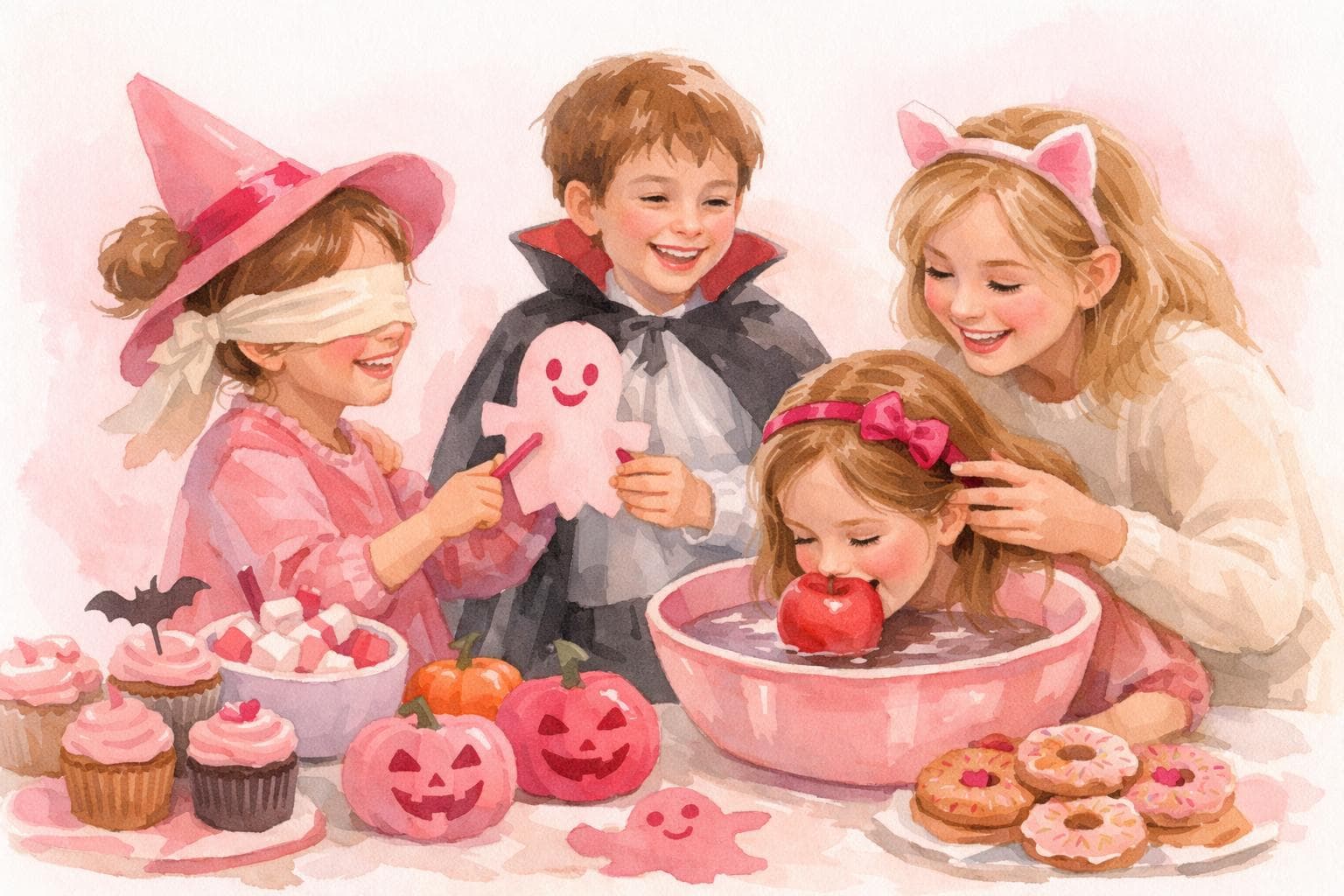
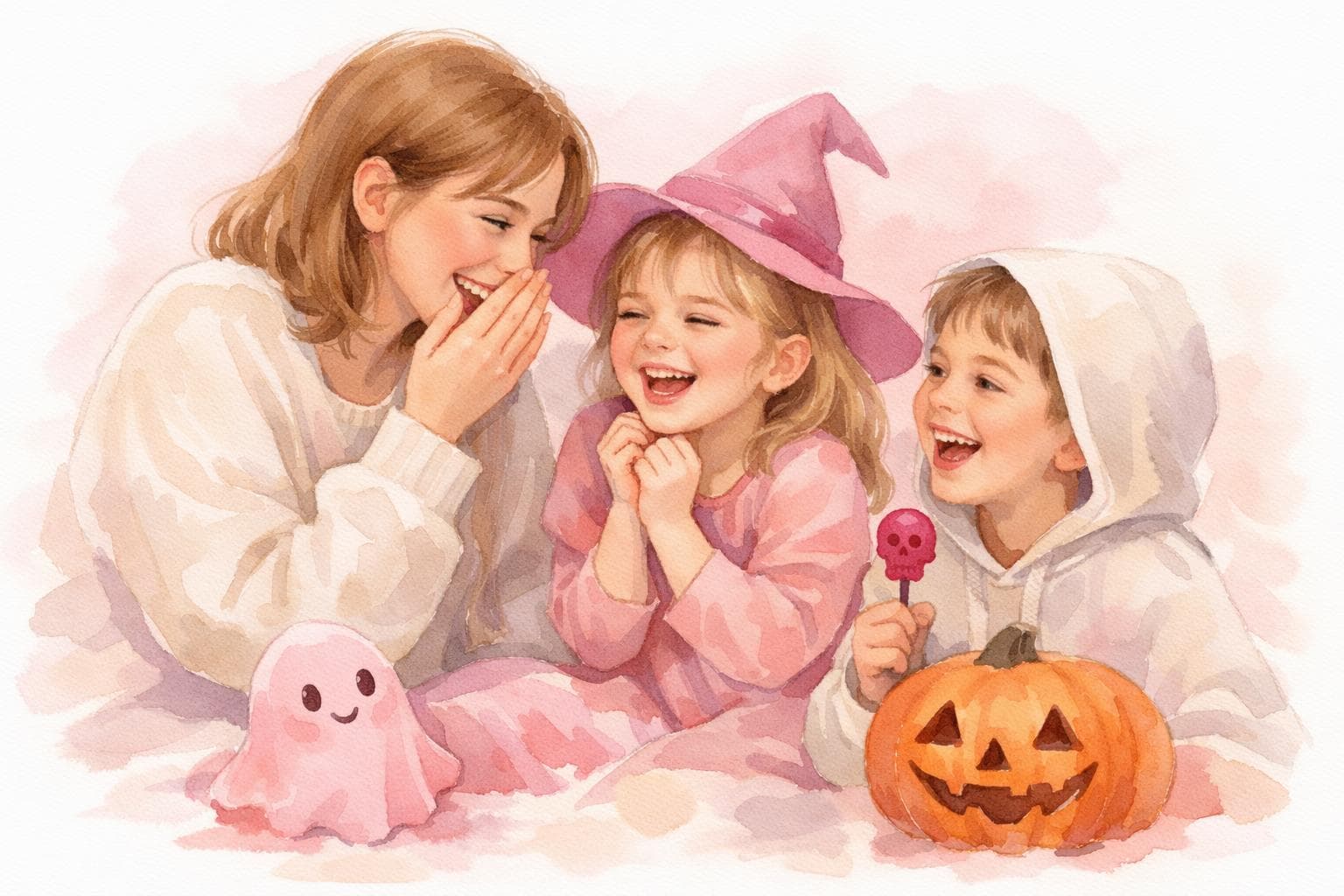
The car ride to school is quiet, the mood is flat, and you need something that works in about four seconds. A good, groan-worthy joke does that better than almost anything else in your parenting toolkit. Halloween jokes specifically hit different: they are short, silly, and every kid at the lunch table has one ready to trade for another.
Halloween jokes for kids are short, pun-based riddles built around Halloween characters, ghosts, witches, skeletons, pumpkins, mummies, designed to be easy enough for a young child to understand, remember and retell. Research on humor and child development consistently finds real cognitive payoff behind the silliness: students who learned material paired with humor scored 11% higher on recall tests compared to control groups, according to Joketext's 2026 review of classroom humor research. Understanding a joke, especially one built on puns or irony, requires a child to grasp two meanings at once, according to Graydon Hall Nursery Schools' developmental guide, which is exactly why joke-telling becomes a genuine marker of cognitive growth, not just a distraction. This guide covers 100 Halloween jokes sorted by age and type, plus what the research says about why they matter more than they seem to.
For more ways to keep a Halloween party moving without losing the room, our guide to Halloween games for kids: 40 party games and activities covers that ground directly.
100 jokes, sorted by category
Category | Count | Sample joke |
|---|---|---|
Ghost jokes | 15 | Why don't ghosts like rain? It dampens their spirits. |
Witch jokes | 15 | What do you call a witch who lives at the beach? A sand-witch. |
Skeleton jokes | 15 | Why didn't the skeleton go to the party? He had no body to go with. |
Pumpkin and jack-o'-lantern jokes | 15 | What do you call a pumpkin that works out? A jacked-o'-lantern. |
Mummy and monster jokes | 15 | Why did the mummy take a vacation? He was coming apart at the seams. |
Vampire and black cat jokes | 15 | Why don't vampires have many friends? They're a pain in the neck. |
Knock-knock and one-liners | 10 | Knock knock. Who's there? Boo. Boo who? Aw, don't cry, it's just a joke. |
That is 100 jokes total, organized so you can pull an entire theme, all ghost jokes for a bedtime story, or mix categories for a lunchbox note.
Jokes by age, so nobody gets bored or lost
Age group | Best category | Why it works |
|---|---|---|
Preschool, 3 to 5 | Ghost and pumpkin jokes with simple wordplay | Younger children respond to absurd, exaggerated incongruity before they understand true puns |
Elementary, 6 to 9 | Skeleton, witch and knock-knock jokes | This is the exact window pun appreciation tends to click, often clustering around age 7 |
Tweens, 10 and up | Vampire, mummy and one-liner jokes with double meanings | Older kids begin appreciating humor that depends on context and social awareness, not just wordplay |
A developmental note worth knowing: if your child suddenly starts loving puns around age 7, that is a sign of healthy cognitive development, according to Joketext, not a random phase. Humour develops between 12 and 36 months in infancy and grows from simpler to more complex incongruities through early childhood, according to a 2025 study in the Journal of Child Language, tracking exactly how that progression unfolds developmentally.
Why sharing jokes matters more than it looks like it does
Humor is inherently social, and when kids share jokes with friends, siblings or parents, they practice reading an audience, timing delivery, and handling a joke that falls flat, according to Joketext's research summary. A 2025 study published in Communications Psychology found that humour invites interaction, enhances relationships and group cohesion, and enables children to express challenging or difficult views more comfortably, making joke-telling a genuine social-emotional skill, not just a party trick.
"Children who can understand and share jokes are more likely to build friendships and form strong social bonds." - Graydon Hall Nursery Schools, child development guide (2026)
Laughter carries measurable benefits beyond the social side too. Children who laugh regularly show lower risk of high blood pressure, digestive problems and depression, according to a child development summary from UCP Charter School, alongside stronger cognitive flexibility and emotional resilience.
Jokes vs other quick connection tools, compared
A quick joke | A quick hug | A quick compliment | |
|---|---|---|---|
Time required | 5 to 10 seconds | 3 to 5 seconds | 5 seconds |
Works mid-conflict | Often, as a tension-breaker | Rarely, can feel dismissive | Rarely, can feel forced |
Builds a specific skill | Cognitive flexibility, social timing | Emotional co-regulation | Self-esteem |
Repeatable throughout the day | Yes, easily | Yes | Can feel repetitive if overused |
Humor acts as a communicative tool, transforming potentially difficult discussions into lighter conversations, according to Mastermind Behavior's 2025 review of humor and parent-child connection, a distinct function from a hug or a compliment, both valuable but not interchangeable.
Key takeaways
- A joke is a two-second connection tool with measurable cognitive benefits: students paired with humor scored 11% higher on recall tests, according to 2026 classroom research.
- Pun appreciation tends to click around age 7, a genuine developmental milestone, not a random preference shift, making age-matched jokes more than just a nicety.
- Humor development starts in infancy, progressing from simple incongruity around 12 to 36 months to context-dependent, socially aware humor by the tween years.
- Joke-telling builds real social skills: reading an audience, timing delivery, and recovering from a joke that flops, according to current child development research.
- Laughter itself carries physical benefits, including lower documented risk of high blood pressure and digestive issues in children who laugh regularly.
Sources and further reading
- Joketext. (2026). Kids who laugh, learn better: the research behind daily jokes. joketext.com
- Graydon Hall Nursery Schools. (2026). The importance of humor in child development: laughing for learning. ghns.ca
- Mastermind Behavior. (2025). The role of humor in building connections with children. mastermindbehavior.com
- Paine, A. et al. (2025). Humorous peer play and social understanding in childhood. Communications Psychology, 3, 76. pmc.ncbi.nlm.nih.gov
- Humour from 12 to 36 months: insights into children's socio-cognitive and language development. (2025). ScienceDirect. sciencedirect.com
- UCP Charter School. (2025). The importance of laughter in child development. ucpcharter.org