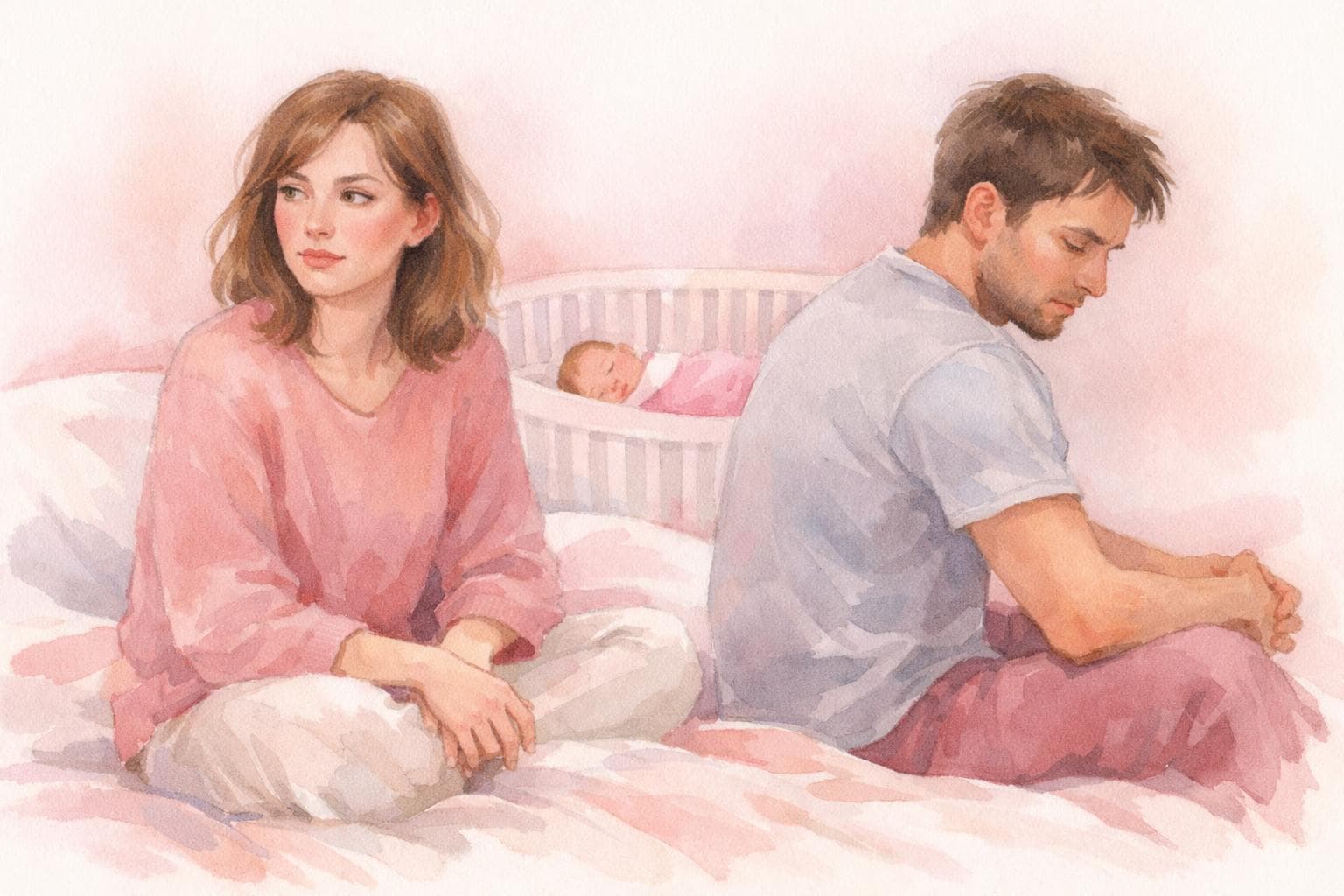
You used to talk for hours. Now you mostly communicate in logistics — who's picking up from nursery, whose turn it is to do the night feed, whether there's any milk left. Sound familiar?
Feeling distant from your partner after having a baby is one of the most common experiences in early parenthood, and also one of the least talked about. There's so much focus on the baby the feeding schedules, the developmental milestones, the sleep regressions , that the two people who made all of this happen tend to quietly slip to the bottom of the priority list.
But here's what the research actually shows: you're not growing apart because something is wrong with your relationship. You're growing apart because something enormous has happened to it.
What the Numbers Tell Us
The data on couples after childbirth is fairly sobering, but it's also reassuring in a strange way — because it confirms that what you're experiencing is normal, not a sign of failure.
A 2022 meta-analysis published in Frontiers in Psychology drawing on 49 studies and nearly 100 samples of parents — found a significant decline in marital satisfaction between pregnancy and 24 months postpartum (Bogdan, Turliuc & Candel, 2022). The Gottman Institute puts the figure even more bluntly: around 67% of couples experience a drop in relationship satisfaction within the first three years of their child's life.
An Australian cohort study following 1,507 women from early pregnancy through to 4.5 years postpartum found a "considerable drop in both emotional satisfaction and physical pleasure in intimate relationships after birth with emotional satisfaction continuing to fall up until 4.5 years postpartum" (PubMed, 2013).
That last part matters. The distance doesn't always resolve on its own just because the baby starts sleeping through the night.
Why This Happens (And It's Not What You Think)
Most couples assume the problem is time, if only they had more of it, everything would go back to normal. But relationship researchers point to something deeper.
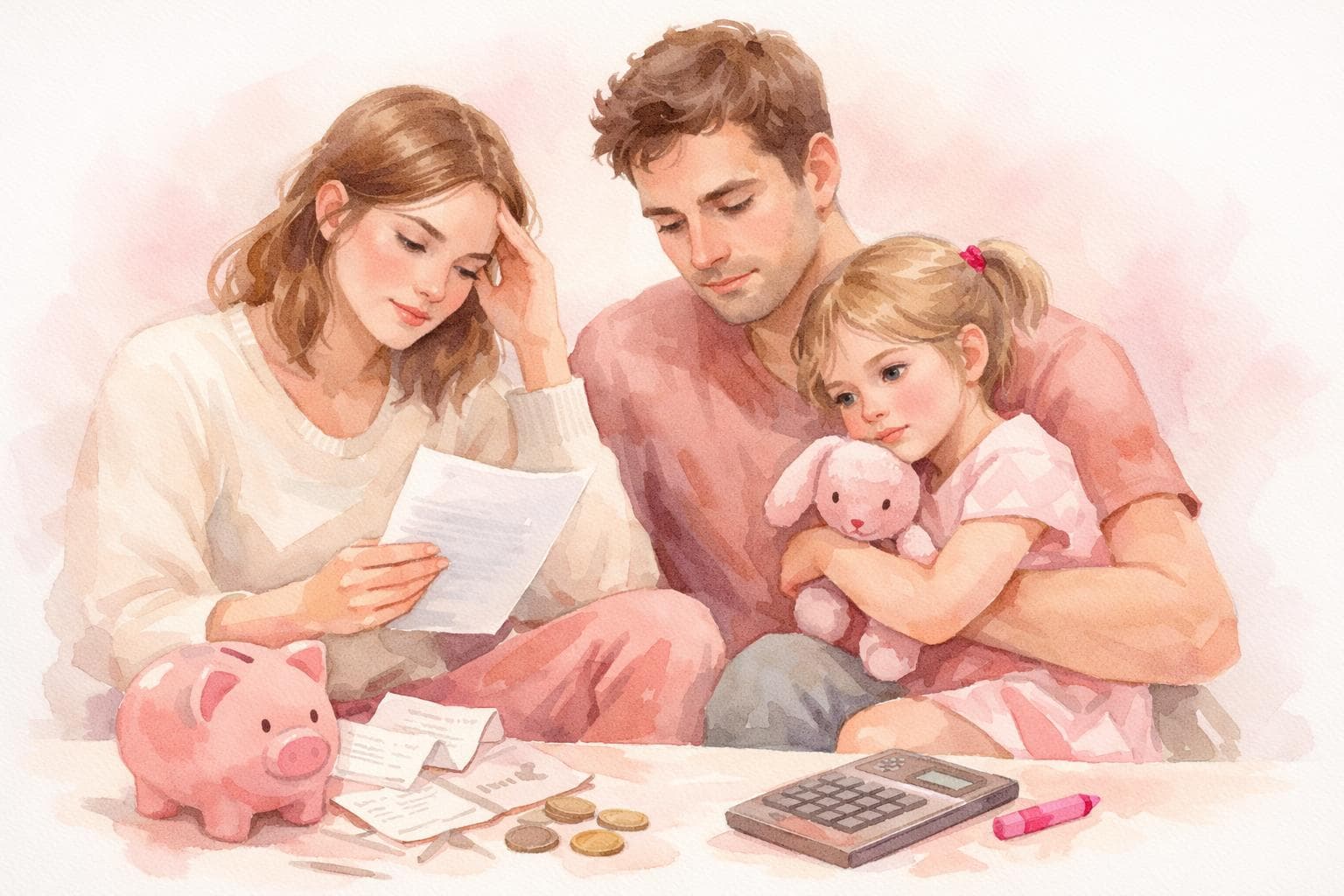
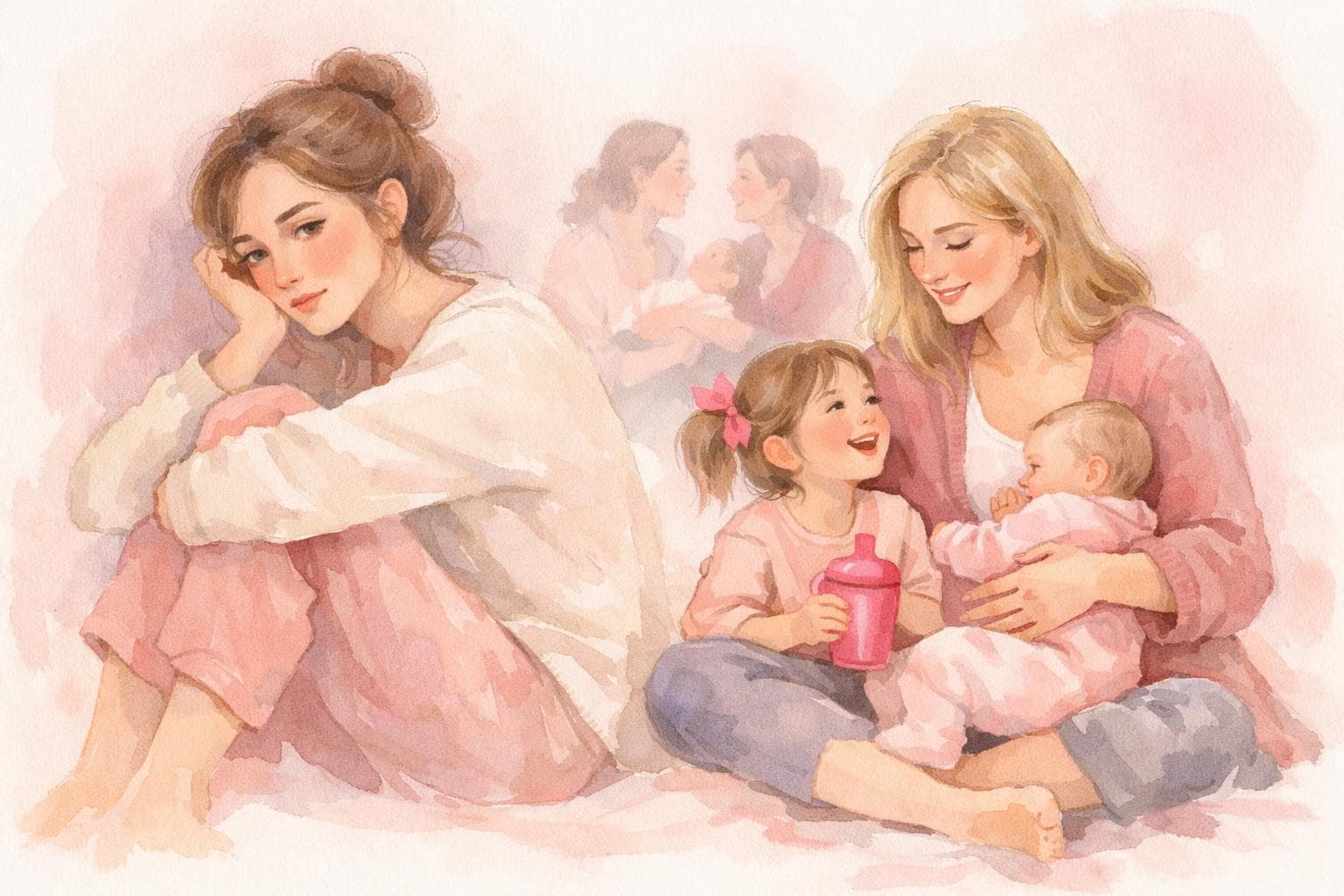
The mental load asymmetry. In many households, one partner (usually, though not always, the mother) carries a disproportionate amount of the invisible labour: the anticipating, the planning, the scheduling, the worrying. This imbalance doesn't just create resentment, it creates emotional distance. If you're feeling overwhelmed by the weight of motherhood, that exhaustion doesn't stay contained. It seeps into how you show up in your relationship.
Identity shift without acknowledgement. Becoming a parent is a profound transformation researchers call it matrescence — and it changes what you need, what you value, and how you see yourself. When partners move through this transition at different speeds, or without openly discussing it, the gap between them widens. You may feel like you're living with a stranger, or like you've become one.
The "touched out" reality. After hours of physical contact with a baby or toddler, many mothers feel genuinely saturated by touch not cold, just full. This is a physiological and psychological response not a rejection of a partner, but it can easily be received as one.
Conflict patterns shift under pressure. Relationship psychologist John Gottman identified four communication patterns that predict relationship breakdown, what he calls the Four Horsemen: criticism, contempt, defensiveness, and stonewalling. Sleep deprivation and stress bring out these habits faster than almost anything else. Contempt, which Gottman identifies as the single greatest predictor of divorce, tends to surface when resentment has been building quietly for too long.
What Distance Actually Looks Like Day-to-Day
It doesn't always look like fighting. Sometimes it looks like nothing at all.
What you might noticeWhat might actually be going on
Conversations that stay surface-level
Neither partner has the emotional bandwidth to go deeper
Less physical affection
Feeling "touched out," disconnected, or emotionally depleted
Irritability over small things
Unspoken resentment about the division of labour
Feeling like flatmates
The couple relationship has been replaced by the parenting relationship
Less interest in sex
Hormonal changes, exhaustion, body image shifts, emotional distance
This emotional withdrawal isn't usually intentional. It's more like a slow tide going out and many couples don't notice until they're standing on dry sand wondering what happened.
"Couples often lose sight of the original relationship they had with their partner because of the competing demands during the postpartum period." - Psychology Today, licensed marriage and family therapist, 2023
What Actually Helps
The good news is that this kind of distance is not the same as incompatibility. It's a response to a very specific set of circumstances, and it can be changed.
Name it, don't perform around it. One of the most useful things a couple can do is simply acknowledge that things feel different, without making it a verdict on the relationship. "I feel like we've lost each other a bit lately" opens a door. "You never listen to me anymore" slams it shut.
Protect small moments of connection. Research from the Gottman Institute consistently shows that relationships are built in micro-moments, not grand gestures. A cup of tea made without being asked. A question that goes beyond "how was your day." A hand reached for in the evening. These bids for connection, and whether they're responded to or rejected, do more to shape relationship quality than most couples realise.
Divide the invisible labour openly. If mom burnout is partly driving the distance in your relationship, the solution isn't to communicate better over an unfair division it's to make the division fairer. That requires making the invisible visible: actually naming what's being carried, by whom, and what a more equal distribution might look like.
Address your own wellbeing first. You cannot pour from an empty cup is one of those phrases that became a cliché because it's true. If postpartum anxiety or persistent overwhelm is affecting how you show up in your relationship, addressing your own mental health is not selfish it's structural. Research consistently shows that one partner's emotional wellbeing directly affects the other's.
Consider talking to someone. Couples therapy post-baby carries a particular stigma as if seeking support is an admission that the relationship is failing. It isn't. It's the recognition that you're navigating something genuinely hard, and doing so with an outside perspective is a reasonable and effective response.
A Note on Realistic Expectations
The couple you were before a baby is not the couple you'll be after one — and that's not necessarily a loss. Many partners describe eventually finding something deeper: a partnership forged through difficulty, a shared history with real weight to it.
But that version of the relationship doesn't just appear. It gets built, usually through the uncomfortable work of staying honest with each other even when it's easier not to.
If you're feeling distant right now, that's not evidence that you're with the wrong person. It's evidence that you're human, that you're tired, and that your relationship like everything else in early parenthood needs attention and care to grow.
Further reading: How motherhood changes your relationships | What self-care really means after kids