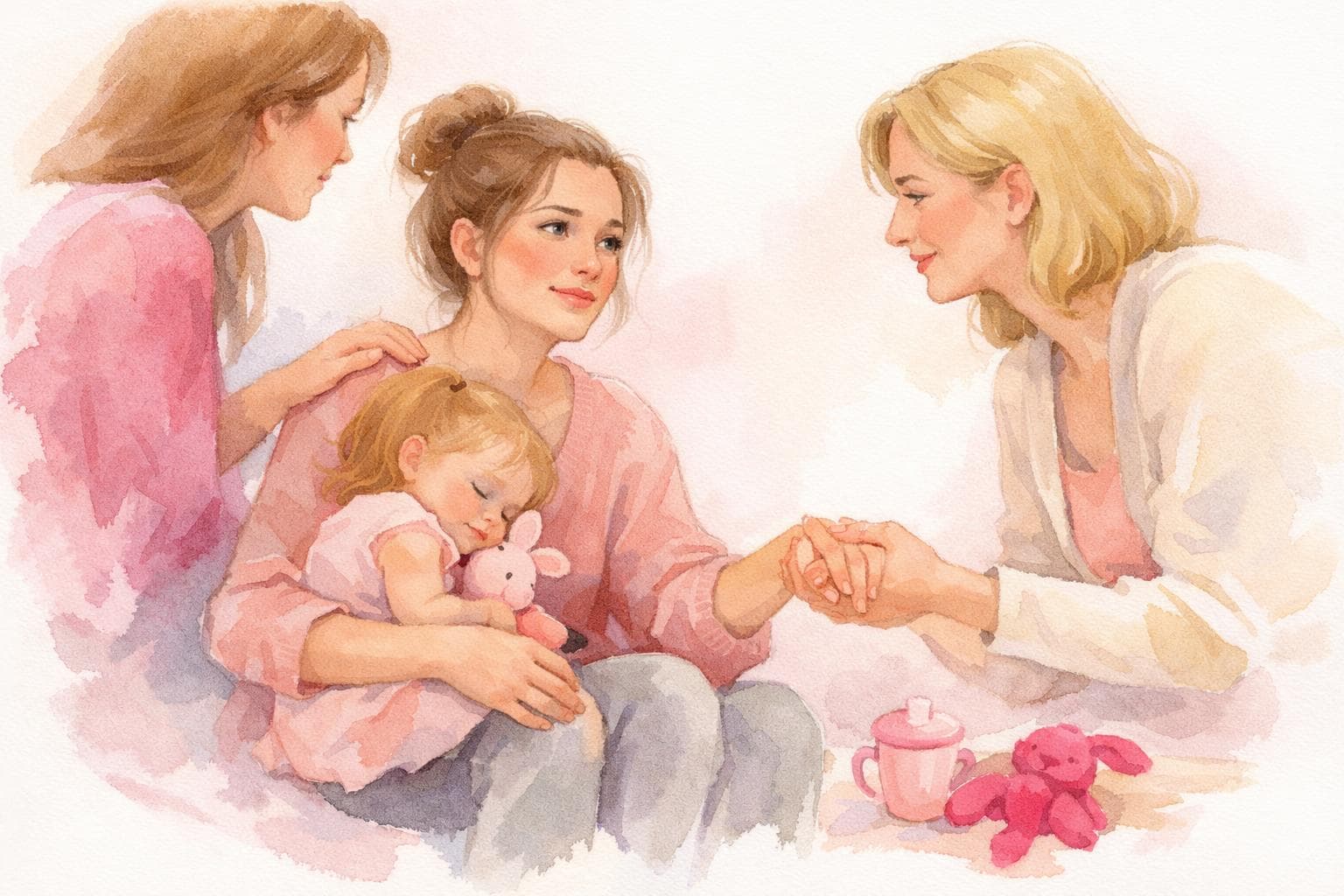
You have not slept through the night in months. You have not eaten a meal without cutting someone else's food first. You have not used the bathroom without an audience since you cannot remember when.
And then someone says, "You should take a trip by yourself." And the guilt hits before the excitement does.
Here is the thing. That guilt is lying to you. The research, the data and the lived experience of millions of women all point in the same direction: solo trips are not selfish. For mothers, they might be essential.
The case for solo travel as a mother
A 2023 study published in Scientific Reports tracked adults over 21 days and found that chosen solitude, time alone that you opt into rather than time forced by isolation, was associated with improved wellbeing. The benefits were strongest when solitude felt autonomous and self-directed. A solo trip is the most concentrated version of that.
The Deloitte Women at Work Report (2023) found that 46% of women reported extreme stress levels, compared to 37% of men. Women are also more likely to carry the cognitive and emotional weight of family logistics, which means even "days off" at home rarely feel like rest. The washing machine is still there. The to-do list is still visible. The mental load does not pause just because you sit down.
Leaving the house, the town, the postcode entirely is sometimes the only way to actually switch off.
Solo female travel has surged in recent years. According to ABTA, 16% of UK travellers went on holiday alone in 2023, up from 11% the year before. In the 35 to 44 age group, the figure more than doubled from 6% to 13%. Searches for "solo travel" increased 72.6% between April 2023 and April 2024. Women now make up 71% of solo travellers globally.
Mothers are part of that wave. And they are not running away from their families. They are returning to themselves.
What a solo trip does for your brain
When you leave your daily environment, your brain shifts out of task mode and into a more open, reflective state. Psychologists call this "soft fascination," a restful kind of attention that allows mental recovery.
A 2025 mixed-methods study on new mothers found that while women often spent time physically alone with their baby, true restorative solitude, free from caregiving demands, was almost nonexistent. Personal time was directly linked to better mood. A solo trip delivers that personal time in a way that an evening bath or a locked bathroom door simply cannot.
"Having space gives us time to connect with ourselves, and connecting with ourselves benefits our wellbeing. What we found was that, on any given day when people felt autonomous and competent in solitude, they feel better on that day." - Dr. Netta Weinstein, University of Reading
Why 48 hours is the sweet spot
You do not need a week in Bali. Two nights away is long enough to properly decompress but short enough to be logistically possible. It fits around most childcare arrangements. It is affordable on a modest budget if you stay local. And it gives you one full day where you wake up with nobody to look after but yourself.
Forty-eight hours is not a holiday. It is a reset. And every mother deserves at least one a year.
The 48-hour solo trip itinerary template
This is not prescriptive. Adapt it, rearrange it, throw half of it away. The only rule is: nothing on this schedule is for anyone else.
Day one: arrive and exhale
Time | What to do |
|---|---|
Morning | Travel to your destination; no podcasts about parenting, no calls home unless you want to |
12:00 | Arrive, check in, unpack slowly; resist the urge to plan the rest of the trip minute by minute |
13:00 | Eat lunch alone at a cafe; order what you want, not what is fastest or cheapest |
14:30 | Walk with no destination; follow what interests you, not a route |
16:00 | Rest; nap, read, lie on the bed and stare at the ceiling; this is allowed |
18:00 | Shower or bath without rushing, without listening for a cry through the door |
19:30 | Dinner; a place you chose for yourself, a glass of something you enjoy |
21:00 | Sleep whenever you are tired; no bedtime negotiations, no monitor to check |
Day two: the full day
Time | What to do |
|---|---|
Morning | Wake without an alarm; eat breakfast at your own pace |
10:00 | Do one thing that is just for you: a museum, a hike, a market, a bookshop, a yoga class, a spa treatment, a long swim |
12:30 | Lunch; sit somewhere with a view if you can |
14:00 | Journal, sketch, read or simply sit; you do not need to fill every hour with activity |
16:00 | Call home if you want to; do not if you do not; both are fine |
18:00 | Final evening meal; reflect on how you feel compared to when you arrived |
21:00 | Early night or late night, your call |
Day three: return gently
Time | What to do |
|---|---|
Morning | No rush; pack slowly, have one last coffee |
Late morning | Travel home; notice how you feel in your body; something will have shifted |
Dealing with the guilt
The guilt of leaving your children, even for 48 hours, is real. It does not make you a bad mother. It makes you a mother who has been conditioned to believe that her value is measured by her availability.
A 2023 Pew Research survey found that mothers are more likely than fathers to feel judged for their parenting decisions. A solo trip can feel like an invitation for that judgment. But the women who do it consistently report coming home more patient, more present and more emotionally regulated.
You are not abandoning your family by leaving for two days. You are refilling the resource they depend on most: you.
If guilt is something you wrestle with regularly, this piece on asking for help might help reframe it. And if you feel like you are running on empty long before any trip is possible, read about emotional exhaustion in motherhood and finding alone time even with no help.
You do not need permission
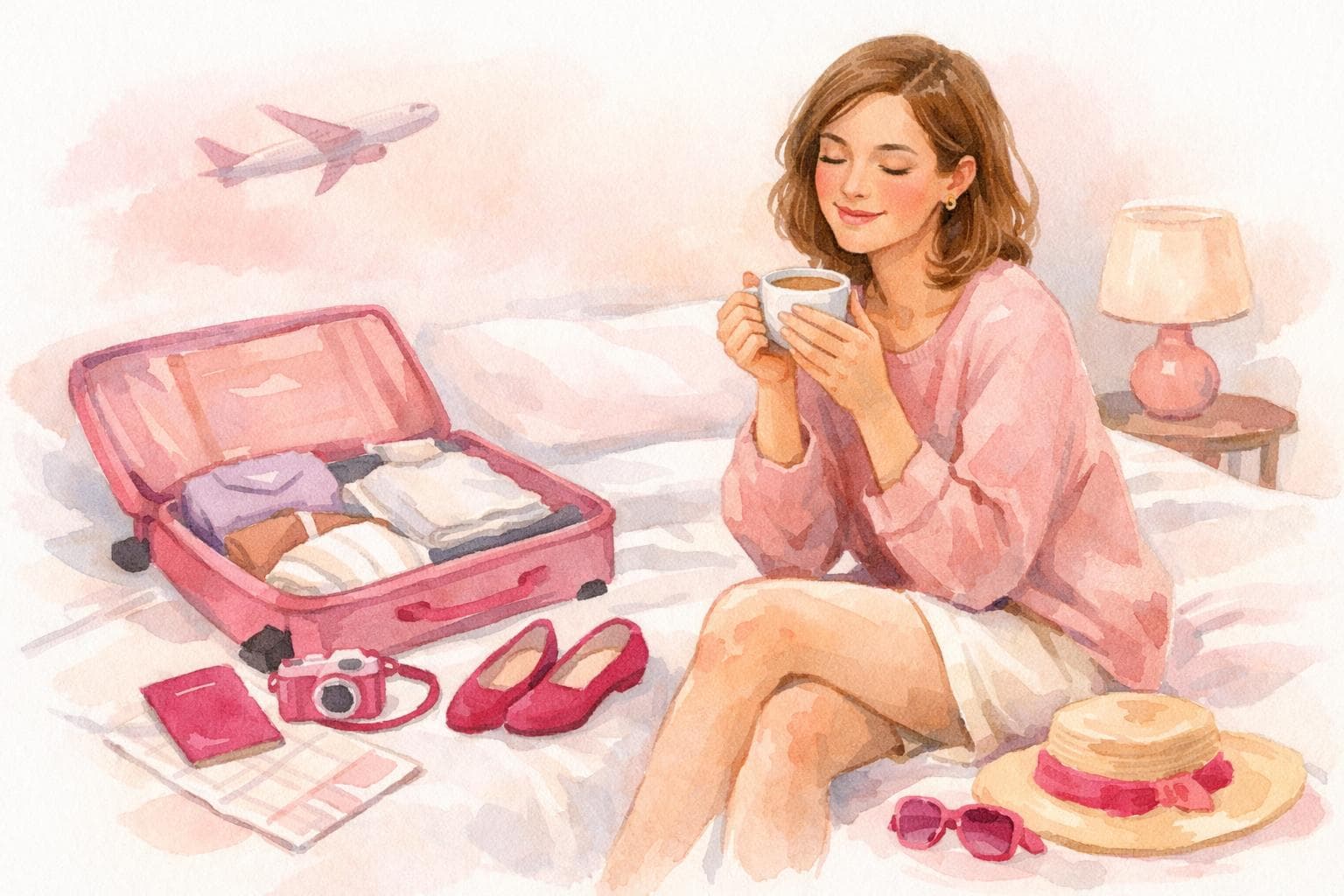
You do not need your partner's approval, your mother's blessing or social media's validation to take 48 hours for yourself. You need a bag, a destination and the decision that your wellbeing matters enough to act on.
Book it. Go. Come back different. Your family will be fine. And you will be better for having left.
Sources and further reading
- Weinstein, N. et al. (2023). Balance between solitude and socializing: everyday solitude time both benefits and harms well-being. Scientific Reports. doi.org/10.1038/s41598-023-44507-7
- Nguyen, T.T. et al. (2025). "I got all sorts of solitude, but that solitude wasn't mine." British Journal of Social Psychology. pmc.ncbi.nlm.nih.gov
- Deloitte. (2023). Women at Work Report. deloitte.com
- ABTA. (2023). Holiday Habits Report. Cited in The Week and Travel Weekly.
- Pew Research Center. (2023). Parenting in America Today. pewresearch.org
- Nagoski, E. & Nagoski, A. (2019). Burnout: The Secret to Unlocking the Stress Cycle. Ballantine Books.