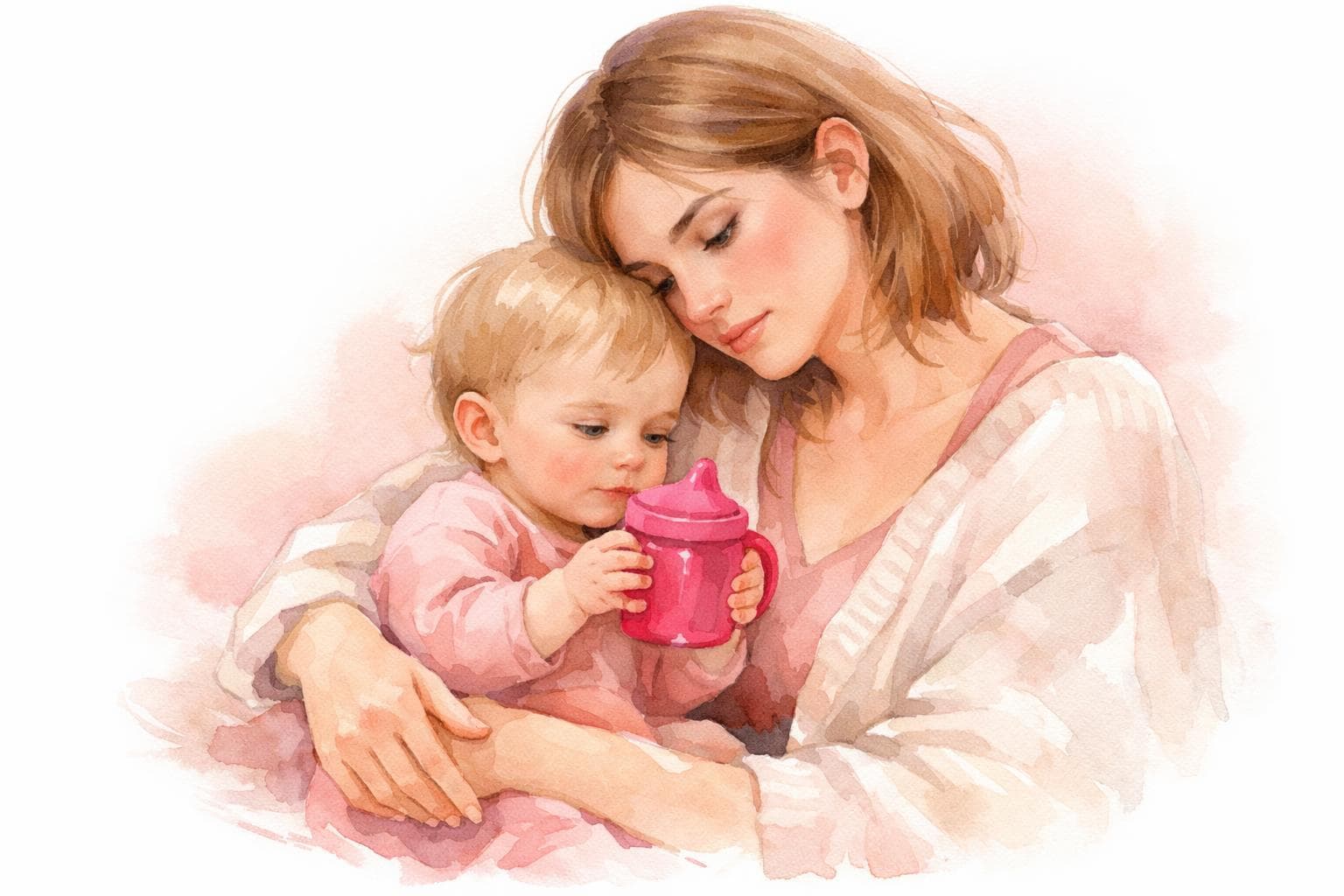
Nobody warned me that weaning might make me cry.
Not every mother feels this way. For some, the end of breastfeeding arrives with relief: the body reclaimed, the logistics simplified, the particular physical demands of feeding behind them at last. That experience is entirely valid. But for others, including people who were ready to stop, weaning comes with a grief that catches them off guard, landing somewhere they didn't know was exposed.
The emotional reality of weaning is one of those postpartum experiences that gets very little cultural airtime. The attention goes to the logistics: how to reduce feeds, how to manage engorgement, how to handle a baby who isn't ready. The internal experience of the mother ending this chapter, whatever she feels about it, tends to get a footnote if it gets anything at all.
What actually happens hormonally when you wean
Part of the emotional intensity of weaning is not psychological. It is chemical.
When breastfeeding ends, oxytocin and prolactin levels, both elevated throughout the feeding period, drop significantly. Oxytocin is sometimes called the "bonding hormone" but it functions more broadly than that: it regulates mood, reduces stress and anxiety and supports a sense of calm and connection. Prolactin has similarly mood-stabilising properties. When both fall simultaneously, some women experience a sharp, temporary mood dip that has nothing to do with their circumstances and everything to do with their neurochemistry.
This is sometimes described as D-MER (Dysphoric Milk Ejection Reflex) in the feeding context, but a related phenomenon can occur during the weaning process itself. The hormonal adjustment period varies in length and intensity. For some mothers it passes within a week or two. For others it is more prolonged.
A 2018 study published in Archives of Women's Mental Health found that rapid weaning was associated with a higher risk of mood disturbance than gradual weaning, with the hormonal shift hypothesised as the primary mechanism. This is one of the reasons that where circumstances allow, a gradual reduction in feeding is generally advised.
The grief that is more than hormonal
Even when the hormonal adjustment is complete, some of what weaning produces is genuinely grief.
Breastfeeding, when it has been part of the relationship with a child, is a form of physical intimacy that exists nowhere else. It is comfort, connection and physical closeness that is specific to this period of the child's life. When it ends, regardless of when or how or who initiated, something real is over.
Mothers who have struggled with breastfeeding and are relieved to stop can still feel the grief of having found it difficult. Mothers who have found it straightforward and meaningful can feel the loss of ending something that worked. Mothers for whom the decision was made by the child, who weaned themselves suddenly and without ceremony, sometimes experience a disproportionate emotional response that is about the absence of choice in the ending.
All of these are legitimate. None of them are signs that the decision to wean was wrong.
What weaning can bring up beyond the feeding relationship
For many women, weaning also marks a transition in the postpartum identity narrative. The end of breastfeeding is often the end of the most acute physical dependency of the baby on the mother's body. It can signal the beginning of a new developmental phase for the child. And it can produce a complex mix of feelings about what that transition means.
Some mothers describe a quiet grieving of the baby stage itself as weaning approaches, an awareness that the child is becoming more independent in ways that produce both pride and loss. Some experience a return of menstruation during weaning, which brings its own emotional dimensions. Some find that the end of the physical intimacy of feeding creates an unexpected distance that takes time to adjust to.
These are not pathological responses. They are the ordinary emotional complexity of a significant transition.
When the emotional response to weaning is more than adjustment
There is a difference between the grief and adjustment that weaning naturally produces and a more significant mood disturbance that warrants attention.
Normal emotional responses to weaning | Signs that more support may be needed |
|---|---|
Sadness or tearfulness that is manageable | Persistent low mood or inability to function |
Feeling emotional around feed times | Anxiety that does not reduce as the hormonal shift stabilises |
A sense of grief about the transition | Feeling disconnected from the baby or from yourself |
Irritability during the adjustment period | Intrusive thoughts or symptoms that feel clinical in nature |
Mixed feelings about the decision | Significant difficulty in the relationship or daily life |
If what you are experiencing feels closer to the right-hand column, it is worth a conversation with your GP or midwife. The hormonal shifts of weaning can trigger or exacerbate postpartum mood disorders in some women, and that is treatable.
How to take care of yourself during the weaning transition
Not by getting through it quickly. By allowing it to be what it is.
A gradual reduction in feeds, where circumstances allow, gives both your body and your emotional experience more time to adjust. Acknowledging what you are feeling, rather than pushing it aside as irrational, tends to shorten the period of difficulty rather than lengthen it. Finding language for the experience, in a journal, with a partner or in a community of other mothers who have been through the same, is consistently helpful.
And if breastfeeding was a central part of how you connected with your baby, it is worth being intentional about finding other forms of closeness to move into. The physical connection that fed the relationship does not disappear when the feeding does. It relocates.
"Every ending is a beginning we don't know about yet." - Unknown
If weaning has coincided with a period of difficulty around body image and how your body is changing, breastfeeding and body image: navigating a complicated relationship addresses that specific intersection. And if the grief of weaning is part of a larger experience of mourning the baby phase that is passing, grief in motherhood: how to mourn the life you had before gives that feeling the context it deserves.
Weaning is a transition. Transitions are allowed to be emotional. You are allowed to feel whatever you actually feel about this one.
Further reading: La Leche League International, the womanly art of breastfeeding (2010). Wendy Wisner, breastfeeding and postpartum mental health resources. NHS, stopping breastfeeding.