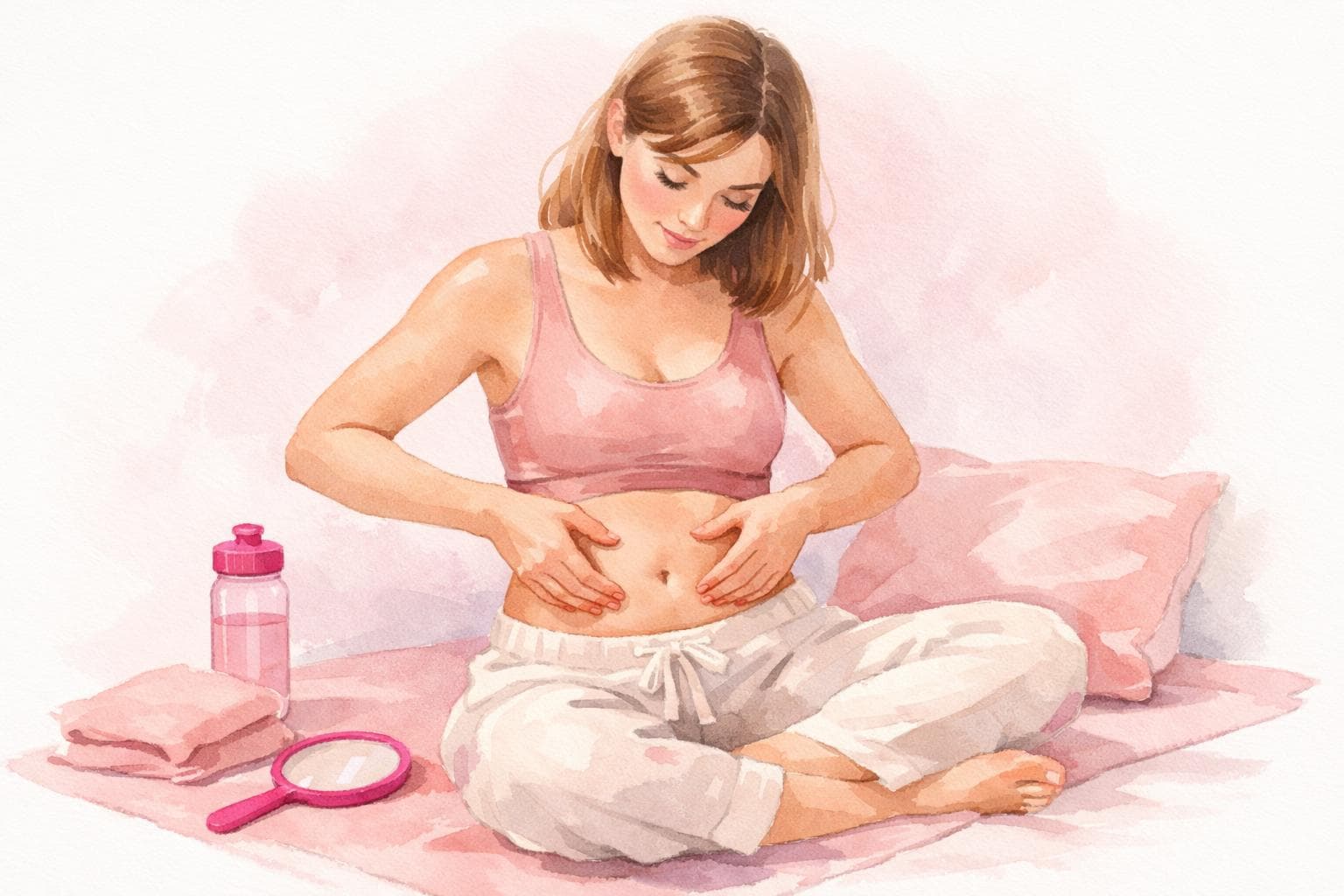
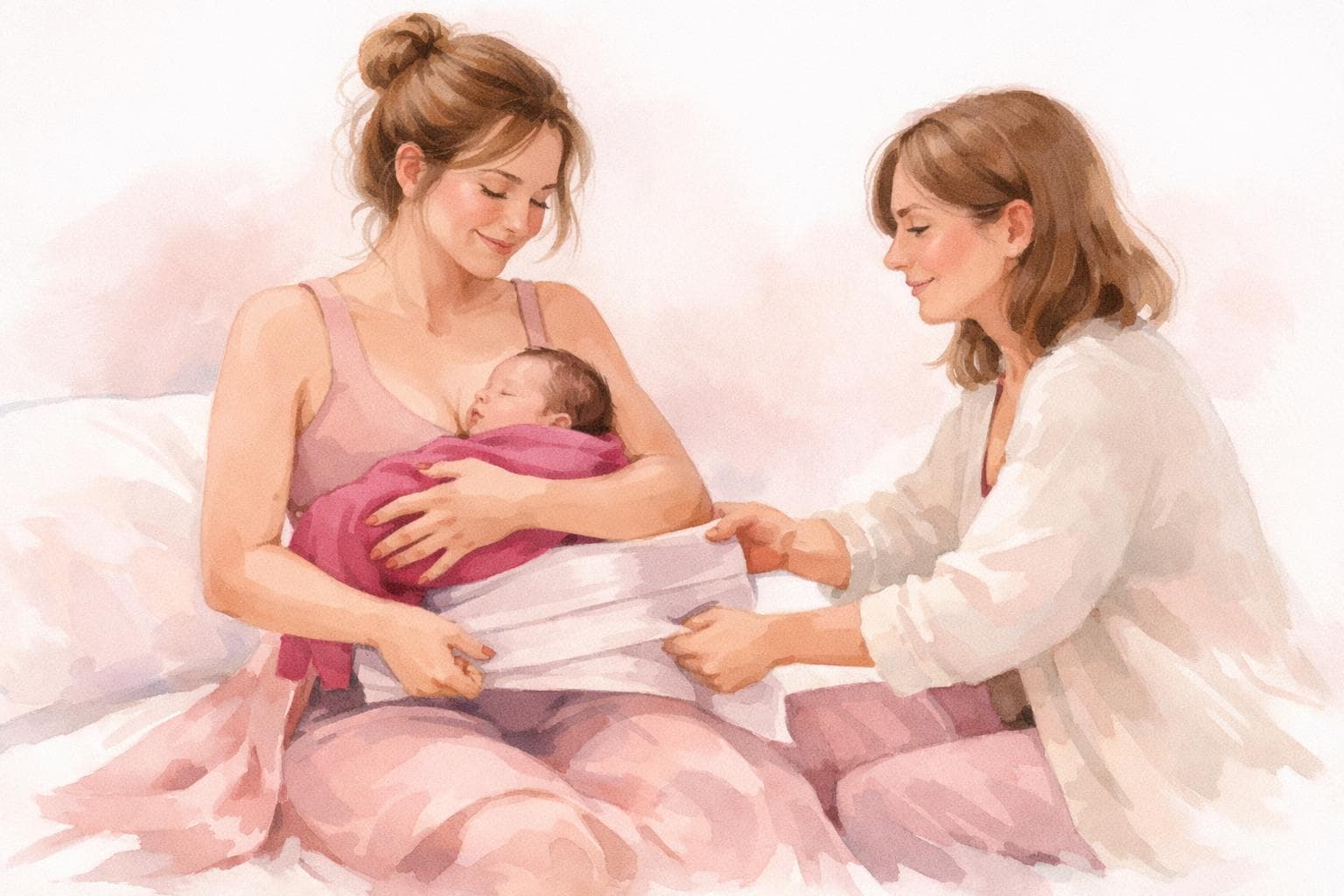
Long before elastic waistbands and velcro wraps appeared on Instagram ads, women around the world were binding their bellies after birth. Not with products. With cloth. Wrapped by hand, often by a mother or a grandmother, as part of a postpartum ritual that treated the weeks after delivery not as a return to normal but as a sacred period of healing.
That tradition has survived centuries for a reason. And while modern medicine has been slow to study it, the practice is now finding its way back into Western postpartum care, not as a trend but as a rediscovery.
The traditions behind the wrap
Postpartum belly binding appears across nearly every continent, under different names and with different techniques. But the intention is always the same: to hold a body that has just opened, expanded and given life.
Tradition | Region | Method | Postpartum rest period |
|---|---|---|---|
Bengkung | Malaysia, Southeast Asia | Long cotton strip wrapped from hips to ribs, knotted at the front | 6 weeks (pantang) |
Sarashi | Japan | Folded cotton strip, shorter and wider, wrapped from hips to solar plexus | 100 days (ansei) |
Faja | Mexico, Central America | Woven sash or band wrapped snugly around the belly | 40 days (la cuarentena) |
Veshtanam | India | Cotton saree strips wrapped around the midsection after a warm bath | 42 days |
Lappa | West Africa | Cloth wrap tied firmly around the waist and abdomen | 40 days |
What is remarkable is not the variety but the consistency. Across continents, cultures independently arrived at the same conclusion: the postpartum body benefits from gentle compression, warmth and rest. In Malaysia, the womb is considered central to a woman's wellness. In Japan, ansei prescribes peace, quiet and pampering. In Latin America, la cuarentena insists on 40 days of minimal activity and maximum support.
As Ayurvedic practitioner and postpartum doula Ysha Oakes puts it: belly binding can feel "like being hugged at a time when there is so much empty space inside."
What the science supports
The clinical research on traditional belly binding is limited but growing. A 2024 phenomenological study published in the British Journal of Midwifery explored postpartum mothers' experiences of traditional binding for diastasis recti abdominis and found that participants used binding for physical comfort, symptom management and emotional reassurance during recovery.
A literature review on bengkung binding by Fajrin, Purwandari and Mogonta (2022) found evidence supporting its role in aiding uterine involution and improving postpartum comfort, particularly when combined with abdominal massage and herbal application.
For post-caesarean recovery specifically, a 2019 randomised controlled trial found that women who wore abdominal binders reported significantly less pain during early mobilisation and lower distress levels, supporting the mechanical benefit of compression after surgical delivery.
What the research does not yet support is the claim that binding alone can heal diastasis recti. A 2025 meta-analysis in Physiotherapy Research International concluded that exercise-based interventions outperformed binding for reducing the inter-recti gap. Binding provides support. Rehabilitation provides repair. They serve different purposes.
"Different cultures endorse various traditional practices to facilitate the physical recovery of postpartum mothers. Bengkung involves wrapping rigid cotton fabric around the torso from under the breasts to the pelvic bone." - British Journal of Midwifery (2024)
Traditional binding vs modern belly bands
If you have already read our honest test of a postpartum belly band, you might be wondering how traditional binding compares.
Traditional binding (bengkung) | Modern elastic belly band | |
|---|---|---|
Material | Cotton cloth, breathable, mouldable | Elastic, neoprene or spandex |
Fit | Custom-wrapped to your body each time | One-size or adjustable with velcro |
Compression | Adjustable by wrapping technique; firm but adaptable | Uniform; depends on sizing |
Cultural context | Part of a wider postpartum ritual (rest, massage, nutrition) | Standalone product |
Time to apply | 10 to 15 minutes (or help from another person) | 30 seconds |
Emotional experience | Ritualistic, often done by a caregiver | Functional, self-applied |
Traditional binding takes longer. It is less convenient. But many women describe the wrapping process itself as therapeutic: a daily act of care, often performed by a partner, doula or family member, that marks the transition between "on duty" and "being looked after."
How to do bengkung belly binding at home
You will need a strip of cotton fabric approximately 15 to 17 metres long and 15 to 20 centimetres wide. Muslin or cotton lawn works well. Some women use a long cotton scarf or purchase a pre-cut bengkung strip online.
Step by step
- Start by placing the centre of the cloth on your lower abdomen, just above the pubic bone
- Wrap the cloth around your back, crossing the tails behind you
- Bring the tails forward and twist or knot them at the front
- Move upward by one width of the cloth and repeat: wrap, cross, knot
- Continue upward until you reach just below the bust line
- Tuck the remaining fabric into the top layer to secure
The wrap should feel firm but not restrictive. You should be able to breathe comfortably, sit without the cloth digging in and move without pain. If it feels too tight at any point, unwrap and start again with less tension.
When to start
After a vaginal birth, you can begin within the first week if it feels comfortable. After a caesarean, wait until your incision has begun healing, typically two to three weeks, and avoid wrapping directly over the wound until your midwife or doctor confirms it is safe.
How long to wear it
Traditional practice recommends wearing the wrap for 6 to 8 hours per day, for up to 40 days postpartum. Many women wear it during the day and remove it at night. Listen to your body. If it feels supportive, continue. If it feels uncomfortable or you notice increased pelvic pressure, reduce the duration and consult a pelvic floor physiotherapist.
What belly binding cannot replace
Belly binding supports. It does not rehabilitate. If you are experiencing diastasis recti, pelvic floor dysfunction, incontinence or chronic lower back pain, you need clinical assessment and targeted exercise, not just compression.
A pelvic floor physiotherapist can assess your specific recovery needs and design a programme that works alongside binding rather than relying on it.
Our trimester-by-trimester guide to postpartum recovery gives a realistic timeline for what your body is going through. And if the physical changes are affecting how you feel about yourself, grieving your pre-baby body explores the emotional side of recovery that no wrap can reach.
Reclaiming the ritual
Modern postpartum care is fast. You are discharged within hours. The six-week check lasts minutes. Nobody wraps your belly, draws your bath or tells you to rest for 40 days.
Traditional belly binding is not just about compression. It is about being held. It is about someone saying: you just did something extraordinary, and now it is your turn to be cared for.
You can reclaim that, even in a culture that does not offer it. A strip of cotton, ten quiet minutes each morning and the decision to treat your recovery as something worth honouring. That is where healing starts.
Sources and further reading
- British Journal of Midwifery. (2024). Traditional treatment for diastasis rectus abdominis in postpartum mothers: a phenomenological study. magonlinelibrary.com
- Fajrin, I., Purwandari, A. & Mogonta, D.C. (2022). Literature review: effectiveness of the use of bengkung on recovery in postpartum mothers. Patria Artha Journal of Nursing Science, 6(2), 161-170.
- Karaca, I. et al. (2019). Influence of abdominal binder usage after cesarean delivery on postoperative mobilization, pain, and distress. PMC. pmc.ncbi.nlm.nih.gov
- Abdullah, M. et al. (2025). Comparative efficacy of abdominal exercises and abdominal binding on DRA reduction: a systematic review and meta-analysis. Physiotherapy Research International. onlinelibrary.wiley.com
- Full Circle Birth Collective. (2026). The roots of belly binding. fullcirclebirthcollective.com
- Dennis, C.L. et al. (2007). Traditional postpartum practices and rituals: a qualitative systematic review. Women's Health Issues, 17(4), 262-276.