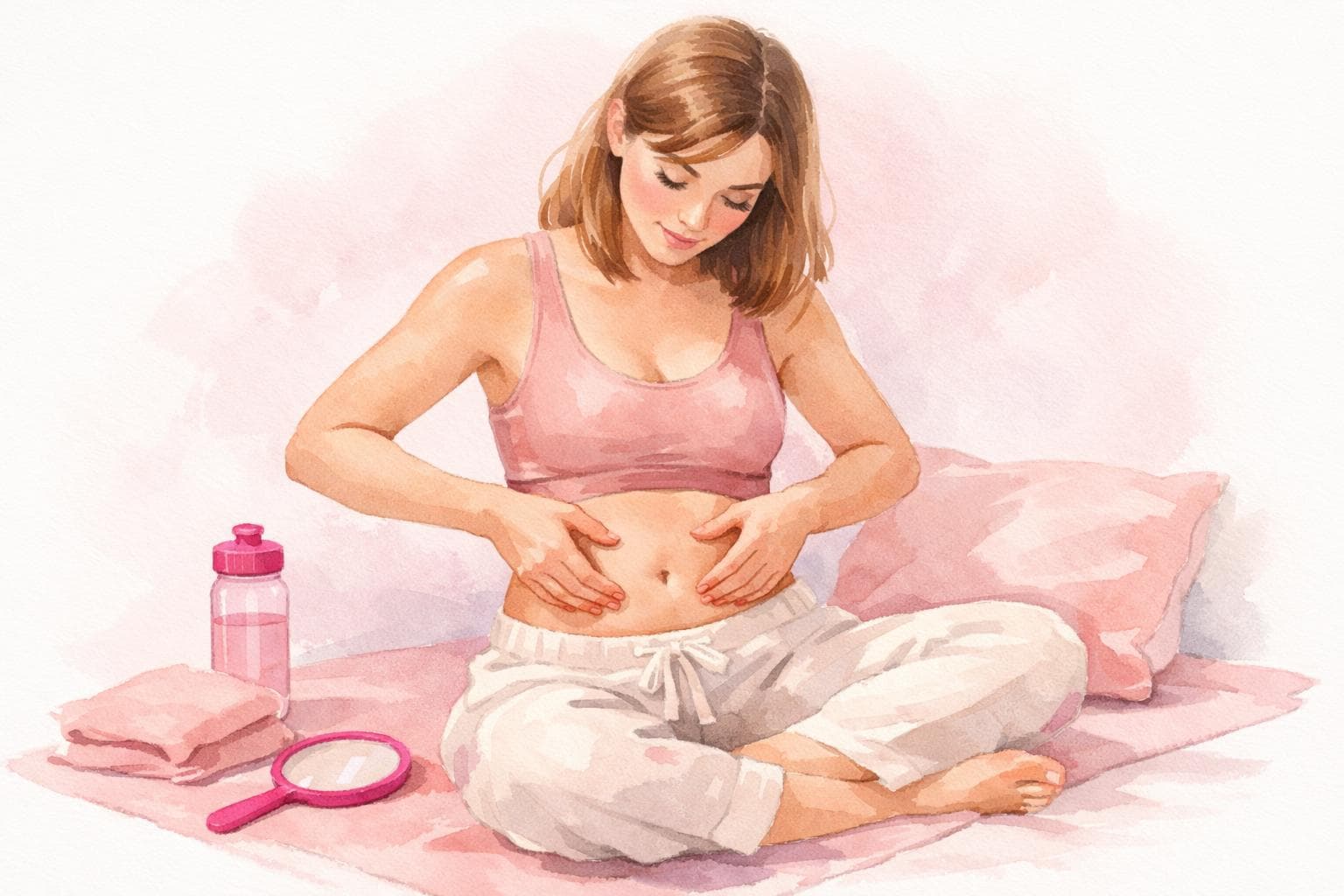
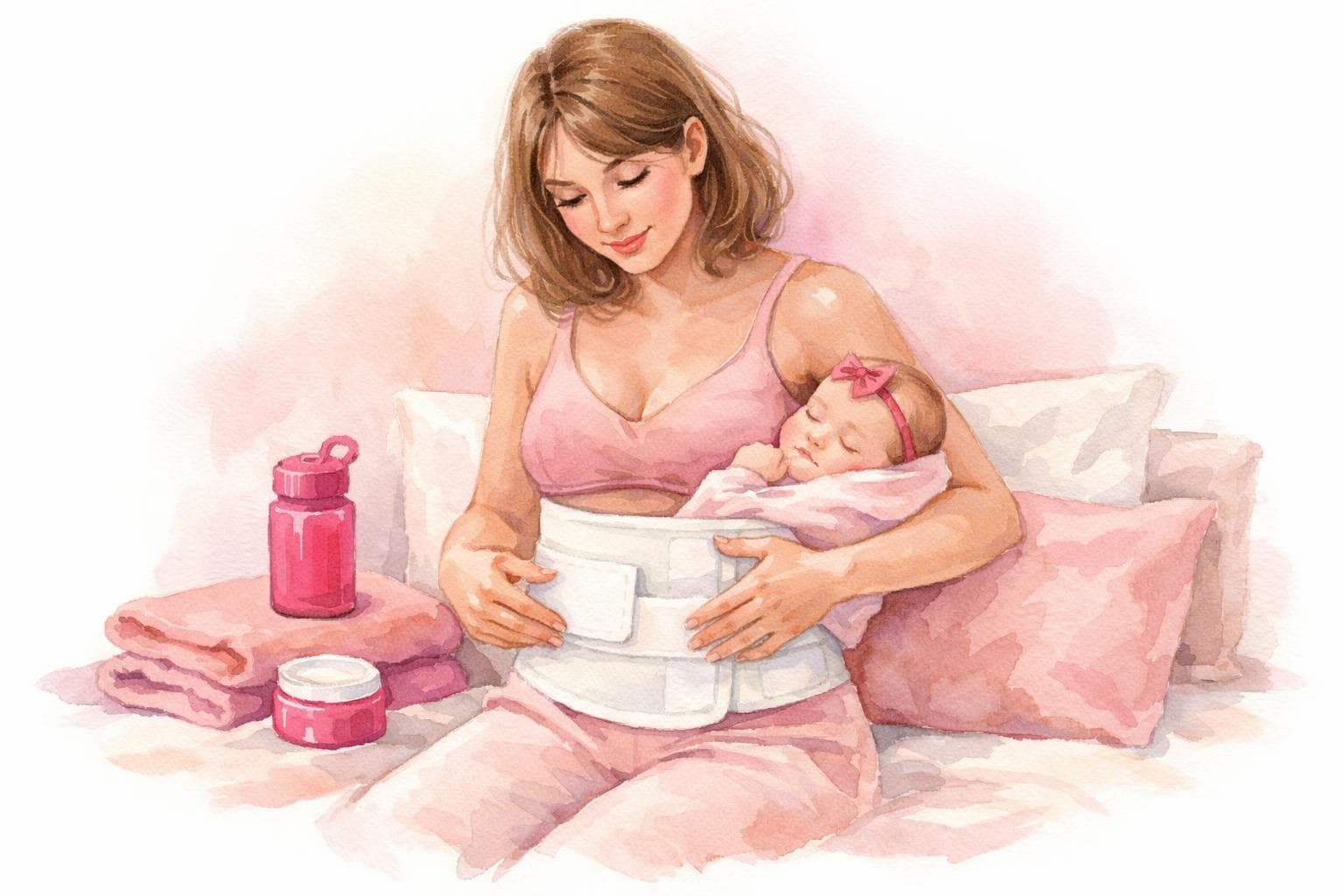
The ad appeared three days after I gave birth. An algorithm that clearly knew more about my body than I did, serving me a sleek image of a postpartum belly band that promised support, slimming and faster recovery. The model wore it under a fitted top and looked serene. I was wearing a hospital gown inside out and had not slept in 40 hours.
I bought it. Of course I did. And then I wore it for four weeks to see whether it actually did anything beyond give me something to believe in.
Here is what I found, what the research says and what I wish the ads had told me.
What is a postpartum belly band?
A postpartum belly band, also called an abdominal binder, is a wide elastic wrap worn around the midsection after delivery. It compresses the abdomen and supports the lower back. They have been used in various cultural traditions for centuries and have become a major product in the postpartum recovery market.
The claims typically include: faster abdominal recovery, reduced diastasis recti, improved posture, decreased pain after caesarean section and a flatter stomach.
Some of those claims hold up. Most do not. Let us separate them.
What the research actually supports
Post-caesarean pain and mobility
This is where the evidence is strongest. A 2019 randomised controlled trial published in PMC studied the use of abdominal binders after caesarean delivery and found that women who wore binders reported less pain during mobilisation and lower distress levels in the first 48 hours compared to those who did not.
A separate review noted that binders reduce the mechanical load on the incision site, which can make early movement, coughing and breastfeeding positioning more comfortable.
If you have had a C-section, a belly band in the first few weeks has reasonable clinical backing.
Perceived support and postural awareness
Cleveland Clinic describes elastic belly bands as a helpful reminder to engage your core and use good posture during early postpartum recovery. The proprioceptive feedback, the feeling of compression, can cue your abdominal muscles to activate and remind you not to hunch while feeding.
This is real, even if it is subtle. During my four weeks, I noticed I stood straighter and was more aware of my core engagement while wearing the band. That awareness faded the moment I took it off.
What the research does not support
Healing diastasis recti
This is the big one. Many belly bands are marketed as treatment for diastasis recti abdominis (DRA), the separation of the rectus abdominis muscles that occurs in most pregnancies. A 2025 systematic review and meta-analysis of randomised controlled trials published in Physiotherapy Research International compared abdominal exercises with abdominal binding for DRA reduction. The review concluded that exercise-based interventions were more effective than binding alone at reducing inter-recti distance.
Cleveland Clinic states it clearly: wearing binders cannot heal diastasis recti and will not strengthen your core muscles.
A 2024 scoping review in the International Urogynecology Journal examined DRA rehabilitation methods and found no consensus supporting external binding as a standalone treatment. Exercise, particularly deep core activation and progressive loading, was the standard approach across studies.
Permanent changes to abdominal shape
No belly band will reshape your postpartum body. The compression creates a visual effect while you are wearing it. That effect disappears when you remove it. There is no evidence that external compression causes lasting changes to tissue, muscle or fat distribution.
"Wearing binders can't heal diastasis recti and won't strengthen your core muscles. But they can be a helpful reminder to engage your core and use good posture." - Cleveland Clinic
My 4-week experience
Week | What I noticed |
|---|---|
Week 1 | Immediate relief when standing up from the sofa; felt "held together"; wearing it 6 to 8 hours a day |
Week 2 | Pain around the C-section scar reduced; posture improved while wearing it; started noticing discomfort if worn too tight |
Week 3 | Became reliant on it for feeling "normal"; core felt weaker without it; began reducing hours to 3 to 4 per day |
Week 4 | Stopped wearing it; began pelvic floor exercises and gentle core rehab instead; the real work started here |
The honest summary: the band helped in weeks one and two. It made the physical aftermath of a caesarean section more manageable. By week three, it had become a crutch. And by week four, I realised that what my body actually needed was not compression. It was rehabilitation.
Belly band vs pelvic floor physiotherapy
This comparison is important because the two are often treated as interchangeable. They are not.
Belly band | Pelvic floor physiotherapy | |
|---|---|---|
What it does | External compression and support | Internal muscle retraining and strengthening |
Evidence for DRA | No evidence of healing | Strongest evidence for reducing separation |
Pain relief | Yes, especially post-caesarean | Yes, particularly for pelvic and lower back pain |
Long-term benefit | Minimal once removed | Lasting changes in function, strength and continence |
Cost | One-off purchase | Ongoing sessions, but many countries offer postnatal referrals |
When to start | Immediately postpartum for comfort | From 6 weeks postpartum, or earlier with guidance |
If you can afford both, use the band for early comfort and transition to physiotherapy for lasting recovery. If you can only choose one, choose the physiotherapy.
Safety considerations
Wearing a belly band is generally safe, but there are guidelines worth following:
- Do not wear it too tight; you should be able to breathe comfortably and sit without it digging in
- Limit wear to a few hours at a time rather than all day; prolonged compression can affect digestion and pelvic floor function
- Avoid sleeping in it unless your doctor specifically advises otherwise
- If you experience numbness, tingling, increased pain or difficulty breathing, remove it immediately
- A band is not a substitute for medical advice about diastasis recti or pelvic floor dysfunction
The real recovery happens without a product
I am glad I used a belly band. It got me through the hardest physical days after my C-section. But I am also glad I stopped. Because the real postpartum recovery, the one that actually matters, happens through movement, rehabilitation and time.
If you are navigating the wider emotional side of physical recovery, reading about grieving your pre-baby body might help you make sense of what you are feeling. And our trimester-by-trimester guide to postpartum recovery gives a realistic picture of how long healing actually takes. Spoiler: it is longer than six weeks, and no product will speed it up.
Your body did something extraordinary. It does not need a band to fix it. It needs patience, support and, eventually, the right kind of strengthening. That is the honest truth.
Sources and further reading
- Abdullah, M. et al. (2025). Comparative efficacy of abdominal exercises and abdominal binding on diastasis recti abdominis reduction: a systematic review and meta-analysis. Physiotherapy Research International. onlinelibrary.wiley.com
- Karaca, I. et al. (2019). Influence of abdominal binder usage after cesarean delivery on postoperative mobilization, pain, and distress. PMC. pmc.ncbi.nlm.nih.gov
- Skoura, A. et al. (2024). Diastasis recti abdominis rehabilitation in the postpartum period: a scoping review. International Urogynecology Journal / PMC. ncbi.nlm.nih.gov
- Cleveland Clinic. (2026). Diastasis recti (abdominal separation): causes and treatment. my.clevelandclinic.org
- Nahabedian, M.Y. (2018). Management strategies for diastasis recti. Seminars in Plastic Surgery, 32(3), 131-141.
- Keller, M. et al. (2012). The effect of abdominal support during exercise on intra-abdominal pressure and muscular activation. Journal of Bodywork and Movement Therapies.