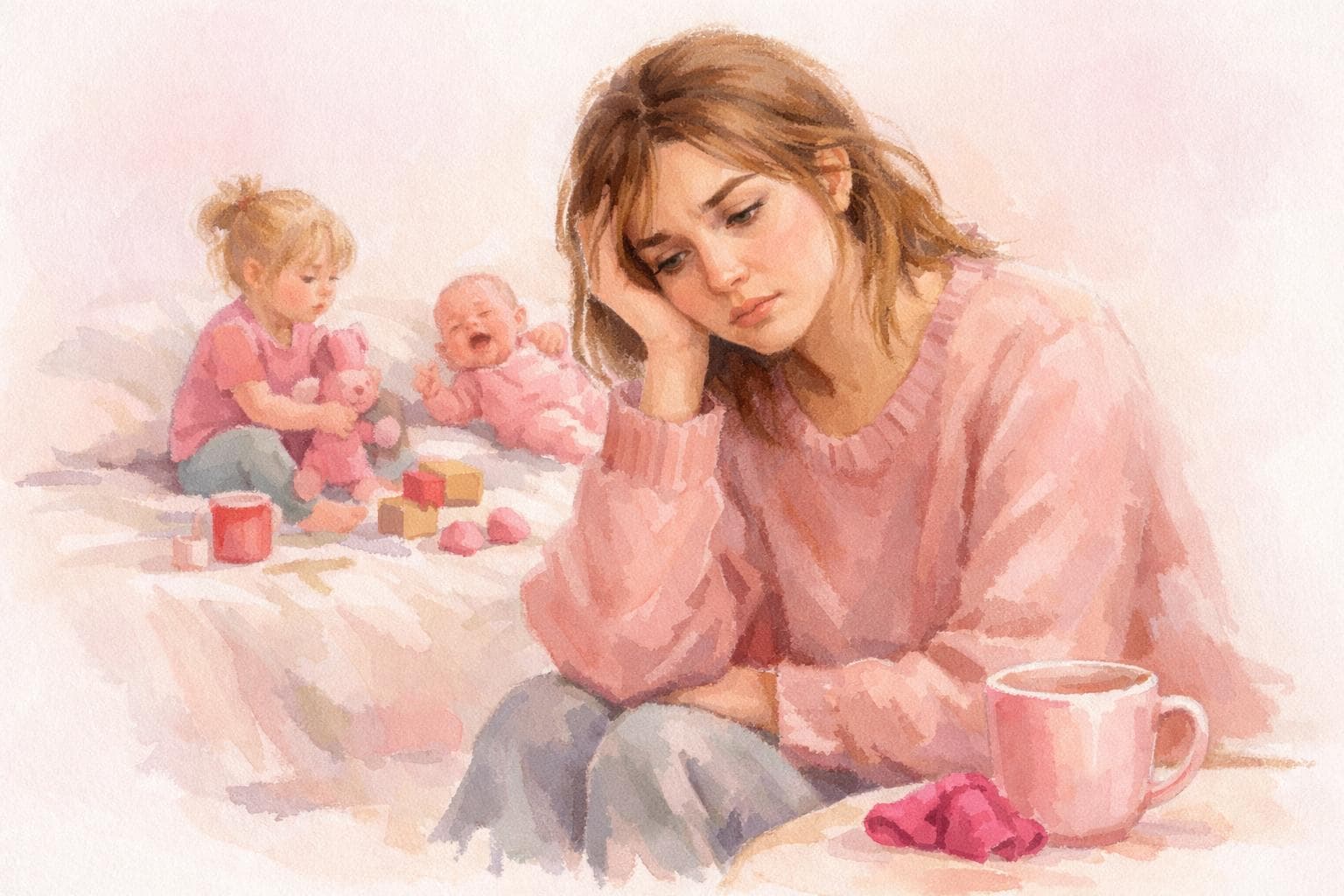
You can be surrounded by people and still be lonely. That's the thing nobody explains before you have children.
There is the baby, who needs you constantly but cannot yet talk to you. There is the partner, if you have one, who is also exhausted and also adjusting and often present in the room but not quite reachable. There is the group chat from your old life that keeps moving without you, full of plans you can't join and references you've started to miss. And there is you, in the middle of all of it, feeling something you weren't prepared for: profoundly, surprisingly alone.
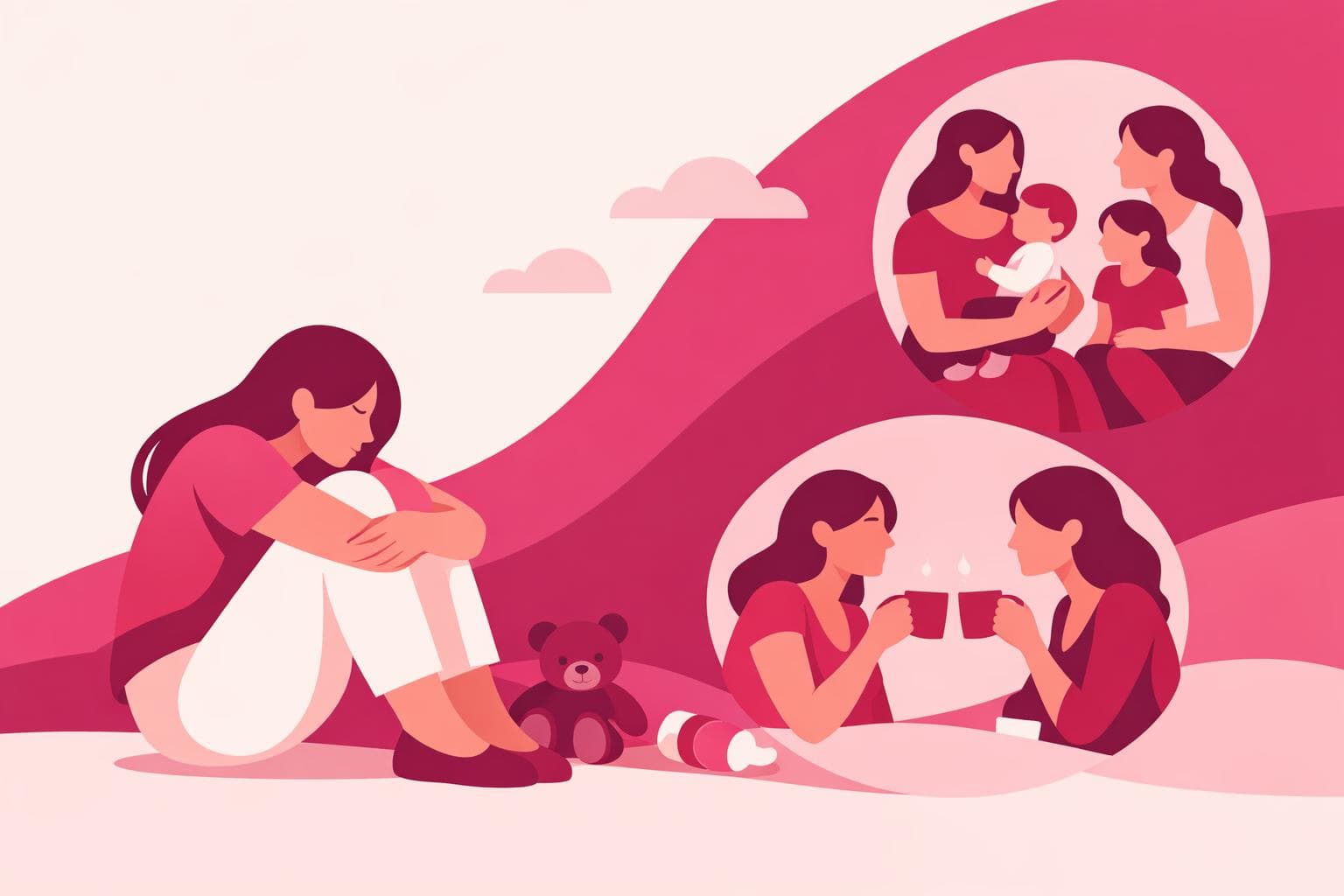
Maternal loneliness is one of the least discussed aspects of early parenthood and one of the most widespread. It doesn't fit the narrative of the joyful new mother, so it tends not to get named. And things that don't get named are much harder to address.
How common this actually is
The numbers on this are striking. A 2018 report from the UK's Office for National Statistics found that mothers of young children were among the loneliest groups in the country, with new mothers significantly more likely to report loneliness than any other demographic segment except the very elderly.
A Co-op and British Red Cross report on loneliness found that more than nine million people in the UK frequently or always feel lonely, with new parents and mothers of very young children disproportionately represented. In the US, a 2021 Cigna survey found similar patterns: parents of children under five reported higher rates of loneliness than almost any other life stage, with working mothers identifying social isolation as a top-five concern.
These numbers matter not just as statistics but as permission. If nine million people frequently feel lonely in the UK alone, and mothers are disproportionately among them, then maternal loneliness is not a personal failing. It is a structural condition.
Why motherhood is so structurally isolating
Understanding the mechanism helps more than telling yourself to try harder.
Before children, most adults maintain social connection through work, shared activities, spontaneous availability and the relative freedom to be somewhere other than home. Motherhood dismantles most of those structures simultaneously. Work may be paused or changed. Shared activities become logistically complicated or physically impossible. Spontaneous availability disappears entirely. And home, which is where most of the labour of early parenting takes place, is a context that can feel very small after a while.
There is also a quality dimension, not just a quantity one. The conversations available to a new mother are often limited to a narrow range: the baby's feeding, the baby's sleep, developmental milestones. These conversations are not unimportant, but they are also not the full range of a person's inner life. The loneliness that most mothers describe is not just the absence of people. It is the absence of being known as a complete person by someone who has time and attention to spare.
Philosopher and writer Simone Weil described attention as the rarest and purest form of generosity. In the economy of early parenthood, attention is the resource everyone is most short of. Finding someone who will actually pay attention to you, to your whole self, is harder than it sounds and more important than it is usually acknowledged to be.
The specific kinds of loneliness that motherhood produces
They are not all the same, and naming the specific kind you're experiencing changes what might help.
Type of loneliness | What it feels like | What tends to help |
|---|---|---|
Social loneliness | Missing having people around regularly | Regular low-stakes contact, even brief |
Intimate loneliness | Missing being truly known and understood | One or two deeper connections over many superficial ones |
Existential loneliness | The sense of not quite recognising yourself | Reconnecting with interests or identity outside the role |
Relational loneliness | Distance from a partner who is physically present | Honest conversation about the disconnection |
Community loneliness | Feeling outside of any group that knows you | Finding or building a shared context, local or online |
Most mothers experiencing loneliness in the postpartum period are dealing with more than one of these at the same time. The interventions that help are different for each, which is why generic advice like "get out more" tends to miss the mark.
What actually helps
Not all of it is available immediately. But these tend to make a genuine difference over time.
Prioritise depth over breadth. One relationship where you can be genuinely honest is worth more than ten where you're performing fine. The energy required to maintain surface-level connection when you're depleted is often greater than people expect. Finding one person, or one community, where honesty is possible changes things.
Name the loneliness rather than managing it. Saying "I've been feeling quite isolated" to another mother, a partner or a friend opens a space that staying cheerful and coping doesn't. Most people are more relieved than uncomfortable when someone else says the real thing first.
Lower the bar for what counts as connection. A ten-minute phone call during a nap. A voice note exchange with someone who gets it. A regular text thread where nobody is expected to perform. These are not substitutes for real friendship but they sustain the thread of connection during a period when meeting people for lunch is rarely feasible.
Find a context where you're known for something other than being a mother. A class, a community, a work context, an online group organised around an interest rather than parenting status. Being in a room where nobody knows you as someone's mother gives a different part of you room to exist.
Be the one to say something first. Most other mothers in the playground or the mother-and-baby class are also lonely and also waiting for someone else to make the first move. Being the one who says "do you want to get a coffee sometime" is uncomfortable and almost always worth it.
The thing worth saying directly
Maternal loneliness is not evidence that you made the wrong choice, that you are ungrateful or that you are somehow less suited to motherhood than the women around you who appear to be managing fine.
It is evidence that you are a person who needs genuine human connection, and that the structural conditions of early motherhood have made that harder to access than it used to be.
"The most terrible poverty is loneliness and the feeling of being unloved." - Mother Teresa
If the loneliness has a specific texture of missing who you used to be, How to feel like yourself again after kids addresses that dimension directly. And if part of what you're missing is friendships that have drifted since having children, When friendships fall apart after kids and what to do speaks to how those losses happen and what, if anything, can be done about them.
You are not alone in feeling alone. That is not nothing. It is, in fact, the beginning of finding your way to something better.
Further reading: Vivek Murthy, Together: the healing power of human connection in a sometimes lonely world (2020). Johann Hari, Lost connections: why you're depressed and how to find hope (2018). Brené Brown, Braving the wilderness: the quest for true belonging (2017).