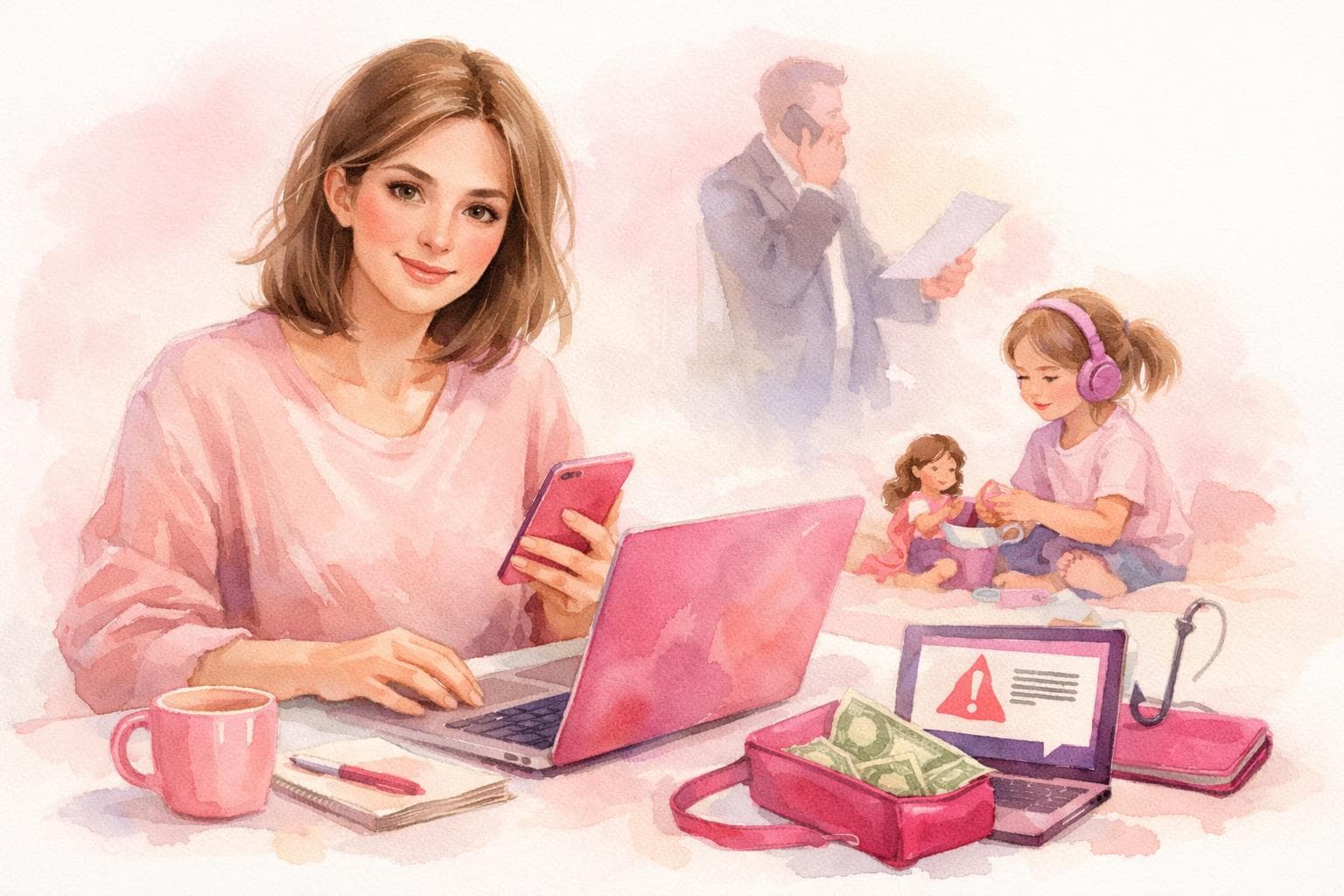
There is a version of this that goes badly. You start sharing pieces of your life online, the real ones, because you are told that authenticity is what connects. You share your child's first steps, your postpartum struggles, your marriage in a difficult season. The audience grows. And then one day you look at what you've put out there and realise you've given away something you can't take back.
Personal branding for mothers sits in genuinely complicated territory. The content that performs best tends to be the most personal. The content that protects you and your family tends to be the most boundaried. Those two things pull in opposite directions and nobody gives you a map for navigating the space between them.
This is an attempt at one.
What a personal brand actually is (and isn't)
A personal brand is not a performance. Or it shouldn't be. The most sustainable version of building a presence online or professionally is not about constructing a character that doesn't exist: it is about being known for something specific and real that you actually offer.
For mothers who want to build a professional presence, that often means identifying a genuine area of expertise or experience and sharing it with enough consistency and specificity that people begin to associate your name with it. That expertise might be rooted in professional skills you developed before or during motherhood. It might be rooted in the motherhood experience itself. Either is a legitimate starting point.
What it does not require is sharing your children without their consent, your relationship in its private moments or your worst days as content. The idea that authenticity means total exposure is not accurate. Authenticity means being genuinely yourself within whatever boundaries you have consciously chosen. Those boundaries can be wide or narrow. What matters is that they are yours.
The privacy question that most people avoid
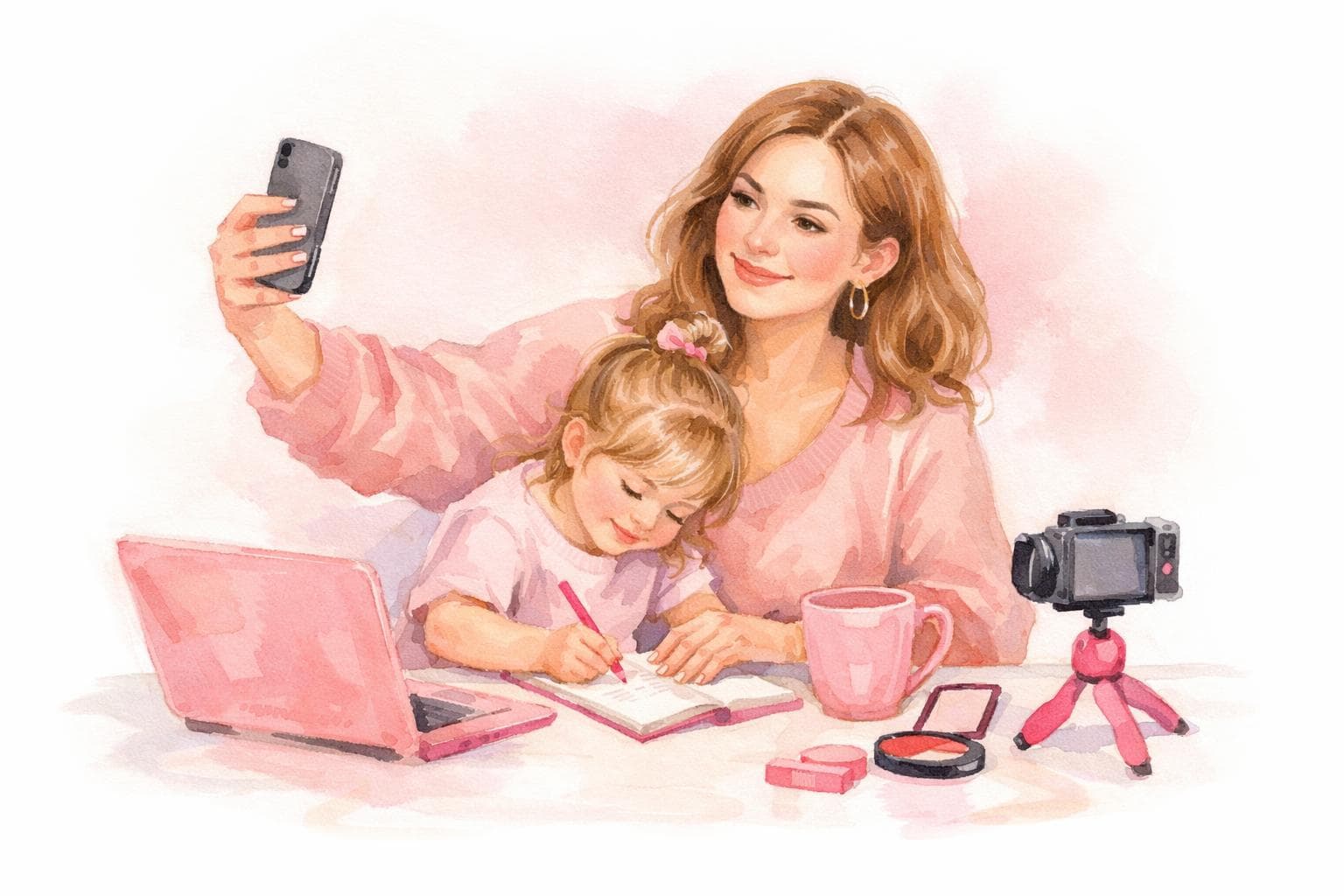
Digital privacy for children is a growing area of ethical and legal concern. The term "sharenting," the practice of parents sharing content about their children on social media, has attracted increasing scrutiny from child development researchers and legal scholars alike.
A 2019 report from Nominet, the UK's internet registry, found that by age 13, the average child has had approximately 1,300 photographs of themselves shared online by their parents, often without the child's knowledge or meaningful consent. In 2021, French lawmakers began discussions around children's rights to their own digital image, and similar conversations are underway in other European countries.
None of this means you cannot mention your children exist. It means the decision about how much of their lives you make public deserves more deliberate thought than most platforms encourage.
Some questions worth sitting with before you decide:
- Could my child be identified from this content in a way that could cause harm now or later?
- Would I be comfortable if my child could see everything I have shared about them?
- Am I sharing this because it serves something genuine in my work or because it is the content I think will perform?
- Have I distinguished between what is mine to share and what belongs to someone who cannot yet consent?
What you can build without the exposure
Quite a lot, as it turns out.
What requires sharing personal family content. What doesn't
A parenting account built on family moments
Professional expertise rooted in your field
Content that uses your child's image or voice
Insights and opinions drawn from your experience
Real-time sharing of family life
Behind-the-scenes content about your work process
Relationship content dependent on your partner's participation
Values-based content that reflects who you are
The right-hand column is not the lesser option. Many of the most respected and commercially successful personal brands in the parenting and lifestyle space are built on professional expertise and genuine perspective rather than on family exposure. What they offer is a clear point of view and a consistent, trustworthy presence.
The practical approach to building something sustainable
Building a personal brand when you are also a mother with limited time, limited energy and legitimate privacy concerns is not the same as building one from an unencumbered position. The approach has to match the reality.
Start with specificity. What is the one thing you want to be known for? Not three things, not a general area. The most specific version of your expertise or perspective you can articulate. Specificity is what makes a brand distinguishable. "Marketing consultant for small businesses" is more useful than "marketing expert." "Postpartum physiotherapist" is more useful than "women's health professional."
Show up consistently over a long period rather than intensively over a short one. Research on audience building across platforms consistently finds that consistency matters more than frequency. One piece of useful content per week for two years builds more than five pieces per week for two months and then nothing.
Protect a version of yourself that exists off-platform. Your relationships, your private experience of motherhood, your marriage, your children's inner lives: these are not content. They are your life. A personal brand that consumes the whole life is not sustainable, and the mothers who have built something lasting tend to be the ones who drew that line clearly, early.
On the identity question underneath this
Building a professional presence as a mother often surfaces a deeper question: who am I, professionally, after everything that motherhood has changed? What do I have to offer that is genuinely mine?
Those questions are worth taking seriously, because the answer to them is the foundation of anything you build. A personal brand built on something you don't actually believe in or care about will always feel hollow and will eventually become impossible to sustain.
"Your personal brand is a promise to your clients and customers. It tells them what they can expect from you." - Jeff Bezos
If the professional identity question feels tangled up with a wider loss of self in motherhood, Losing yourself in motherhood and relationships: and why it's more common than you think addresses the roots of that. And if you are navigating the specific challenge of building something professionally while staying at home, How to start a business as a stay-at-home mom is a useful practical companion.
What you build should be recognisably yours. And what you protect should remain inviolably so.
Further reading: Dorie Clark, Stand out: how to find your breakthrough idea and build a following around it (2015). Gary Vaynerchuk, Crushing it: how great entrepreneurs build their business and influence (2018). Nominet, sharenting report (2019).