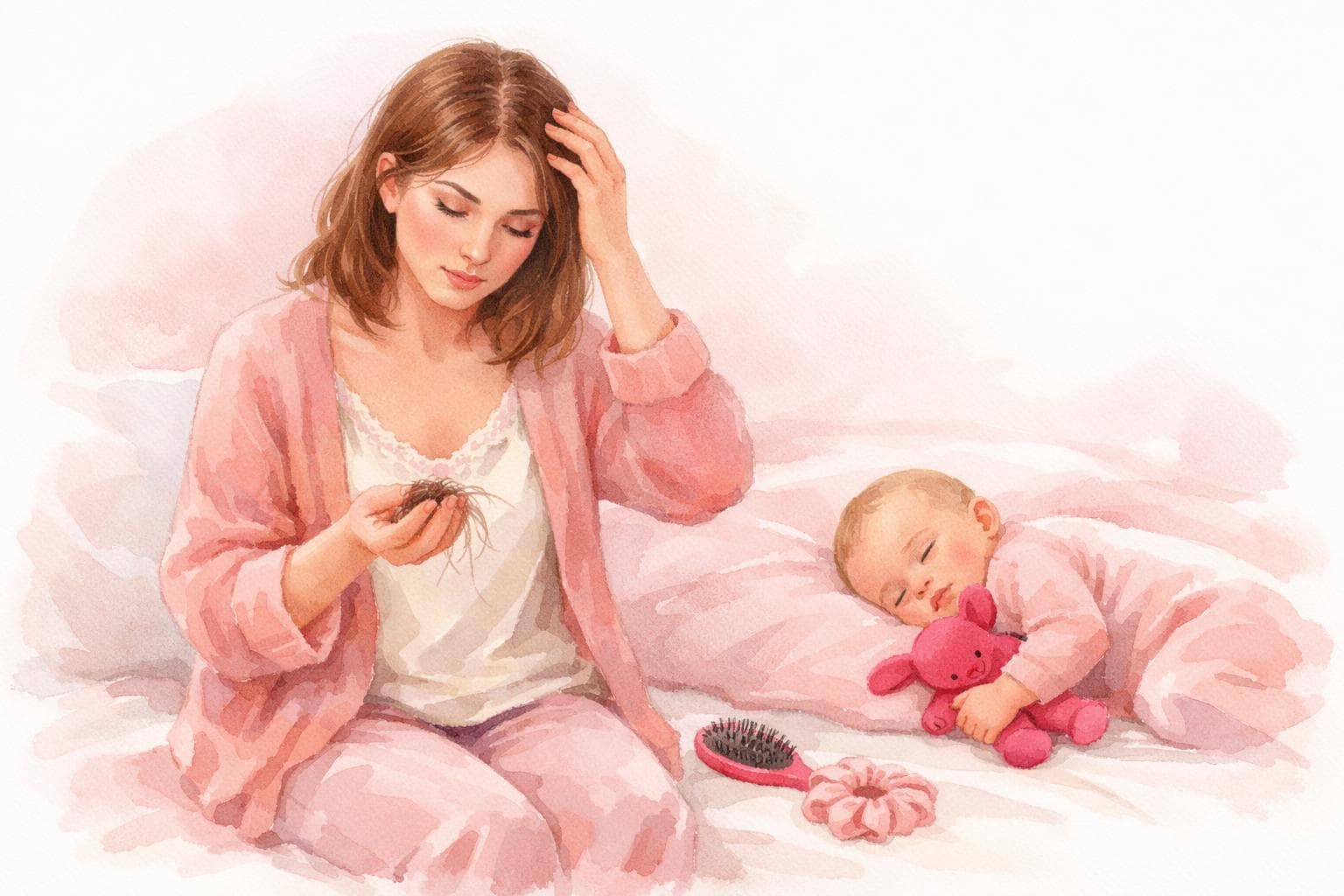
It starts in the shower. A handful of hair that seems like too much, then another, then a slow but undeniable thinning around the temples that you notice first in photographs and then in the mirror every morning.
Nobody warned me. Or rather, it was mentioned somewhere in a pregnancy book, in a single line, the way minor side effects are mentioned on medication packaging. Not enough to prepare you for what it actually feels like to watch yourself shed, month after month, while already navigating the most destabilising transition of your life.
Postpartum hair loss is so common it is considered a normal physiological process. That doesn't make it easy. And understanding what's happening, why it's happening and what, if anything, actually helps can make a significant difference to how you experience it.
What is actually happening to your hair
During pregnancy, rising oestrogen levels prolong the growth phase of the hair cycle, known as the anagen phase. This is why many women notice their hair becoming thicker and more lustrous during pregnancy: hairs that would normally shed are staying put.
After birth, oestrogen levels drop sharply. The hairs that were held in the growth phase are suddenly released into the shedding phase simultaneously. The medical term for this is telogen effluvium: a temporary but significant disruption to the hair growth cycle triggered by a physiological stressor. In this case, the stressor is giving birth.
The American Academy of Dermatology estimates that most women experience postpartum hair loss between one and five months after delivery. Peak shedding typically occurs around three to four months postpartum and can last for several months before the cycle rebalances. For most women, hair returns to its pre-pregnancy density by twelve months after birth, though this timeline varies and is affected by factors including breastfeeding, stress, nutritional status and genetics.
Why it can feel worse than you expected
The gap between "this is normal" and "this is fine" is a wide one.
Knowing that something is clinically expected doesn't always change the emotional experience of going through it. For many women, postpartum hair loss happens at the exact moment when they are already feeling most unlike themselves: recovering physically, adjusting to a new identity, sleeping in fragments, potentially struggling with mood. Hair, for a lot of people, is tied to a sense of identity and appearance in ways that feel disproportionate until they're disrupted.
A 2019 study published in the British Journal of Dermatology found that hair loss in women had a significantly greater impact on psychological wellbeing than in men, with participants reporting reduced confidence, social anxiety and distress that was frequently dismissed by healthcare providers as cosmetic rather than clinically significant.
It is clinically significant. And you are allowed to find it distressing even while knowing it is temporary.
What actually helps (and what doesn't)
This is where most advice becomes unreliable, because the market for postpartum hair loss solutions is large and the evidence base for most products is thin.
What genuinely makes a difference:
- Nutrition. Iron deficiency is a primary driver of hair loss in postpartum women and is frequently overlooked. If you haven't had blood tests since having your baby, ask your GP for a full blood count and ferritin level. Low ferritin, even within the technically normal range, is associated with hair shedding. Iron-rich foods and supplementation, guided by a GP, can meaningfully affect the trajectory of regrowth. Protein, zinc and biotin also support hair cycle health.
- Scalp health. A clean, unblocked scalp follicle is better positioned to support regrowth. Scalp massage has some evidence behind it: a small 2016 study in ePlasty found that regular standardised scalp massage increased hair thickness over a 24-week period. It also costs nothing.
- Gentle handling. Tight hairstyles, heat styling and aggressive brushing all increase mechanical breakage, which compounds the appearance of thinning. Loosening your ponytail is not a cure but it is a reasonable harm reduction measure.
- Patience. This is the least satisfying answer and the most important one. Telogen effluvium is self-limiting. The hair cycle will rebalance. For the majority of women, significant regrowth is visible by nine to twelve months postpartum.
What is unlikely to help as much as advertised: most "hair growth supplements" sold specifically to postpartum women, which are largely unregulated and whose active ingredients, where they have any effect at all, work on the same mechanism as getting adequate nutrition through food.
Approach evidence level cost
Iron/ferritin testing and supplementation
High, if deficiency is present
Low (GP-guided)
Adequate protein intake
Moderate
Low
Scalp massage
Low to moderate
Free
Gentle styling and handling
Practical harm reduction
Free
Branded postpartum supplements
Low in most cases
Often high
Minoxidil (topical)
Moderate for androgenetic hair loss, less evidence for telogen effluvium
Moderate
When to see your GP
Most postpartum hair loss is telogen effluvium and will resolve without medical intervention. There are situations where it warrants investigation:
- Hair loss that is patchy or asymmetric rather than diffuse
- Loss that continues beyond twelve months postpartum without signs of regrowth
- Additional symptoms including fatigue, brain fog, weight changes or mood disturbance, which may suggest thyroid dysfunction
- Hair loss accompanied by scalp changes, redness or itching
Thyroid disorders, which can be triggered by pregnancy, are a common and treatable cause of hair loss that is sometimes mistaken for normal postpartum shedding. A simple blood test can rule it out or, if it's the cause, point you toward treatment.
The part nobody says but should
You are not vain for caring about this. You are not shallow for finding it difficult. You are a person who is dealing with a significant physical change on top of every other significant physical and emotional change the postpartum period brings.
"Beauty begins the moment you decide to be yourself." — Coco Chanel
If the distress around your body after having a baby goes beyond hair loss, Body image after motherhood: learning to love yourself again addresses that broader experience with more depth. And if the postpartum period has been harder overall than you expected, How to survive the first year of motherhood emotionally is worth reading alongside this.
Your hair will come back. And in the meantime, what you're feeling about losing it is valid.
Further reading: American Academy of Dermatology, Hair loss in new moms. Fiona Lovely, The complete guide to postpartum health (NHS resources). Teri Dourmashkin, Hair loss: understanding the causes and finding solutions (Harvard Health).