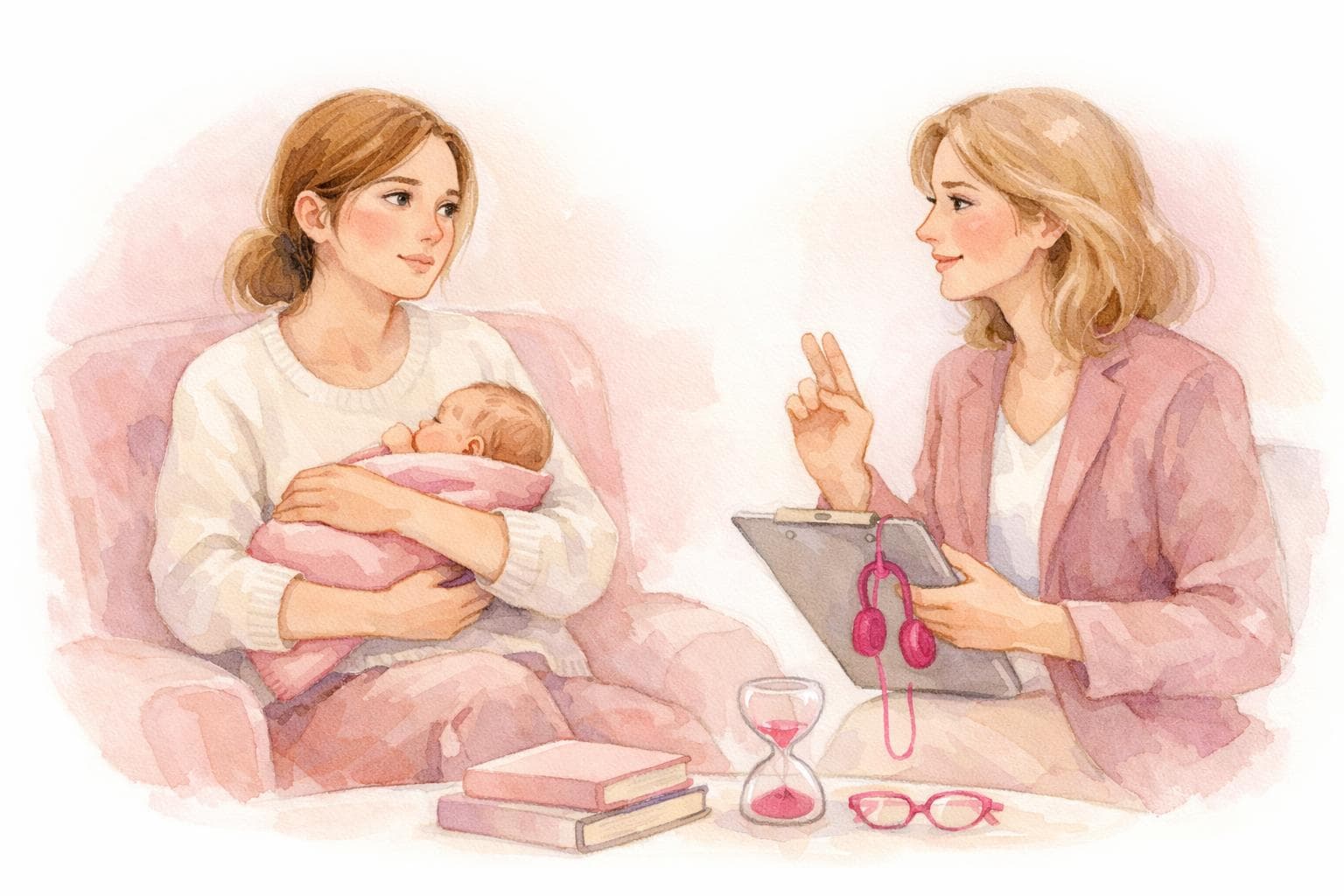
At your six-week check, the GP scans the form, asks if your stitches have healed and tells you everything looks good. You walk out thinking: so that is it then. Postpartum is over. I should feel normal now.
You do not feel normal. Not even close. And nobody mentioned that "six weeks" was never meant to be a finish line.
The truth is, postpartum lasts far longer than the medical system acknowledges. Your body, brain and hormones are still recovering months, and in some cases years, after giving birth. Understanding that timeline changes everything about how you treat yourself during it.
What the medical definition says
Clinically, the postpartum period begins immediately after birth and lasts six to eight weeks. The NCBI StatPearls textbook describes this as the "fourth trimester," during which uterine involution, hormonal stabilisation, tissue healing and adjustment to lactation take place.
The American College of Obstetricians and Gynecologists (ACOG) extended its postpartum care recommendations to include contact with a provider within three weeks of delivery and ongoing care through 12 weeks. That was a step forward. But it still does not reflect what most women actually experience.
A modified Delphi study published in PMC (2024) involving multidisciplinary postpartum specialists concluded that evidence suggests postpartum recovery takes significantly longer than the expected six weeks, and that evidence-based guidance for the months beyond that period remains lacking.
In reality, complete postpartum healing, including physical, hormonal, neurological and psychological recovery, takes six months to a year at minimum. For many women, elements of recovery extend well beyond that.
The four postpartum trimesters
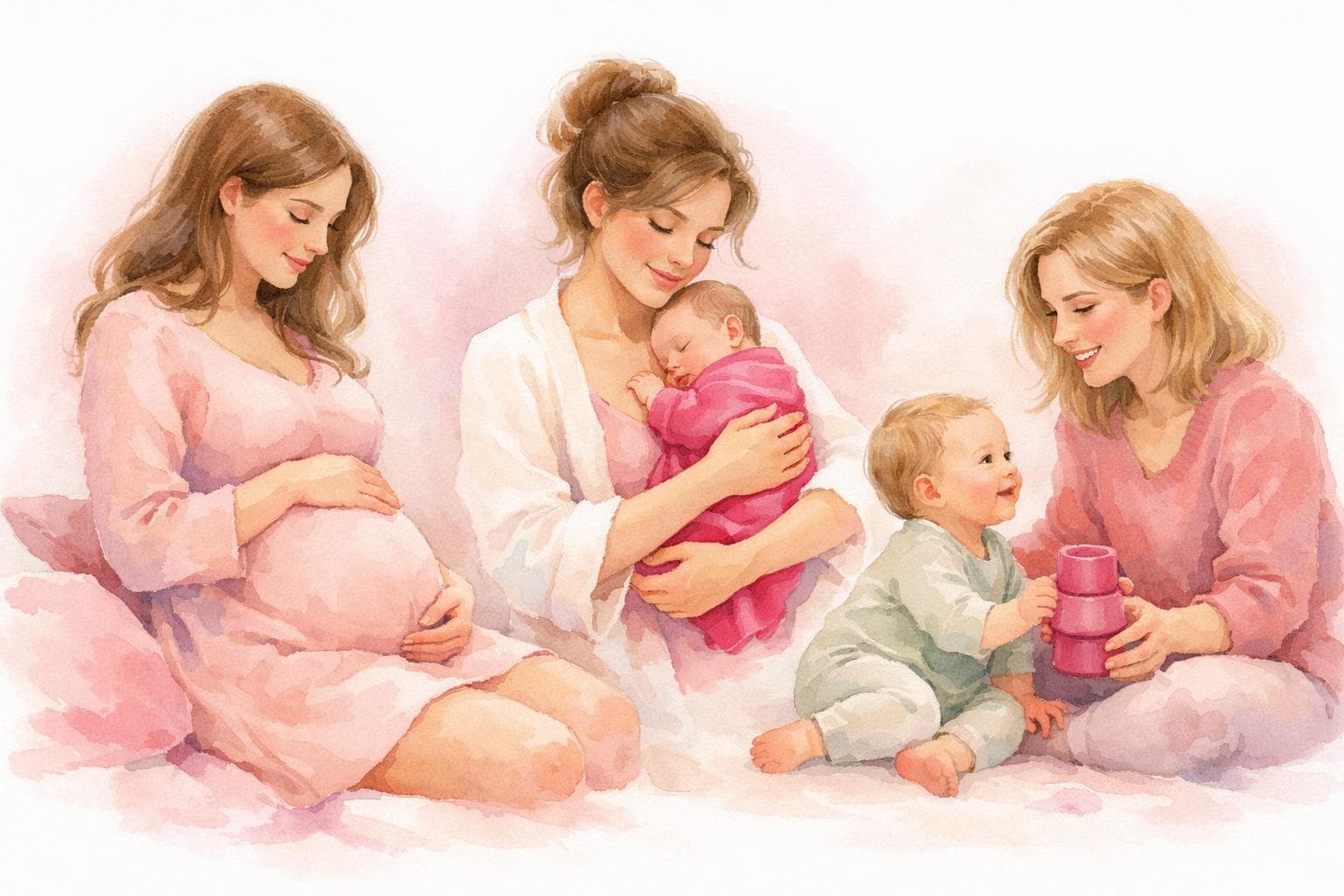
Thinking about recovery in trimesters rather than weeks gives a more honest map of what is happening. Here is what each stage typically involves.
The fourth trimester (birth to 12 weeks)
This is the acute recovery phase. Everything is raw.
What is happening | What you might feel |
|---|---|
Uterine involution and lochia (bleeding) | Physical soreness, heaviness, fatigue |
Oestrogen and progesterone crash sharply | Mood swings, night sweats, tearfulness |
Prolactin and oxytocin rise to support breastfeeding | Intense bonding moments alongside overwhelm |
Sleep architecture is disrupted | Difficulty concentrating, emotional volatility |
Perineal or caesarean healing | Pain, discomfort, restricted movement |
The "baby blues" typically peak around days three to five and resolve within two weeks. If sadness, anxiety or numbness persist beyond that window, it may signal postpartum depression or anxiety.
This trimester is survival. If you are getting through it, you are doing enough.
The fifth trimester (3 to 6 months)
The bleeding has stopped. The stitches have healed. People stop asking how you are. And yet.
This is the stage where many women hit a wall they did not expect. The adrenaline of early motherhood has faded. The support network has pulled back. You are expected to be "back to normal" by now, but your body and mind are still catching up.
Key changes during this phase:
- Hair loss typically peaks around four months postpartum as the hair retained during pregnancy begins to shed
- If breastfeeding, oestrogen remains suppressed, which affects mood, libido and vaginal dryness
- Pelvic floor recovery is ongoing; many women still experience incontinence, heaviness or discomfort
- Sleep deprivation becomes cumulative rather than acute
- Identity questions sharpen, this is often when matrescence starts to feel most disorienting
"Evidence suggests that postpartum recovery takes longer than the expected period of six weeks. Evaluation and recommendations regarding delayed postpartum recovery are still lacking." - Modified Delphi consensus study, PMC (2024)
This is also the stage where postpartum depression can surface for the first time. PPD does not always arrive in the first weeks. For some women, it builds slowly and only becomes visible once the early fog lifts.
The sixth trimester (6 to 12 months)
By now, most women have been discharged from all postnatal services. There is no check-up at nine months. No routine screening at twelve. You are, medically speaking, on your own.
But recovery is still happening:
- Hormones are gradually restabilising, especially if breastfeeding is reducing or ending
- Periods may return, often irregularly at first
- Neurological changes are still in progress; a landmark 2017 study in Nature Neuroscience found that pregnancy-related grey matter changes persisted for at least two years
- Body composition and metabolism are still shifting
- Sleep may or may not have improved, depending on the child
Emotionally, this is the trimester where many women begin to re-evaluate: their relationship, their career, their sense of self. The acute crisis may have passed, but the questions it left behind are still very much alive.
If you are struggling at this stage and do not know where to turn, our guide to choosing the right mental health provider for PPD can help you figure out who to call.
Beyond 12 months
Recovery does not end at a year. Research from the University of Warwick found that mothers' sleep does not fully return to pre-pregnancy levels for up to six years. A 2025 preprint tracking biological age markers found that while some postpartum recovery of biological ageing occurred in the years after birth, subsequent pregnancies could disrupt that trajectory.
The psychological adjustment of motherhood, what researchers call matrescence, is a developmental stage with no fixed endpoint. Like adolescence, it unfolds over years and reshapes how you see yourself, your relationships and your place in the world.
Why this timeline matters
When you believe postpartum ends at six weeks, every symptom after that feels like a personal failure. You think: I should be over this by now. I should be sleeping. I should want sex. I should recognise myself.
But your body is still healing. Your brain is still reorganising. Your hormones are still settling. And the system that told you six weeks was enough did not lie to you exactly. It just did not tell you the whole truth.
Understanding the real timeline gives you permission to stop measuring yourself against a deadline that was never accurate.
What to do with this information
- Extend your own recovery expectations. Twelve months is a more realistic minimum for feeling like yourself again. Some women take longer. Both are normal.
- Keep monitoring your mental health. PPD and anxiety can emerge at any point in the first year. If something shifts, pay attention. Read about the signs your doctor might miss and consider preventive therapy even if you feel okay.
- Ask for help without a deadline. Needing support at eight months postpartum is not late. It is appropriate. This article on asking for help is written for exactly that moment.
- Protect your energy. If you are still in the thick of recovery, read about morning routines for exhausted moms and finding alone time with no help for practical ways to function inside a body that is still catching up.
Postpartum is not a phase. It is a transition.
Six weeks is a medical snapshot. Twelve weeks is a policy update. But the real postpartum, the one you live inside, does not run on anyone else's clock.
Give yourself the time your body is already taking. It knows what it needs. And it is not finished yet.
Sources and further reading
- NCBI StatPearls. (2026). Postpartum care of the new mother. ncbi.nlm.nih.gov
- PMC. (2024). The development of multidisciplinary convalescence recommendations after childbirth: a modified Delphi study. pmc.ncbi.nlm.nih.gov
- PMC. (2024). The fourth trimester: embracing the chaos of the postpartum period. pmc.ncbi.nlm.nih.gov
- Hoekzema, E. et al. (2017). Pregnancy leads to long-lasting changes in human brain structure. Nature Neuroscience, 20(2), 287-296.
- Richter, D. et al. (2019). Long-term effects of pregnancy and childbirth on sleep satisfaction. Sleep. University of Warwick.
- Carroll, J. et al. (2025). Maternal biological aging in mid to late pregnancy and across four years postpartum. medRxiv preprint.
- Paladine, H.L. et al. (2019). Postpartum care: an approach to the fourth trimester. American Family Physician, 100(8), 485-491.