
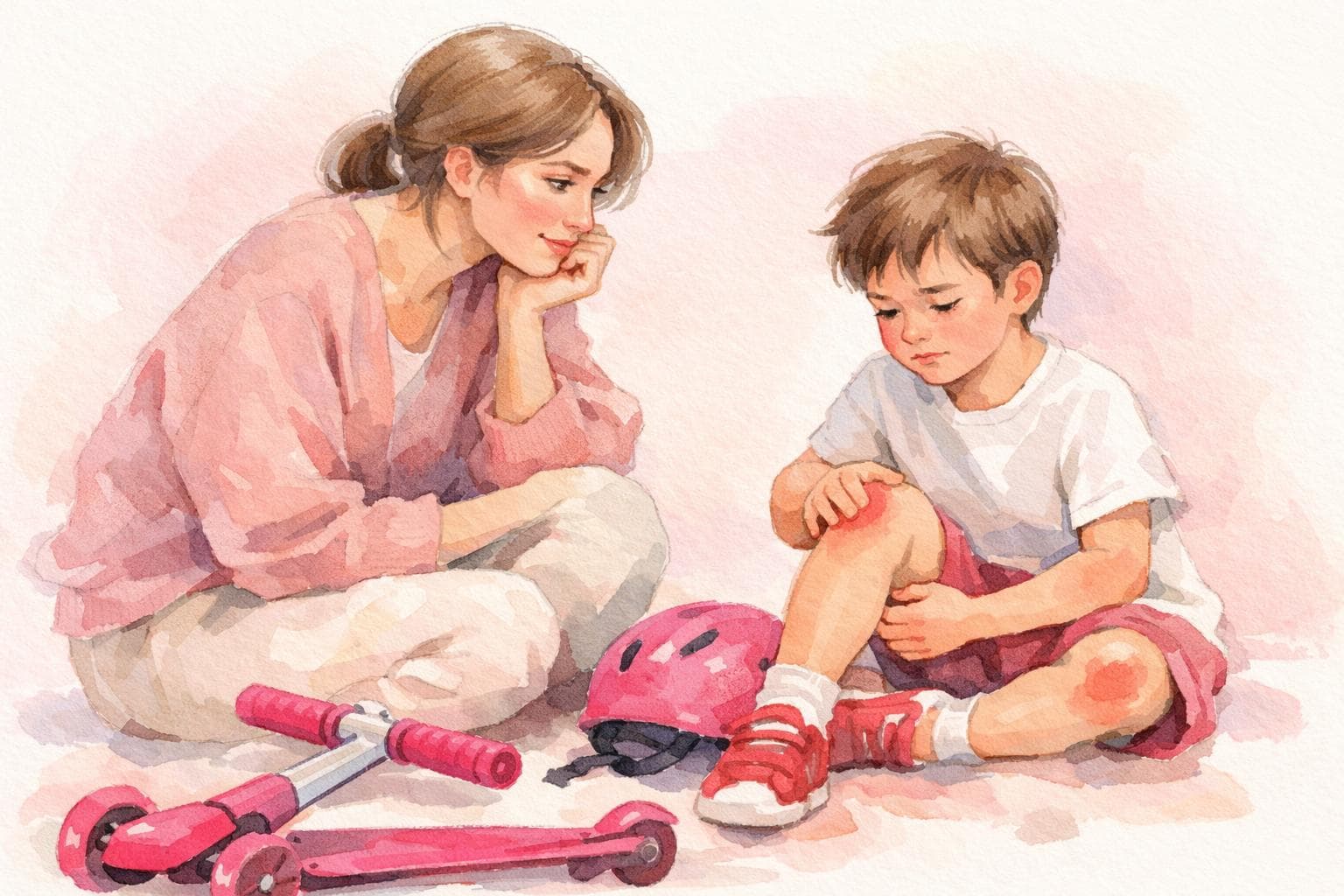
If you have spent any time on parenting TikTok recently, you have probably seen it.
A parent films their child discovering, in real time, the result of a choice they were warned about. The forgotten lunchbox that does not get delivered. The homework left undone that results in a difficult conversation with a teacher. The toy that was left in the rain, which is now broken.
FAFO parenting, which borrows the phrase "f*** around and find out" and applies it to child discipline, is having a cultural moment. But underneath the meme is something that developmental psychology has supported for decades: natural consequences are one of the most effective discipline tools available to parents. And most of us underuse them because they require us to tolerate watching our children struggle.
What FAFO parenting actually means
In practical parenting terms, FAFO is a colloquial version of what psychologists call natural consequences discipline. The principle is simple. Instead of issuing warnings, taking over or rescuing the child from the outcome of their choices, the parent steps back and allows the natural result of the behaviour to teach the lesson.
The child refuses to wear a coat. They get cold. They wear the coat next time.
The child delays getting ready and misses the first ten minutes of the birthday party. They experience the social consequence of arriving late.
The child repeatedly ignores the rule about screen time before homework. The homework is not done. There is a conversation with a teacher.
None of these require shouting, lecturing or punishment. The situation teaches the lesson. The parent's job is to get out of the way.
The psychology behind why it works
Natural consequences have a strong evidence base in child developmental psychology going back to Rudolf Dreikurs and Alfred Adler in the mid-twentieth century, whose work on democratic parenting identified natural and logical consequences as central to building intrinsic motivation and responsibility in children.
More recent research supports this. A 2018 study published in the Journal of Child and Family Studies found that children who experienced natural consequences for their behaviour showed greater self-regulation, higher intrinsic motivation and better problem-solving skills than those managed primarily through punishment or rescue. The lesson was learned because the child experienced it, not because a parent imposed it.
Psychologist Ross Greene, whose collaborative problem-solving model has influenced parenting approaches internationally, argues that children do well when they can, and that when they are not doing well it is usually a skill deficit rather than a motivation problem. Natural consequences, used thoughtfully, build the skills and the motivation together.
Examples of FAFO parenting in practice
The situation | The rescue response | The FAFO response |
|---|---|---|
Child leaves lunchbox at home | Parent drives to school to deliver it | Child goes without or manages with the school's alternative |
Child won't tidy toys before bed | Parent tidies them to avoid conflict | Toys are still on the floor in the morning. Child deals with the mess. |
Child refuses to finish dinner | Parent prepares an alternative | Child is hungry before breakfast. Next time they eat more. |
Child procrastinates on a project | Parent helps finish it at 11pm | Child submits it late or incomplete and has a conversation with a teacher |
Child is rude to a friend | Parent mediates and apologises on their behalf | Friendship experiences natural strain. Child learns the social cost. |
What FAFO parenting is not
This is important. Natural consequences discipline is not permissive parenting. It is not ignoring children or letting them face harmful situations without protection.
There are clear limits:
- Safety is always the parent's responsibility. A child cannot experience the natural consequence of running into traffic. The parent intervenes.
- Very young children do not have the cognitive development to connect natural consequences meaningfully. This approach is most effective from around age four upwards.
- Some natural consequences are too severe or too delayed to teach anything useful. These situations call for logical consequences instead.
- FAFO parenting requires warmth and connection alongside the stepping back. The parent who says "I told you so" is not using natural consequences. They are using punishment with extra steps.
Why parents struggle to do it
Most parents find this approach genuinely difficult. Not because they disagree with it in theory, but because watching your child struggle activates real distress.
Psychologist Wendy Mogel, in The blessing of a skinned knee (2001), describes the tendency of modern parents to over-rescue as one of the most significant obstacles to raising resilient children. We feel their discomfort acutely and move to relieve it before it has a chance to teach anything.
The short-term cost of stepping back is watching your child be uncomfortable. The long-term cost of always stepping in is a child who has not developed the capacity to manage discomfort independently.
"Children need the experience of managing small difficulties so that they can eventually manage larger ones." - Wendy Mogel
How to start using natural consequences
Start with low-stakes situations where the consequence is uncomfortable but not harmful. The forgotten item, the unchosen food, the unmade bed. Build your own tolerance for watching your child experience the result before applying it to higher-stakes situations.
Avoid the lecture after. The consequence is the lesson. Adding a parental commentary undermines it by redirecting the child's attention from their own experience to your reaction.
And if the child is struggling with specific behaviours that keep producing the same difficult outcomes, how to stop yelling at your kids (without pretending to be perfect) addresses the parent regulation piece that makes this kind of discipline possible. For the deeper question of how your own childhood shapes your parenting instincts, how to break generational cycles and parent differently than you were raised is a useful companion.
Further reading: Wendy Mogel, The blessing of a skinned knee (2001). Ross Greene, The explosive child (1998). Rudolf Dreikurs & Vicki Soltz, Children: the challenge (1964).